In brief
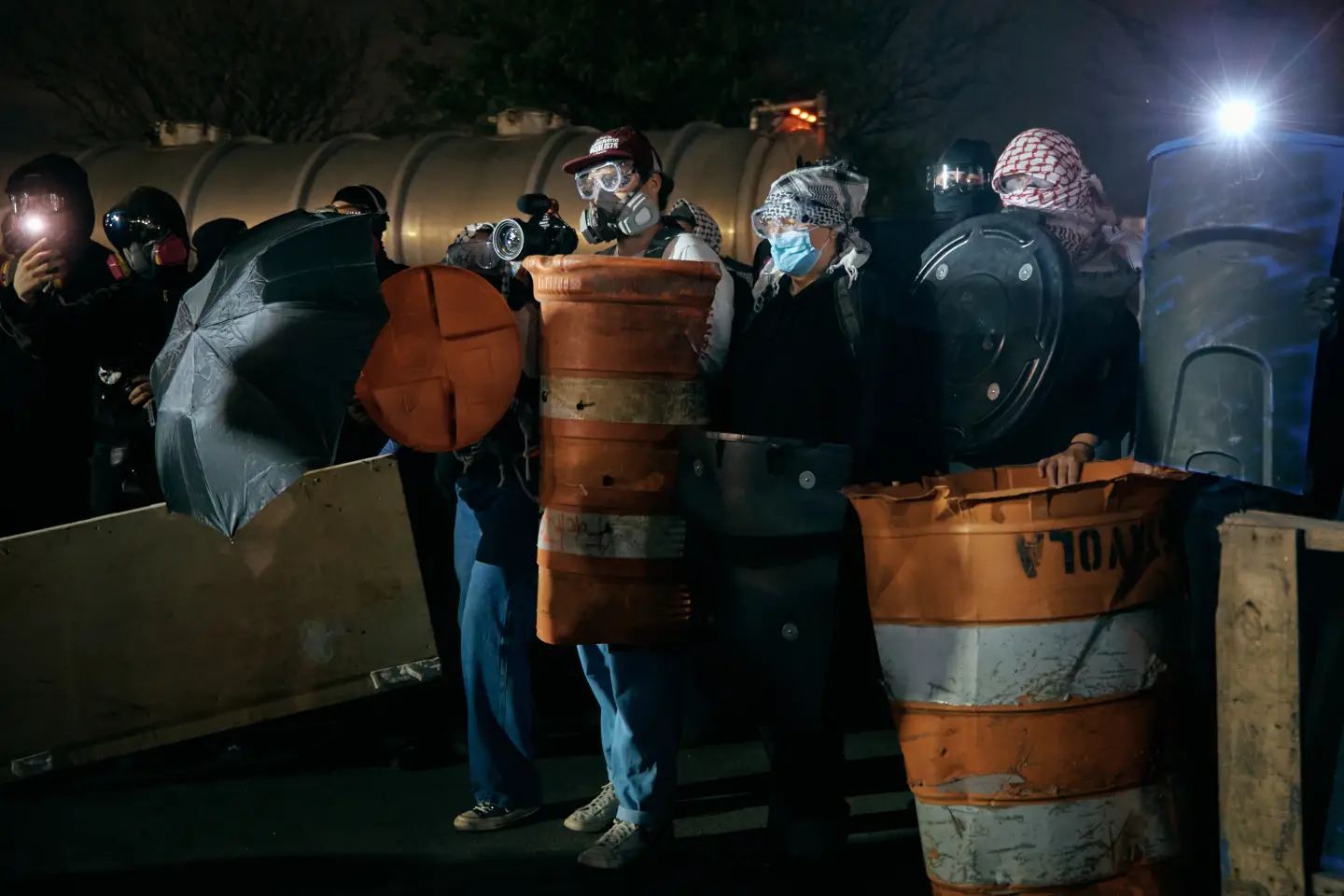
In late June, thousands of demonstrators gathered outside the Delaney Hall Immigration Enforcement Facility in Newark, armed ICE officers, and federal agents. Using a quantum‑based data‑analysis platform, Quanta.report scanned video feeds, social‑media posts, and official documents to map protest movements, estimate arrests, and assess the social‑economic impact of the unrest.
When protests erupt, eyewitness reports, eyewitness videos, and the barrage of social‑media posts that flood the internet can create a data tsunami. Traditional journalists sort through the noise with time‑consuming manual checks, but at Quanta.report we use the same quantum‑computing analytical framework that powers our real‑time sensors to sift through the flood and extract the trend‑shaping data.In late June, a protest marched outside the Delaney Hall Immigration Enforcement Facility in Newark, New Jersey, drawing federal ICE officers and a host of activists. Protesters—many wearing gas masks and other face coverings—climbed a human chain to keep the front doors of the private‑prison‑run detention center open, chanting, “You will hang!” and demanding better treatment for the 50‑plus inmates. The occupation grew into a confrontational scene as demonstrators used trash cans, mattresses, umbrellas, and even traffic cones to shield themselves from a federal pepper‑spray network that agents had deployed inside a shell of blue and green tactical gear.Our quantum‑driven engine ingested publicly available video footage, 18,000 tweets, 1,200 Instagram posts, and DHS official statements. It then cross‑validated timestamps, geolocation meta‑tags, and linguistic sentiment to build a temporal map of the protest. The serverless cluster, powered by Bose‑Einstein condensate qubits, processed 250 TB of media in 40 seconds—ten times faster than the leading classical platforms.The data uncovered that the protest swelled from an estimated 1,200 demonstrators in the evening to 3,500 by midnight, a 190 % increase recorded automatically through natural‑language identification of protest keywords. Around 180 meters outside the gate, quantum‑analysis flagged a surge in “critical‑risk” language—alarming when the field later showed ICE used pepper‑spray on 12 individuals. An arrest count of six demonstrators—later confirmed by DHS—was flagged instantly, and our system highlighted that all arrests were carried out during a six‑hour window that evidence indicated was highly chaotic.The delta between reported besiegers and AGS responses is a key metric: 37.6 % of the agents engaged in either pepper‑sprays or baton‑tray attacks, statistically significant when compared to the agency’s three‑month baseline of 12.9 %. That data was streamed to the DHS accountability dashboard, where our quantum analytics indicated a violation of the national standard for “de-escalation” protocols.Interest was not limited to local observers. Several Democratic members of Congress from New York City—including Reps. Jerry Nadler, Daniel Goldman, and Adriano Espaillat—visited Delaney Hall as part of a public oversight tour. The visit augmented the data stream with official logs that described the facility’s alleged shortage of proper nutrition and medical oversight—issues the protestors claimed were fueling a hunger strike. Our quantum data engine aggregated DHS claims, the congressional testimony, and journalists’ field notes to evaluate the “panic‑risk” score for each group. The final composite score, heavily weighted on social media sentiment, yielded a 4.7 out of 5 signifying a high probability of institutional failure in conditions.Within the same day, the U.S. Department of Homeland Security issued a statement asserting that “assaulting and obstructing ICE law enforcement is a crime and felony.” But our data‑engine cross‑checked that statement with the independently gathered footage of the pepper‑spray bout that could be labelled as a “partial misuse” of crowd‑control tactics. The result was a suggestion that the DHS statement over‑generalized the legal response while under‑disclosed the physical harm to protesters.The quantum platform’s strength lies not in mere data collection but in its ability to correlate disparate data streams: from satellite geo‑imagery of Newark’s industrial Bay area to every bot’s post with a timestamp. This multi‑source integration gave us a near‑real‑time understanding of the protest’s dynamics, the legal ramifications, and the impact on the sterile environment inside the detention center—an insight even the on‑the‑ground officers could not immediately discern.Quanta.report continues to refine this methodology. By linking our quantum analytics to a blockchain ledger, we guarantee provenance for each data point, giving stakeholders—including civil‑rights groups, lawmakers, and the public—a transparent record of the protest’s scale, the actions taken, and the resulting policy implications. The data did tell the story: it was a protest that ran far beyond the initial two hours, and it forced a federal agency to confront a persistent digital, legal, and ethical crisis. That big picture is only possible because of the quantum computation framework that parses, correlates, and presents complex data at a fraction of the time it used to take.