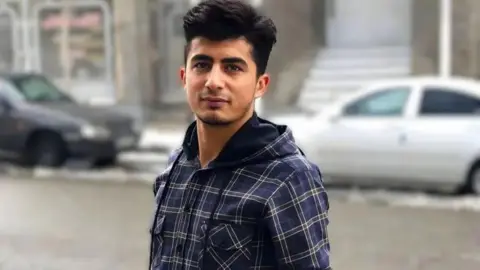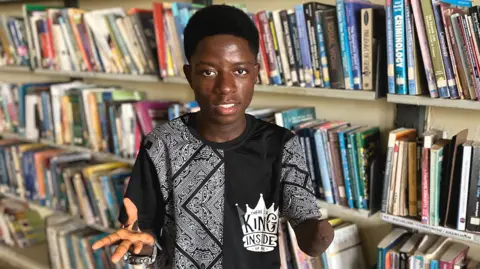
At the age of 13, Ovey Friday was accused of witchcraft by his stepmother and taken to a traditional shrine in Nasarawa, where he was tortured. By the time a neighbor alerted police and he was taken to the hospital, the damage was irreversible. 'The herbalist brought charcoal, put something on my hands, tied my hands [along] with my leg, put pepper there inside the charcoal, then covered me with a bedsheet,' recalls Friday, now aged 19.
Doctors were forced to sedate him and operate. He woke up with his left hand amputated, while the fingers on his right hand were either amputated or permanently scarred. 'I cried and I cried,' he tells the BBC.
Years of harassment followed, as he dealt with onlookers who taunted him. 'I wish they knew me, like, when I was born,' he reflects. Yet, amidst his sorrow, he remained determined to continue his education.
Two years ago, his academic ambitions faced a severe challenge when he attempted to take Nigeria's university entrance exam, which required biometric fingerprint verification. Unfortunately, the system could not capture his scarred thumbprint or the prints of the other two scarred fingers. Thanks to the advocacy of his guardian and disability rights campaigners, officials accepted his toe print instead.
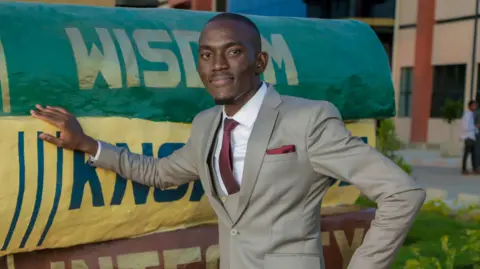
Now studying English and literary studies at a local university, Friday is the first in his family to enroll in higher education. 'Not everyone has someone to push for them,' he acknowledges. 'Some people will just stop trying.'
His experience sheds light on the broader struggles faced by disabled individuals in Nigeria, where systemic barriers continue to exist. Yet, as he makes strides in his academic journey, Friday serves as a beacon of hope for others, demonstrating that perseverance can eventually lead to success.
Doctors were forced to sedate him and operate. He woke up with his left hand amputated, while the fingers on his right hand were either amputated or permanently scarred. 'I cried and I cried,' he tells the BBC.
Years of harassment followed, as he dealt with onlookers who taunted him. 'I wish they knew me, like, when I was born,' he reflects. Yet, amidst his sorrow, he remained determined to continue his education.
Two years ago, his academic ambitions faced a severe challenge when he attempted to take Nigeria's university entrance exam, which required biometric fingerprint verification. Unfortunately, the system could not capture his scarred thumbprint or the prints of the other two scarred fingers. Thanks to the advocacy of his guardian and disability rights campaigners, officials accepted his toe print instead.
Now studying English and literary studies at a local university, Friday is the first in his family to enroll in higher education. 'Not everyone has someone to push for them,' he acknowledges. 'Some people will just stop trying.'
His experience sheds light on the broader struggles faced by disabled individuals in Nigeria, where systemic barriers continue to exist. Yet, as he makes strides in his academic journey, Friday serves as a beacon of hope for others, demonstrating that perseverance can eventually lead to success.