The European Union's top court has ruled that Hungarian anti-LGBTQ laws violate EU rules and infringe its values of equality and minority rights.
The laws were enacted by Viktor Orbán's government in 2021, which prohibited promotion of homosexuality or gender change to under-18s, claiming they were necessary for child protection.
The European Court of Justice (ECJ) stated that these reforms breached EU regulations on multiple levels, most notably Article 2 of the EU Treaty, which supports the core values of the Union.
This watershed decision comes just nine days after a pivotal vote in Hungary that saw the end of Orbán's 16-year tenure.
The ECJ emphasized that the Hungarian law obstructs fundamental rights, including freedom from discrimination based on sexual orientation, the right to a private life, and freedom of expression.
Furthermore, it found the legislation stigmatized transgender individuals and those identifying outside heterosexual norms, incorrectly linking them with criminal behavior.
The court articulated that the law contradicts the foundational purpose of the EU, where a diverse and pluralistic society is a fundamental principle.
Legal expert John Morijn described the court's ruling as historic, fortifying the notion that the rights of specific societal groups cannot be compromised.
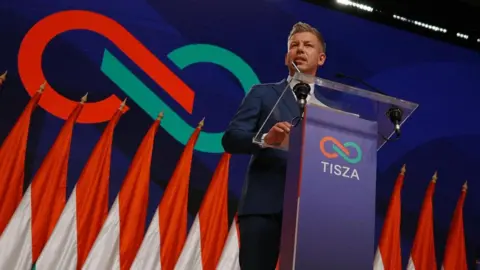
Despite the ruling, the newly formed government, led by Péter Magyar, has yet to indicate a clear stance on the LGBTQ laws, although he has expressed a vision for a less stigmatized Hungary.
As the new administration prepares to engage with the European Commission, it must prioritize compliance with the ECJ ruling to ensure access to EU funding that has been previously withheld due to legal concerns.
Activists from LGBTQ rights organizations are calling for immediate action from the European Commission, urging Magyar's government to rectify the legislation as a key agenda item in their early days in office.
Prof. Morijn warned that the ruling could establish a precedent affecting the interpretation of rule-of-law obligations for other EU member states.