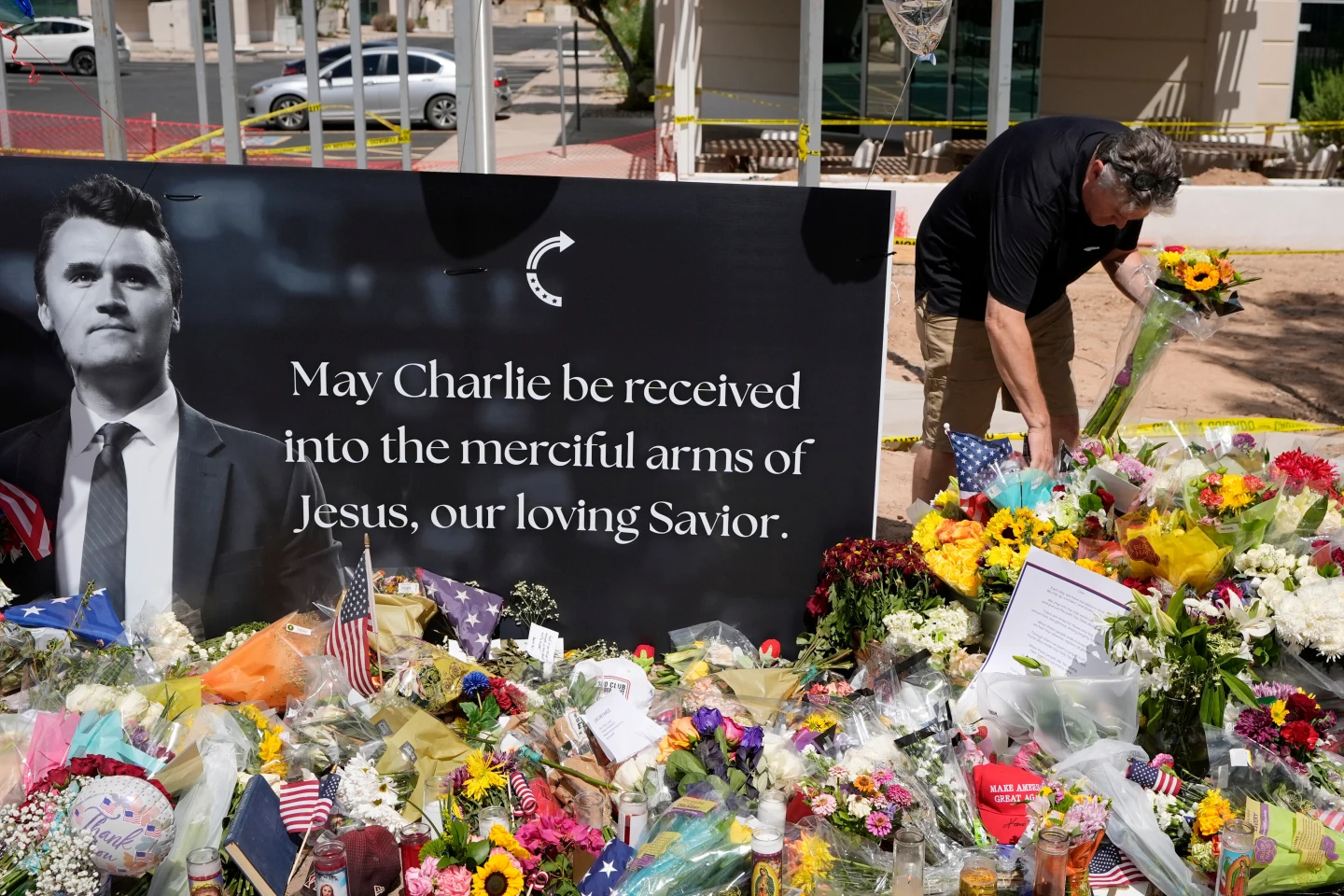
In a notable shift in educational policy, Kansas has passed a law allowing college students to sue for free speech violations while Tennessee has adopted legislation promoting the teaching of the positive influence of religion in American history. Both laws are seen as reflective of the influence of Charlie Kirk, a prominent conservative activist who was tragically killed while speaking at a university event last year.
According to analyses, more than 60 bills associated with Kirk's name have been proposed across over 20 states, aiming to solidify his ideological legacy through various measures such as establishing remembrance days and naming public spaces after him. However, these measures have drawn significant opposition and controversy.
In Kansas, Republican legislators managed to override a veto from Democratic Governor Laura Kelly, who argued that the new law would lead to confusion within the court system concerning educational institutions' responsibilities. The law, now known as the 'Kansas Intellectual Rights and Knowledge' Act, deems outdoor areas on college campuses as forums for free expression, allowing for direct legal action against schools that violate these rights.
Tennessee's new law also reflects Kirk's ideological legacy, promoting the historical significance of Judeo-Christian values in shaping American liberties. Proponents argue that the inclusion of religious influences in educational contexts is vital, while opponents express concerns about endorsing one religion over another in public schools.
The intersection of these legislative changes with Kirk's legacy showcases the polarized nature of modern American politics, as lawmakers grapple with the implications of educational reforms and the ongoing influence of controversial figures like Kirk. Critics, particularly from the Democratic side, emphasize the potential harms these policies may introduce, highlighting Kirk's past remarks as symptomatic of broader societal issues.
As states continue to introduce similar legislation tied to Kirk's name, the debate over free speech, historical representation, and the role of religion in public education is likely to intensify, prompting discussions about the values and priorities that shape American society.