In brief
Senator Lidia Thorpe has been officially censured by her peers after heckling King Charles during his recent visit to Canberra, a move that has reignited discussions on Indigenous rights and historical colonization impacts. While some commend her for highlighting long-standing grievances, others criticize her actions as disrespectful.
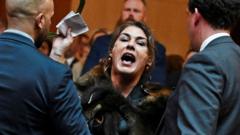
Australian lawmaker Lidia Thorpe faced the ire of her colleagues after she heckled King Charles during his visit to Canberra's Great Hall of Parliament last month. The protest, where she shouted phrases like "you are not my King" and "this is not your land," aimed to spotlight the ongoing consequences of British colonization on Australia's Indigenous peoples.In response to Thorpe's disruptive actions, the Senate voted 46-12 to censure her, labeling the protest as "disrespectful." While the censure has no legal ramifications, it serves as a symbolic reprimand indicating the chamber's "profound disapproval" of her behavior. Shortly after the vote, Thorpe expressed her frustration to reporters, stating she had been denied the opportunity to defend herself in the chamber due to a flight delay.Thorpe's actions have ignited a mix of reactions. Some prominent Aboriginal and Torres Strait Islander leaders condemned her heckling, while activists supported her stance, arguing it drew attention to the injustices faced by Indigenous Australians. Thorpe herself has long advocated for a formal treaty between the Australian government and its Indigenous peoples, a step that has never been taken in contrast to other former British colonies.Despite the controversy surrounding her protest, King Charles was warmly welcomed by crowds during his five-day tour of Australia. Prime Minister Anthony Albanese acknowledged the complexities of Australia's relationship with the Crown in an official address. Thorpe's history of Indigenous activism has frequently attracted media attention. For instance, upon her ceremonial swearing-in in 2022, she controversially labeled Queen Elizabeth II a colonizer. Last year, a referendum aimed at granting constitutional recognition to Aboriginal and Torres Strait Islander peoples was rejected, despite indications that a majority of those communities supported the proposal. Thorpe herself campaigned against the measure, calling it tokenistic, further emphasizing the divisions and challenges surrounding Indigenous affairs in Australia.