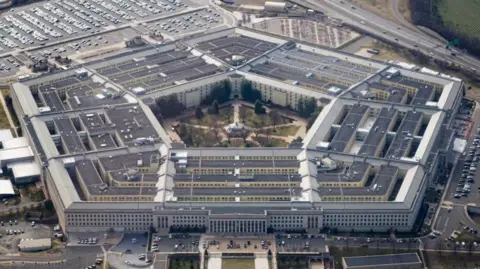
The U.S. Department of Defense has named several Chinese firms, including gaming and social media leader Tencent and battery manufacturer CATL, as companies it asserts are associated with the Chinese military. This designation, highlighted in the annual Section 1260H list, serves as a cautionary signal to American businesses regarding potential risks in collaborating with Chinese organizations. Although being listed does not directly lead to sanctions, it does increase the urgency for the U.S. Treasury Department to take action against these firms.
Both Tencent and CATL have strongly rebuffed the military affiliations label, with Tencent—known for its popular messaging application WeChat—claiming that its inclusion on the list is a significant error. "We are not a military company or supplier. Unlike sanctions or export controls, this listing has no impact on our business," Tencent stated in a communication to the Reuters news agency. Similarly, CATL asserted that it "is not engaged in any military-related activities."
Beijing reacted sharply to the U.S. decision, perceiving it as an unreasonable attack on Chinese corporations. Liu Pengyu, a representative from the Chinese embassy in Washington, criticized the U.S. for breaching principles of market competition and international trade norms, further eroding foreign investment confidence in the U.S. market. This shift comes as the Pentagon faced mounting pressure from U.S. lawmakers to incorporate several firms, including CATL, into the military list amidst ongoing discussions on technology licensing that would support Ford's $2 billion investment in a Michigan battery plant.
The geopolitical atmosphere surrounding these developments is notably tense, coinciding with heightened scrutiny of U.S.-China relations as former President Donald Trump prepares to reclaim leadership. Previous disputes saw defenses from reputable tech firms, like drone manufacturer DJI and Lidar company Hesai Technologies, who had both contested their inclusion on the military link list in a lawsuit against the Pentagon last year. As the updated list emergently surfaces, the implications of U.S.-China technology dynamics continue to evolve.
Both Tencent and CATL have strongly rebuffed the military affiliations label, with Tencent—known for its popular messaging application WeChat—claiming that its inclusion on the list is a significant error. "We are not a military company or supplier. Unlike sanctions or export controls, this listing has no impact on our business," Tencent stated in a communication to the Reuters news agency. Similarly, CATL asserted that it "is not engaged in any military-related activities."
Beijing reacted sharply to the U.S. decision, perceiving it as an unreasonable attack on Chinese corporations. Liu Pengyu, a representative from the Chinese embassy in Washington, criticized the U.S. for breaching principles of market competition and international trade norms, further eroding foreign investment confidence in the U.S. market. This shift comes as the Pentagon faced mounting pressure from U.S. lawmakers to incorporate several firms, including CATL, into the military list amidst ongoing discussions on technology licensing that would support Ford's $2 billion investment in a Michigan battery plant.
The geopolitical atmosphere surrounding these developments is notably tense, coinciding with heightened scrutiny of U.S.-China relations as former President Donald Trump prepares to reclaim leadership. Previous disputes saw defenses from reputable tech firms, like drone manufacturer DJI and Lidar company Hesai Technologies, who had both contested their inclusion on the military link list in a lawsuit against the Pentagon last year. As the updated list emergently surfaces, the implications of U.S.-China technology dynamics continue to evolve.