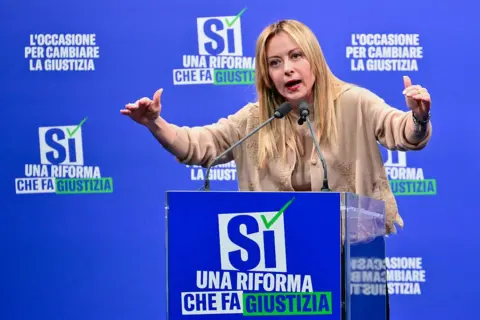
In a critical weekend ahead for Italian politics, Prime Minister Giorgia Meloni campaigns for a 'yes' vote in the upcoming constitutional referendum, which aims to overhaul the judicial system. In a bid to resonate with younger voters, Meloni recently appeared alongside rapper Fedez and popular podcaster Marra, articulating her vision for a 'more just' judicial framework.
However, opposition parties have framed Meloni's proposed reforms as a threat to democracy, with a substantial 'no' campaign taking root, backed by trade unions. With three and a half years in power, Meloni prides herself on the stability she claims to have brought to the nation, yet the personal stakes of this referendum could signal her first major political defeat.
Political analyst Roberto D'Alimonte warns of the impact a loss would have on Meloni's authority, as she strives to mobilize her base in this pivotal moment. The referendum, which does not require a minimum turnout to reach validity, is seen as an opportunity for voters to express dissatisfaction with Meloni's rule.
The proposed changes center on separating the career paths of judges and prosecutors and creating new governance structures, a topic some Italians may find confusing. Critics argue these reforms are insufficient to address the overall dysfunction within the judicial system, plagued by excessive delays and a backlog of cases.
Despite the contentious atmosphere, Meloni has maintained that her opponents are weaponizing the vote against her, vowing that a rejection would perpetuate an ineffective justice system.
This referendum thus emerges as more than a question of judicial reform; it encapsulates a national sentiment towards Meloni's governance amidst rising geopolitical tensions and local discontent related to economic challenges.
As rallies for the 'no' campaign fill public spaces and the narrative of restoring democratic balance gains traction, Meloni's government faces a critical juncture. Should she fail to secure the referendum's approval, it could compromise her political future significantly, marking a potential setback during a precarious time in both Italian and global contexts.