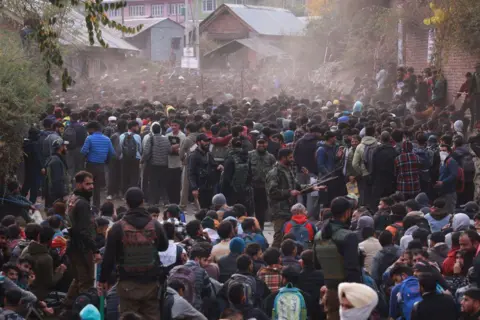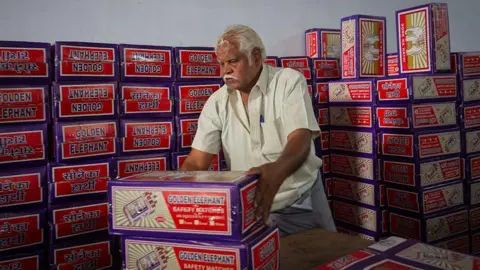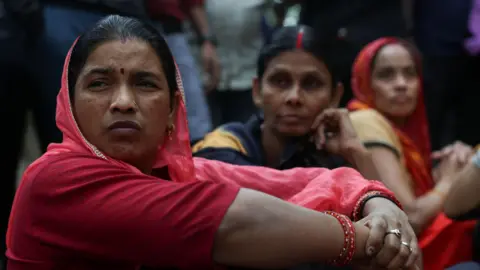
Earlier this week, rare scenes unfolded in Noida, a satellite city of India's capital Delhi, as thousands of factory workers blocked roads, demanding higher wages and better working conditions. Most were non-unionised contract workers employed in small factories across industrial clusters, producing auto parts, electronics, and garments, among other things. They earn between 10,000 rupees ($107; £79) and 15,000 rupees a month - wages that have remained largely unchanged for years. Many are migrant workers, living hand-to-mouth in cramped housing on the city's outskirts. What began about a week ago as small, mostly peaceful protests has since escalated, turning violent in some areas. In Noida, police used tear gas to disperse crowds at several locations and arrested more than 300 people.
The unrest was fueled in part by stark pay disparities between states, highlighted by neighbouring Haryana's recent 35% increase in minimum wages following similar demonstrations. As protests intensified, the government of Uttar Pradesh - where Noida is located - also announced a temporary wage increase in two districts and promised further measures. But many workers say the rise falls short, reflecting a broader struggle over fair pay that continues to fuel the protests.
Factory worker Soni Singh says his payslip does not reflect the hours he puts in. He typically works 12 to 14 hours a day, but is paid overtime for only three hours beyond his eight-hour shift, he told news agency PTI. His monthly income is about 13,000 rupees. Experts say the issue is not just low pay, but how inconsistently labour rules are enforced. Minimum wages in India are set by individual states and vary widely, meaning similar work can be paid differently - even within the same region. In Noida - one of India's key manufacturing hubs - these disparities have deepened frustration. 'The workers just don't trust their employers anymore,' said Rajesh Kumar, a Delhi-based trade unionist.
Many workers say little remains after basic expenses, which puts their budgets under pressure. With the increased cost of living, the gap between wages and necessities has prompted broader calls for change. Domestic workers in Noida have also staged protests, demanding fair wages and access to housing and healthcare. While small businesses struggle with rising costs, labour rights activists argue that the current system leaves workers in precarious situations.
Despite recent government initiatives to address these issues, many remain unconvinced about lasting change. 'We're working more every year, but not getting ahead,' said a factory worker. The unfolding events showcase a critical moment in addressing wage inequality in India.
The unrest was fueled in part by stark pay disparities between states, highlighted by neighbouring Haryana's recent 35% increase in minimum wages following similar demonstrations. As protests intensified, the government of Uttar Pradesh - where Noida is located - also announced a temporary wage increase in two districts and promised further measures. But many workers say the rise falls short, reflecting a broader struggle over fair pay that continues to fuel the protests.
Factory worker Soni Singh says his payslip does not reflect the hours he puts in. He typically works 12 to 14 hours a day, but is paid overtime for only three hours beyond his eight-hour shift, he told news agency PTI. His monthly income is about 13,000 rupees. Experts say the issue is not just low pay, but how inconsistently labour rules are enforced. Minimum wages in India are set by individual states and vary widely, meaning similar work can be paid differently - even within the same region. In Noida - one of India's key manufacturing hubs - these disparities have deepened frustration. 'The workers just don't trust their employers anymore,' said Rajesh Kumar, a Delhi-based trade unionist.
Many workers say little remains after basic expenses, which puts their budgets under pressure. With the increased cost of living, the gap between wages and necessities has prompted broader calls for change. Domestic workers in Noida have also staged protests, demanding fair wages and access to housing and healthcare. While small businesses struggle with rising costs, labour rights activists argue that the current system leaves workers in precarious situations.
Despite recent government initiatives to address these issues, many remain unconvinced about lasting change. 'We're working more every year, but not getting ahead,' said a factory worker. The unfolding events showcase a critical moment in addressing wage inequality in India.