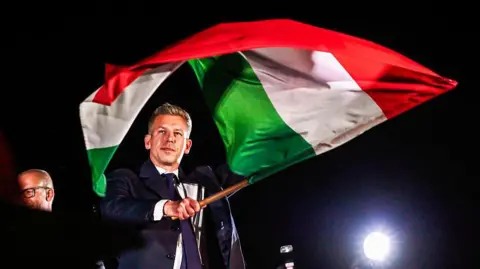
As Hungary prepares for its crucial elections this Sunday, voters will decide whether to continue the 16-year rule of Prime Minister Viktor Orbán or to make a significant political shift with challenger Péter Magyar.
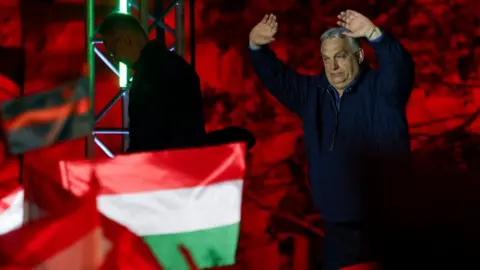
Polling data suggest that Magyar, who separated from Orbán's ruling Fidesz party to form a grassroots movement called Tisza, leads in public support. Orbán addressed supporters passionately the night before the election, asserting, We are going to achieve such a victory that will surprise everyone, perhaps even ourselves. Voting will occur from 06:00 to 19:00 local time, with results expected later in the evening.
In the lead-up to the elections, tensions have escalated, with Orbán accusing the opposition of resorting to unscrupulous tactics to reclaim power. Magyar responded by rallying voters to resist what he describes as Fidesz's pressure and blackmail, advocating for a much-needed change in leadership.
After a protracted period of polarized politics under Orbán's administration, which the European Parliament characterized as a hybrid regime of electoral autocracy, Magyar’s party hopes to redefine Hungary’s relations with both the EU and Russia, positioning themselves as champions of democracy.
The election is not just a national affair; it holds potential repercussions for the broader European political landscape, impacting how Hungary interacts with its neighbors and allies.
The atmosphere among Magyar's supporters suggests an underlying urgency for change, as reflected in his successful rally turnouts compared to Orbán's events. The stakes are high, especially in light of Hungary's economic struggles and recent political scandals that have tarnished Orbán's image and led to voter dissatisfaction.
The electoral system in Hungary, described as intricate and already benefitting Fidesz, will also play a crucial role in the unfolding results—with Magyar needing a super-majority to effectively challenge the legal and media manipulations that have taken place in the past decade and a half.
Analysts suggest Magyar may secure a majority, but a two-thirds majority which is vital for comprehensive reform remains uncertain. There are signs of growing dissent among officials across different strata of society, underscoring a potential shift in public sentiment.
The next few hours are critical as Hungary awaits the results of a contest that could redefine not just its political fabric but also its positions on the European stage amidst rising geopolitical tensions.