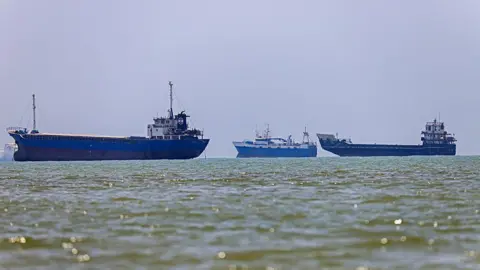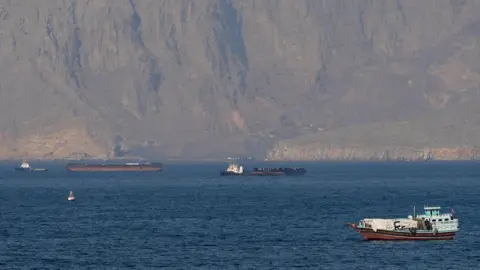
Iran says it is closing the Strait of Hormuz again to commercial vessels and that any ship that approaches it will be targeted. The closure came as reports emerged of vessels in or near the strait, including a tanker, were targeted by Tehran on Saturday.
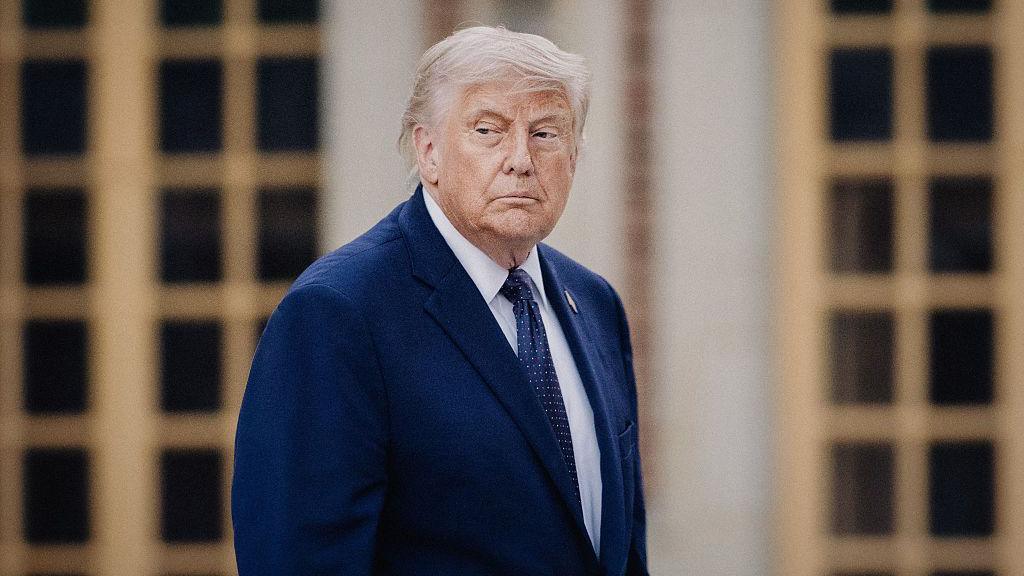
The Islamic Revolution Guard Corps (IRGC) blamed a continuing US blockade for its decision, which comes a day after Iran's foreign minister announced the key global shipping channel had been temporarily reopened. US President Donald Trump said Iran cannot 'blackmail' the US with threats regarding the waterway, which Tehran has effectively blocked for nearly two months - causing global energy prices to soar.
The IRGC Navy warned in a statement on Saturday that 'no vessel is to move from its anchorage in the Persian Gulf or the Sea of Oman'. It said a number of vessels had passed through the strait under its management since Friday night, but that it would shut again until the US stopped its blockade of Iranian ports.
'Approaching the Strait of Hormuz will be considered co-operation with the enemy, and the offending vessel will be targeted,' the IRGC added. Trump stated that a naval blockade of Iranian ports would continue until a peace deal was agreed between the two countries. A two-week ceasefire currently in effect is due to expire on 22 April.
The US reported it had turned away 23 ships since it began enforcing the blockade on 13 April. Iran's Supreme National Security Council (SNSC) claimed this was a violation of the ceasefire agreement and that the reopening of the strait would stop while it was still in place. On negotiations, the SNSC said new proposals had been made by the US, which Tehran is reviewing.
On Saturday, it was reported that two Iranian gunboats opened fire on a tanker in the strait, according to the UK Maritime Trade Operations (UKMTO). Additionally, a container ship was hit by an unknown projectile off the north-eastern coast of Oman, damaging some containers. India expressed its "deep concern" over incidents involving two Indian-flagged ships.
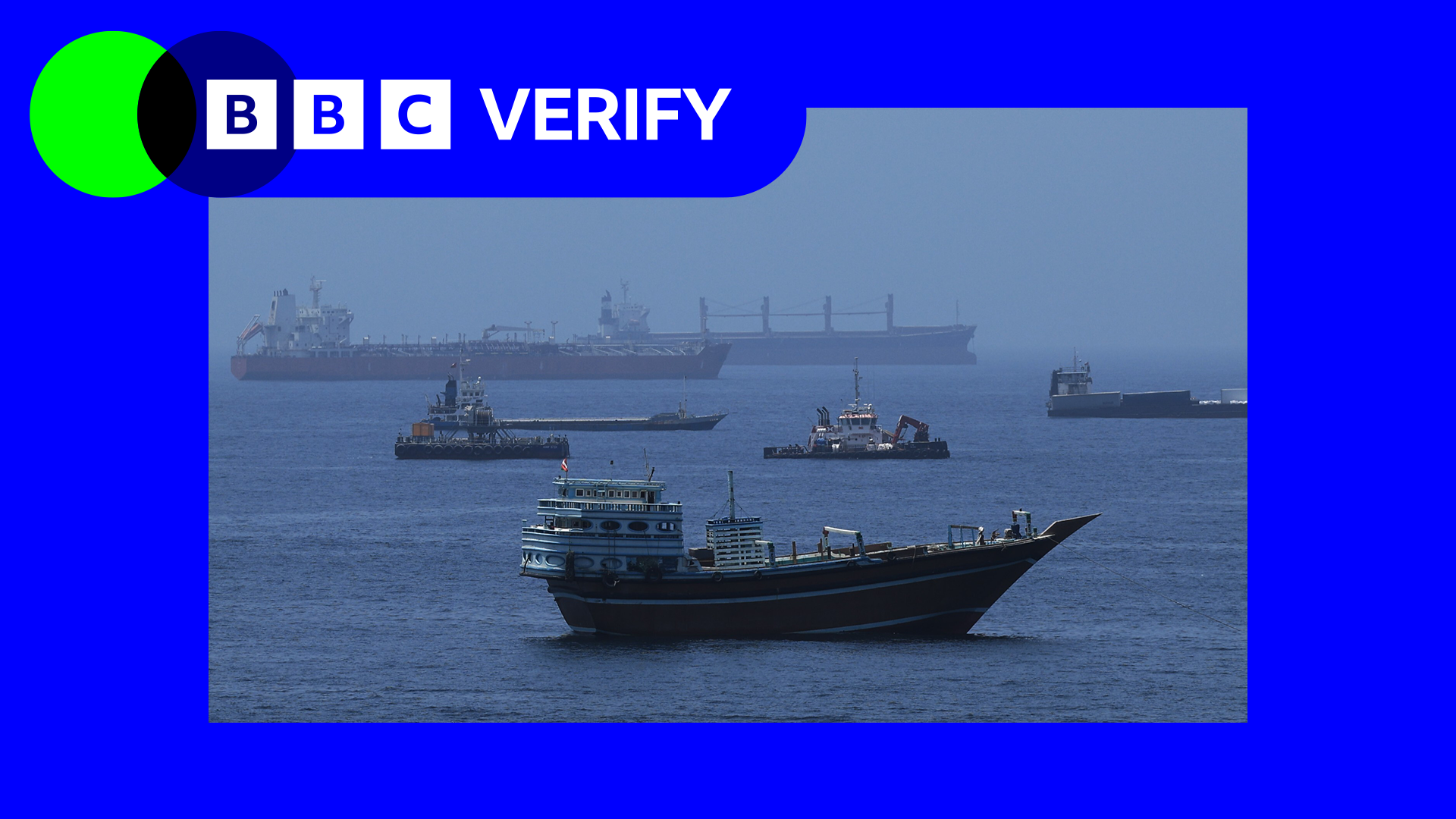
Tracking data indicated some vessels were able to navigate through the strait while it was briefly open, but many were forced to change routes after the IRGC denied them access. About 20% of the world's oil and liquefied natural gas (LNG) is usually transported through the strait, with the number of ships dramatically decreasing during the recent conflict, which began when the US and Israel attacked Iran on 28 February.
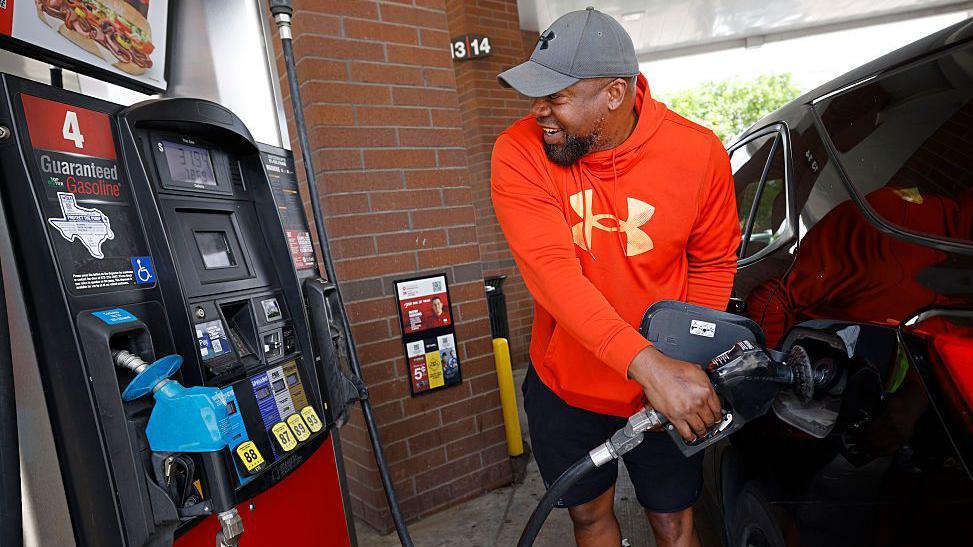
The Strait of Hormuz remains a crucial chokepoint that connects the Gulf to the Arabian Sea, serving as the only maritime passage for several oil-producing states. In light of the outbreaks of violence, the price of oil has surged significantly above $100 per barrel. Iran has previously threatened to attack tankers and has warned of the placement of mines in the region.
The Islamic Revolution Guard Corps (IRGC) blamed a continuing US blockade for its decision, which comes a day after Iran's foreign minister announced the key global shipping channel had been temporarily reopened. US President Donald Trump said Iran cannot 'blackmail' the US with threats regarding the waterway, which Tehran has effectively blocked for nearly two months - causing global energy prices to soar.
The IRGC Navy warned in a statement on Saturday that 'no vessel is to move from its anchorage in the Persian Gulf or the Sea of Oman'. It said a number of vessels had passed through the strait under its management since Friday night, but that it would shut again until the US stopped its blockade of Iranian ports.
'Approaching the Strait of Hormuz will be considered co-operation with the enemy, and the offending vessel will be targeted,' the IRGC added. Trump stated that a naval blockade of Iranian ports would continue until a peace deal was agreed between the two countries. A two-week ceasefire currently in effect is due to expire on 22 April.
The US reported it had turned away 23 ships since it began enforcing the blockade on 13 April. Iran's Supreme National Security Council (SNSC) claimed this was a violation of the ceasefire agreement and that the reopening of the strait would stop while it was still in place. On negotiations, the SNSC said new proposals had been made by the US, which Tehran is reviewing.
On Saturday, it was reported that two Iranian gunboats opened fire on a tanker in the strait, according to the UK Maritime Trade Operations (UKMTO). Additionally, a container ship was hit by an unknown projectile off the north-eastern coast of Oman, damaging some containers. India expressed its "deep concern" over incidents involving two Indian-flagged ships.
Tracking data indicated some vessels were able to navigate through the strait while it was briefly open, but many were forced to change routes after the IRGC denied them access. About 20% of the world's oil and liquefied natural gas (LNG) is usually transported through the strait, with the number of ships dramatically decreasing during the recent conflict, which began when the US and Israel attacked Iran on 28 February.
The Strait of Hormuz remains a crucial chokepoint that connects the Gulf to the Arabian Sea, serving as the only maritime passage for several oil-producing states. In light of the outbreaks of violence, the price of oil has surged significantly above $100 per barrel. Iran has previously threatened to attack tankers and has warned of the placement of mines in the region.