In brief
The IOC has declared that from 2028, only biological females will be eligible to compete in the women's category at the Olympic Games, based on a once-in-a-lifetime genetic test to identify male characteristics. This policy marks a major shift from previous regulations and aims to enhance fairness and safety in women's sports, amid ongoing debates surrounding transgender and DSD athletes. The decision has received both support for its scientific backing and concern over its implications for inclusivity and rights.
The women's category of Olympic sports will be limited to biological females from 2028.
The International Olympic Committee (IOC) says eligibility will be determined by a once-in-a-lifetime sex test, which would prevent transgender women and those with differences in sexual development (DSD) who have gone through male puberty from competing.
It will take effect from the Los Angeles Olympics.
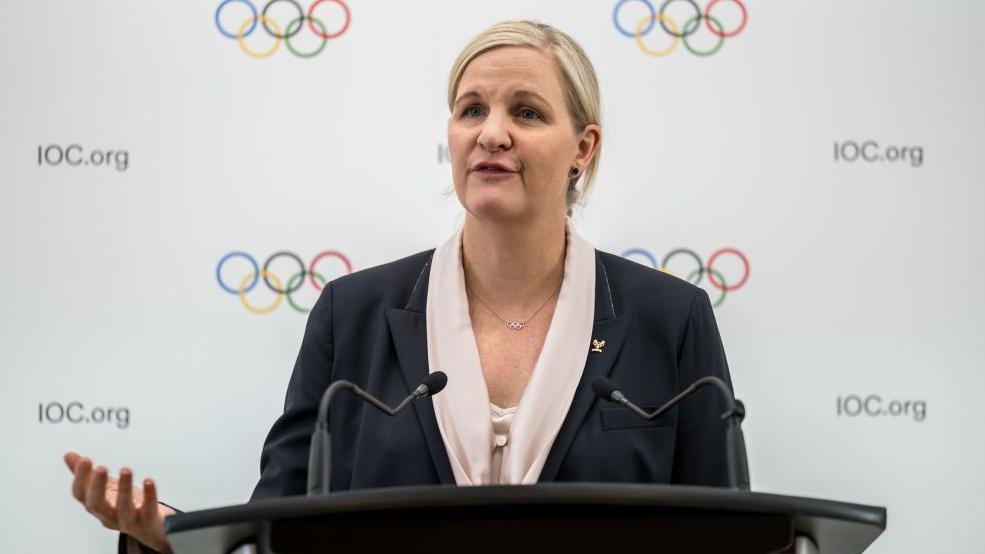
IOC president Kirsty Coventry said the policy was led by medical experts.
At the Olympic Games even the smallest margins can be the difference between victory and defeat, she said.
It is absolutely clear that it would not be fair for biological males to compete in the female category. In addition, in some sports it would simply not be safe.
The IOC said eligibility for the female category would be determined by a screening to detect the SRY gene - the sex-determining region Y gene - which is part of the Y chromosome and causes male characteristics to develop.
The IOC considers that SRY gene screening via saliva, cheek swab or blood sample is unintrusive compared to other possible methods, it said.
Athletes who screen negative for the SRY gene permanently satisfy this policy's eligibility criteria for competition in the female category.
Unless there is reason to believe that a negative reading is in error, this will be a once-in-a-lifetime test.
The IOC said athletes who fail the test would continue to be included in all other classifications for which they qualify. For example, they are eligible for any male category, including in a designated male slot within any mixed category, and any open category, or in sports and events that do not classify athletes by sex.
Until this announcement, the IOC left sex eligibility regulations to the governing bodies of individual sports, rather than applying a universal approach.
While athletics, swimming, cycling and rowing have brought in bans, many others allowed transgender women to compete in female competition if they lowered their testosterone levels.
The ban will also cover almost all athletes with a DSD.
This is a rare condition in which a person's hormones, genes and/or reproductive organs may be a mix of male and female characteristics.
Two-time Olympic women's 800m champion Caster Semenya's DSD means she has male XY chromosomes.
Previously, DSD athletes who had not been through male puberty could compete in women's sport, provided they kept their testosterone within certain levels.
There is an one exemption in the policy for DSD athletes with a rare condition - complete androgen insensitivity syndrome (CAIS), which means they have not gone through male puberty.
This is a hugely significant decision by the IOC following years of controversy over the participation of transgender and DSD athletes in female competition, and intense debate over how sports should balance fairness and safety with inclusion.
Supporters say this approach - based on a genetic test - has recently been successfully employed in athletics and boxing, and is a reliable, confidential and proportionate approach that has the backing of sports scientists, along with the vast majority of athletes.
However, opponents remain concerned, arguing that the approach is invasive and could lead to unintended issues regarding athletes' rights and privacy. As the IOC takes this bold step, it will be crucial to monitor its implications on the broader sports landscape.