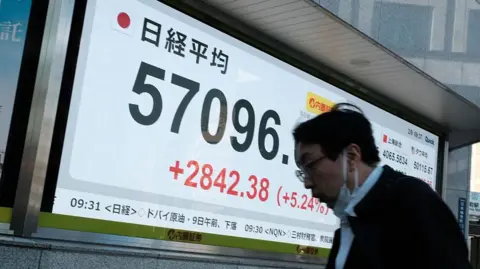
Japanese stocks surged to a record high as markets opened on Monday morning, following Prime Minister Sanae Takaichi's Liberal Democratic Party (LDP) securing a historic election victory. The LDP captured 316 out of 465 seats in the election, marking the first time since 1947 that a single party has achieved a two-thirds majority in the lower house.
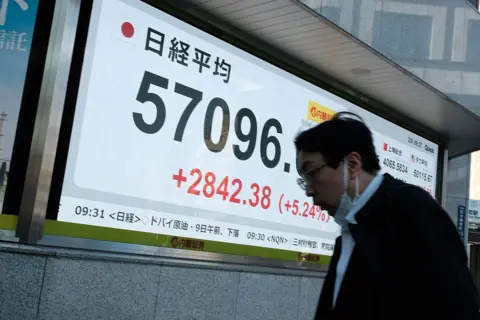
The LDP, in coalition with the Japan Innovation Party, now holds a total of 352 seats, positioning Takaichi to advance her pro-business agenda without lengthy negotiations with opposition parties. Early trading saw the Nikkei index spike over 5%, briefly crossing the 57,000 mark for the first time.
Takaichi emphasized her commitment to pursuing a responsible yet aggressive fiscal policy, steering clear of a Cabinet reshuffle just months into her leadership. Her success contrasts with her predecessors, under whom the LDP lost its majority amid scandals and rising living costs, setting a different tone from previous administrations.
As Takaichi faces the challenge of revitalizing Japan's economy, she has pledged tax cuts and increased spending. The response to her policies could provide much-needed relief amidst April's upcoming cost-of-living adjustments and inflationary pressures. However, questions remain regarding funding sources for her plans, given Japan's substantial national debt.
Investor sentiment is optimistic, noting that the election outcome aligns with a potential economic boost fueled by upcoming stimulus measures and deregulation. Commentators suggest these developments could feed into an existing bull market trend, highlighting the urgency of addressing the rising cost of living and an ageing workforce in Japan.
Even internationally, Takaichi's election has garnered recognition, with US President Donald Trump publicly expressing his support. As she prepares for a diplomatic visit to Washington, her efforts to connect with both traditional conservative voters and the younger demographic could signal a transformative period for Japanese politics.
The LDP, in coalition with the Japan Innovation Party, now holds a total of 352 seats, positioning Takaichi to advance her pro-business agenda without lengthy negotiations with opposition parties. Early trading saw the Nikkei index spike over 5%, briefly crossing the 57,000 mark for the first time.
Takaichi emphasized her commitment to pursuing a responsible yet aggressive fiscal policy, steering clear of a Cabinet reshuffle just months into her leadership. Her success contrasts with her predecessors, under whom the LDP lost its majority amid scandals and rising living costs, setting a different tone from previous administrations.
As Takaichi faces the challenge of revitalizing Japan's economy, she has pledged tax cuts and increased spending. The response to her policies could provide much-needed relief amidst April's upcoming cost-of-living adjustments and inflationary pressures. However, questions remain regarding funding sources for her plans, given Japan's substantial national debt.
Investor sentiment is optimistic, noting that the election outcome aligns with a potential economic boost fueled by upcoming stimulus measures and deregulation. Commentators suggest these developments could feed into an existing bull market trend, highlighting the urgency of addressing the rising cost of living and an ageing workforce in Japan.
Even internationally, Takaichi's election has garnered recognition, with US President Donald Trump publicly expressing his support. As she prepares for a diplomatic visit to Washington, her efforts to connect with both traditional conservative voters and the younger demographic could signal a transformative period for Japanese politics.