Heatwaves and Politics: France’s Air‑Cooling Quandary
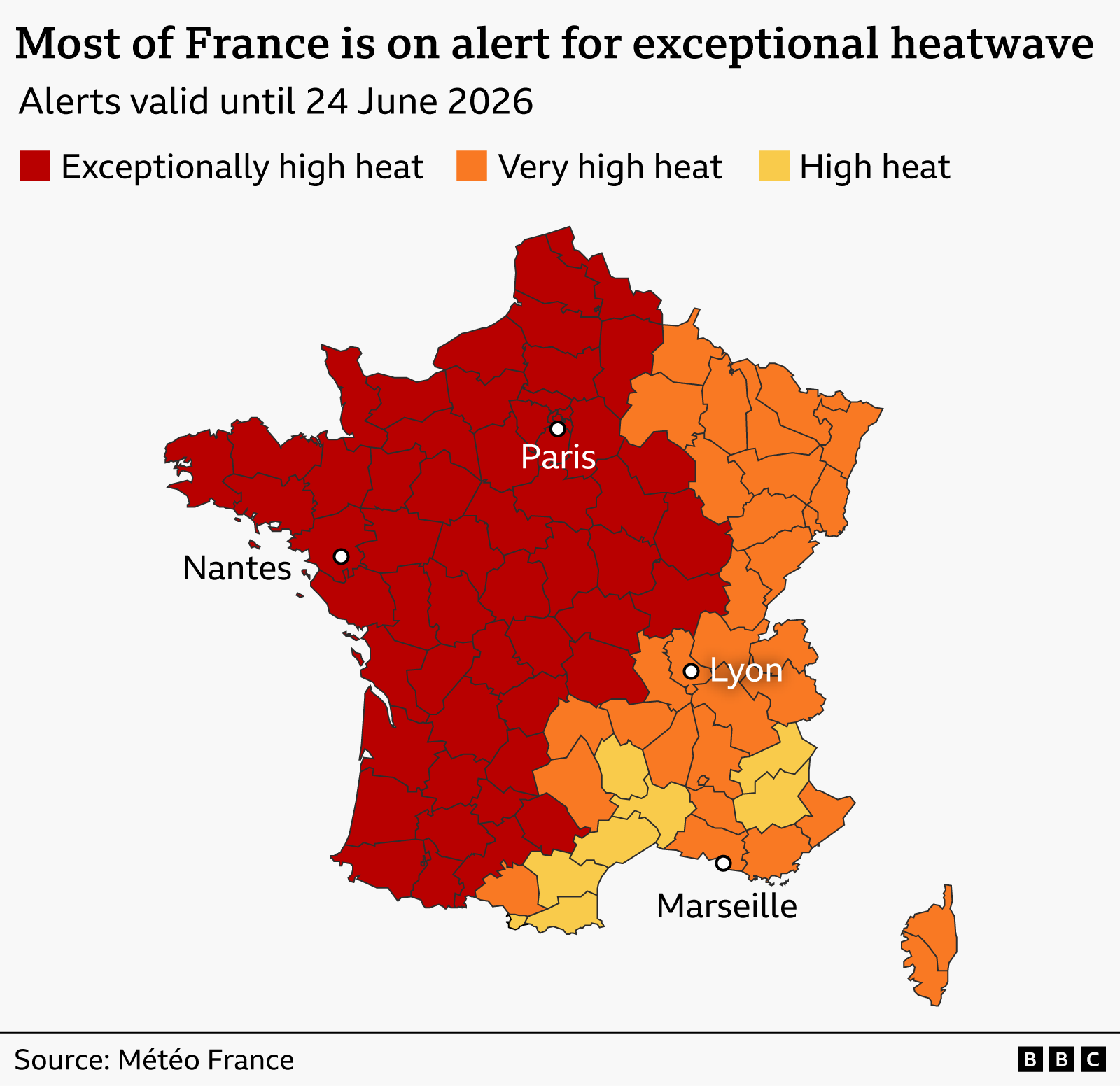
On 24 June 2026, a scorching afternoon set the record for France’s hottest day ever. With temperatures inching toward 40 °C, the country’s supply of electricity, its management of thermal comfort, and the role of air‑conditioning have come under unprecedented scrutiny.
Only a quarter of French households currently own air‑conditioning units, a figure that contrasts sharply with the roughly half in Spain, Italy, and the United States. Hospitals and schools have been particularly hard hit, with many facilities forced to shut temporarily or resort to improvised cooling.
In the political arena, Marine Le Pen of the National Rally (RN) is campaigning for a pan‑French “plan clim” that would see all schools, hospitals and public transport equipped with cooled rooms and subsidised by the state. Interim right‑wing analysts argue that such a package could cost as much as €20 billion but justify it as a necessary investment in public health.
Meanwhile, traditionally anti‑climators from the green side—most notably Marie Tondelier, leader of the Ecologists—have admitted that air‑conditioning has become an unavoidable component of climate mitigation. Her remarks underline a growing acceptance that passive cooling strategies alone cannot keep indoor temperatures within safe limits.
Still, critics maintain that increased use of AC will draw more electricity from the grid, amplifying greenhouse‑gas emissions, especially where hydraulic power does not offset the reliance on fossil fuels. In France, the situation is mitigated somewhat by the country’s nuclear portfolio, but the old fear of refrigerant leaks and urban heat islands lingers.
The public discourse is evolving. The emergence of “heat‑wave health” concerns—in particular time‑sensitive measures to protect vulnerable populations from heat stress—has forced policymakers to pause debate and act. Both the left and the right now see a consensus: that air‑cooling will become a mainstream necessity, but how to finance and integrate it remains the key question.
As the heatwave continues, France’s political leaders are drawn into the debate over where to draw the line between energy consumption, environmental protection and public safety. The next steps will decide how France balances these competing priorities and sets an example for other nations grappling with similar challenges.