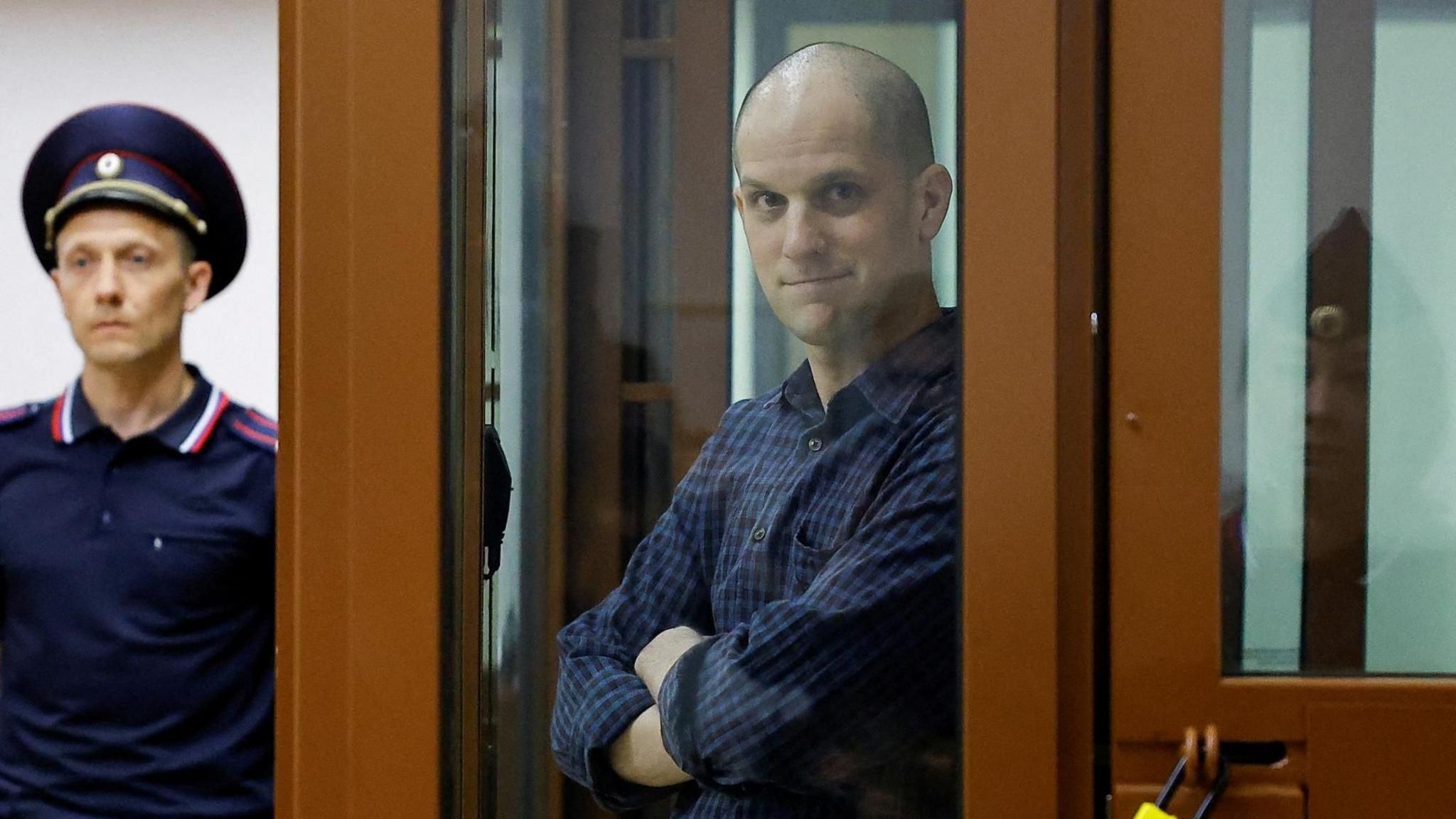
On a chilly evening in Yekaterinburg in 2023, Evan Gershkovich, the Washington‑based correspondent for the Wall Street Journal, was standing in a half‑empty dining hall when a group of masked men forced their way in. One of them declared, “I think we booked that table,” a chilling cue that froze everything in place and then marched him inside the main building of the Russian interior ministry.
There, Gershkovich was handed a written indictment and told he was arrested by the Federal Security Service – the FSB – on a charge of espionage. He later told Radio 4 that the lack of interrogation or torture, routine with Russian state security cases, signaled he was instead a valuable “hostage” or pawn in a larger political game.
After being handed a 16‑year sentence, Gershkovich spent 16 months in the infamous Lefortovo jail in Moscow, a place known for holding political prisoners and dissidents. While the authorities gave him basic amenities, he described the experience as a “really isolating” one that left him psychologically scarred – but he remained calm, smiling for cameras during court appearances to send a clear message of defiance.
In August 2024, Gershkovich was released as part of a prisoner swap that also brought back the Russian assassin Vadim Krasikov, who had been serving a life sentence in Germany. The exchange drew global attention, with the White House insisting that the journalist’s return was a top priority. Political leaders on both sides watched the negotiations closely, knowing the swap had serious implications for U.S.–Russia relations.
Gershkovich’s account underlines a stark reality: not all Russian prisons torture their prisoners; some merely treat them as commercial goods for diplomatic deals. He has compared his treatment to that of Ukrainian journalist Viktoriia Roshchyna, who died in Russian custody in 2024, and has highlighted the desperate need to safeguard journalists in conflict zones.
Now living in Berlin, Gibbs has begun writing a book about his ordeal and has consulted with PTSD specialists to process his trauma. Though he admits he would someday hope to return to Russia, he remains cautious about the post‑Putin era and whether a new government might treat expatriates and former journalists differently.
Gershkovich’s story serves as a stark reminder of how swiftly foreign correspondents can become pawns in international power plays, and of the profound personal costs that accompany such geopolitical gambits.