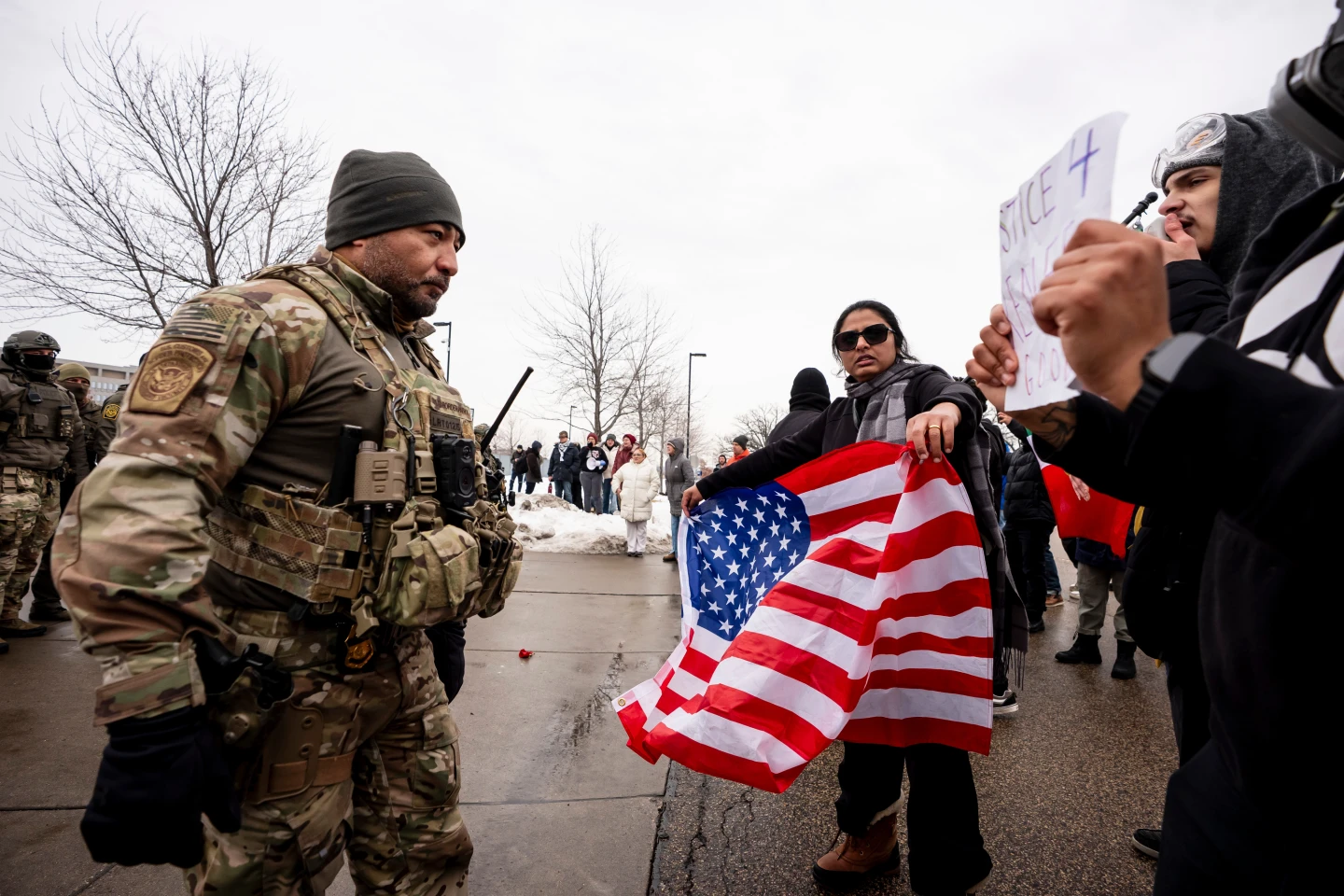
The controversy intensified a day after a federal immigration officer fatally shot a woman in Minneapolis, leading federal authorities to block state investigators from accessing evidence and claiming Minnesota has no jurisdiction to probe the incident.
The shooting of 37-year-old Renee Good raised significant questions about the rights of states to investigate federal law enforcement actions. Legal experts noted that while there is a narrow precedent for prosecuting federal officers under state law, the complexities of constitutional protections could hinder attempts to hold them accountable.
The FBI has informed local law enforcement in Minnesota that they will not be permitted to take part in the investigation, escalating tensions between federal and state authorities. Local prosecutors are evaluating their legal options in the face of federal overreach.
Minnesota Governor Tim Walz has expressed concern over federal leaders' early remarks justifying the agent’s conduct, fearing they could undermine the fairness of the investigation. He is advocating for the involvement of state authorities, whose absence could erode community trust.
Experts suggest that federal officials could assert immunity under the Supremacy Clause, complicating the potential for state charges. According to Robert Yablon, a professor of law, proving excessive force under both state and federal laws presents a significant hurdle for local prosecutors.
The Governor has also warned federal authorities about rescinding cooperative agreements with state agencies, stating that if the FBI retains exclusive investigative control, it may prevent the community from ever knowing the details surrounding the incident.
Meanwhile, local officials in Hennepin County have expressed their intention to continue their investigative efforts, but are concerned about the lack of cooperation with federal agents.
Amid the chaos, medical aid provided to Good after the shooting is also under scrutiny, following reports involving difficulties faced by emergency personnel in reaching the scene.
This incident underscores a larger debate surrounding immigration enforcement tactics and accountability for federal officers, particularly in a divisive political climate.