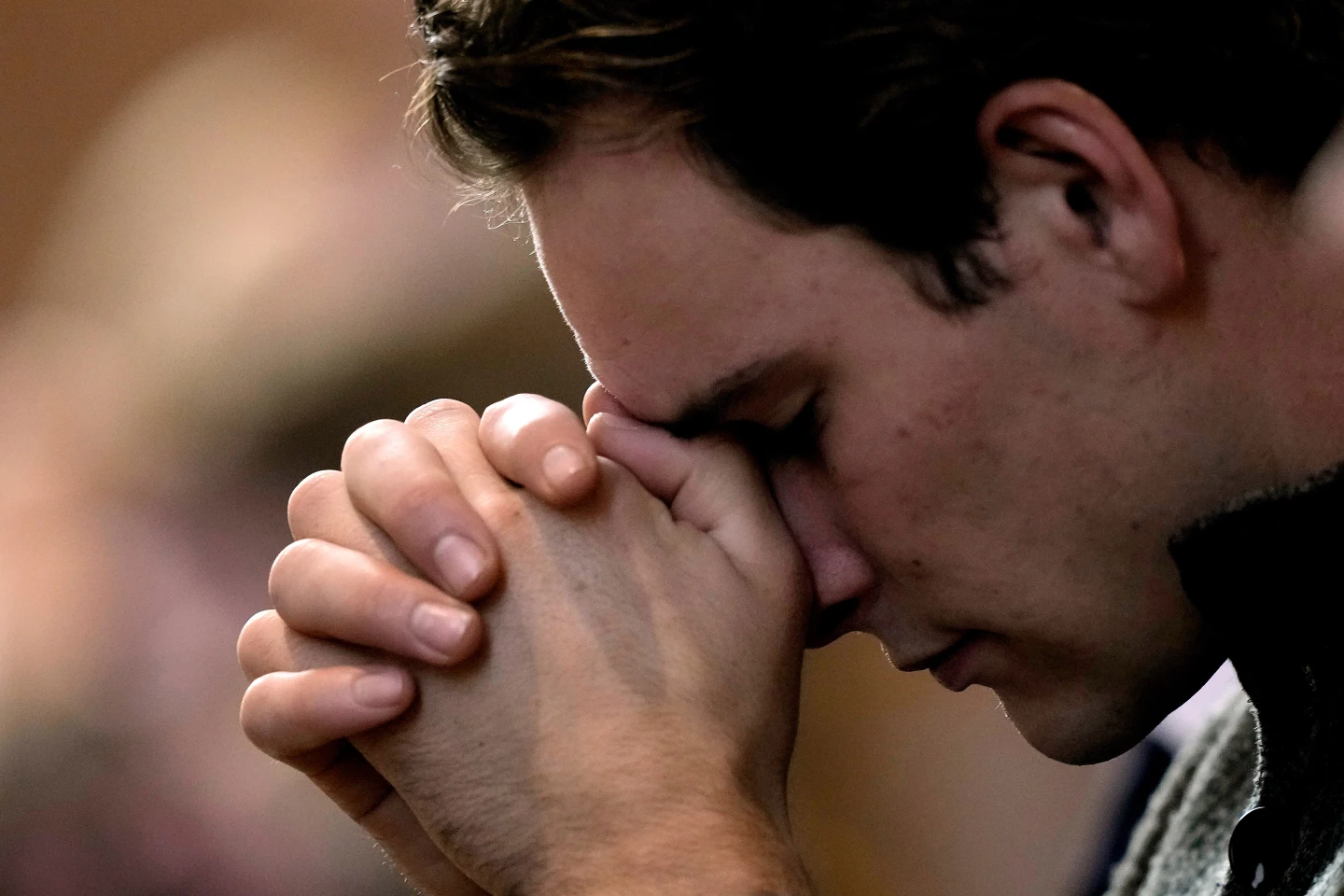
A new Gallup poll released Thursday shows more young men in the U.S. say religion is “very important” in their lives compared to young women — the first time young men have surpassed young women on this measure of religiosity going back 25 years.
Gallup’s latest data shows that 42% of men in the U.S. ages 18-29 said religion is very important to them, a notable increase from 28% in 2022-2023. Over the same time, young women’s attachment to religion has stayed low, at about 30%.
This marks the first time young men have overtaken women by a big margin on this measure, which goes back to 2000. Gallup reports aggregate findings every two years to ensure the estimates are stable.
In prior decades, young women were much more attached to religion than young men, but that has shifted in recent years. Notably, young men's religiosity growth is contrasted against minimal changes reported among older demographics.
The reversal of the gender gap in spirituality is significant, but it's limited to adults under 30; among those aged 30 and older, women continue to display greater levels of religiosity.
Republican Young Men Embrace Faith
The surge in religious importance appears prominently among young Republicans. Attendance rates at religious gatherings have climbed for both genders within this demographic, in stark contrast to Democrats, whose engagement has waned.
Political scientist Ryan Burge from Washington University attributes this shift to the youth's search for acceptance as they navigate social landscapes where certain institutions seem less inclusive towards them.
Moral Divergences Among Young Adults
Surveys indicate that moral perspectives also diverge, with young men showing more restrictive views on issues like divorce and abortion compared to women of the same age. Burge emphasizes how women today are increasingly viewing religion as steeped in patriarchy, impacting their overall engagement.
A Space for Community in Challenging Times
Traversal into faith could resonate with those desiring community ties amidst rising mental health concerns and social isolation. Rabbi Nicole Guzik notes an uptick in her congregation’s membership since the pandemic, illustrating a growing need for religious connection as societal woes intensify.
Gallup's findings suggest that while a general decline in religiosity has been observed, young men’s resurgence in religious commitment may signal a change in the narrative.