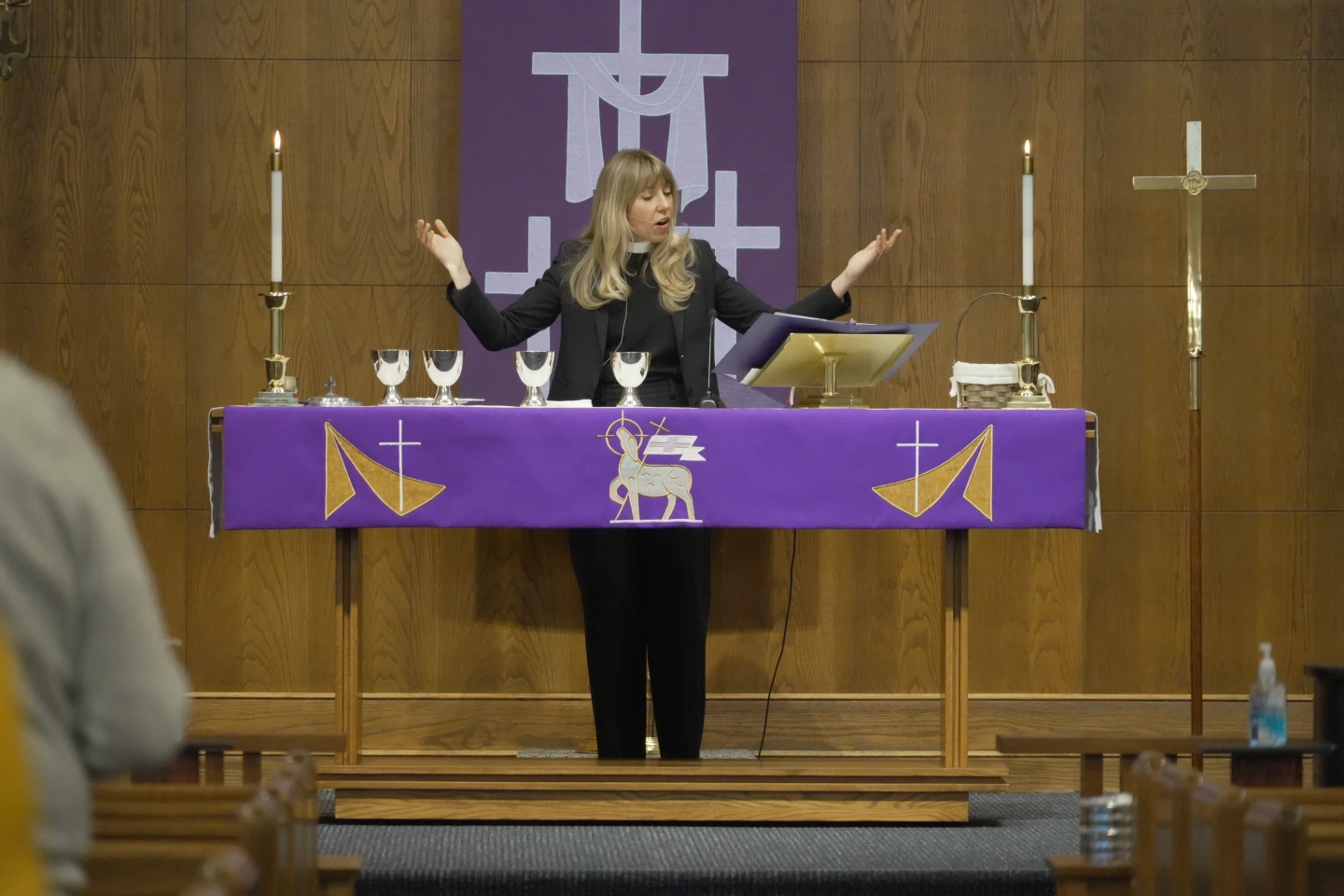
DES MOINES, Iowa — The Rev. Sarah Trone Garriott, a Lutheran pastor and state senator, is among several clergy members in Iowa running as Democrats for Congress. Last Sunday, she emphasized the importance of welcoming strangers in her sermon and addressed the harmful effects of Medicaid cuts on healthcare access.
Trone Garriott represents a significant shift as more religious leaders align with Democratic values, particularly in response to a growing disconnection between Christianity and conservative politics.
In this midterm season, while candidates like Texas Rep. James Talarico gain media attention, they symbolize a broader trend among progressive candidates with theological backgrounds.
Melissa Deckman, CEO of the Public Religion Research Institute, notes the evolution of how faith and policy interact within the Democratic Party. She states, As more voices emerge, it is crucial that we redefine how faith informs our political discussions without imposing views on others.
The challenge for Democrats lies in how to meaningfully engage various religious groups while reconciling a diverse voter base that includes both religious and secular individuals.
Conversations on Faith
Trone Garriott's experiences emphasize that many Democrats are rediscovering the importance of discussing faith openly. She shares, Acknowledging religious differences and embracing them is key to bridging divides. Ignoring them has left a gap that the religious right has filled.
Talarico advocates for a thoughtful approach to discussing religion politically, asserting, If we have to force faith symbols into public spaces, it reflects a failure of the faith itself to resonate with community values. His outspoken nature has drawn both support and criticism, especially amid debates on abortion and LGBTQ+ rights.
Democratic Outreach to Religious Voters
Past electoral outcomes reveal critical insights: Trump garnered overwhelming support from evangelical Christians, while Democrats struggled to resonate with certain religious demographics. Kentucky Gov. Andy Beshear suggests that the party must regain authenticity by clearly communicating their reasons for action.
As clergy like Twedt-Ball note, there's a growing recognition of the need for effective communication regarding faith in politics. Moreover, engaging with voters genuinely about religious motivations could create a more inclusive political landscape.
Pastors Making Political Strides
Black clergy have historically engaged in politics, as demonstrated by figures such as Senator Raphael Warnock. However, fewer white clergy have taken similar steps. Twedt-Ball, along with others like Lindsay James, indicates that recent political climates have inspired them to seek office.
The rising trend of clergy in political offices, including mayoral candidates addressing progressive platforms, marks a pivotal moment in how religion intersects with governance.
Lastly, the call for imaginative thinking in politics resonates deeply with figures like Zohran Mamdani, highlighting faith's potential in inspiring hope and fostering connections in a polarized environment. Together, these pastoral candidates signify a transformative shift in American political and spiritual landscapes.