The World Health Organization (WHO) has stated that it could take up to nine months for a vaccine targeting the Bundibugyo species of Ebola to be developed and ready for distribution. According to WHO advisor Dr. Vasee Moorthy, there are two potential candidate vaccines in development, neither of which has yet entered clinical trials. WHO Chief Dr. Tedros Adhanom Ghebreyesus reported that around 600 suspected cases and 139 suspected deaths have been recorded, with numbers expected to increase as the virus is detected.
To date, 51 confirmed cases of Ebola have been reported in the Democratic Republic of Congo (DRC), particularly in the eastern Ituri province, which is considered the outbreak's epicenter. Two confirmed cases have also emerged in Uganda, both linked to individuals who traveled from the DRC. Although a public health emergency has been declared by the WHO, officials clarified that the outbreak does not meet the criteria for a pandemic. The risk level is assessed as high nationally and regionally, but low on a global scale.
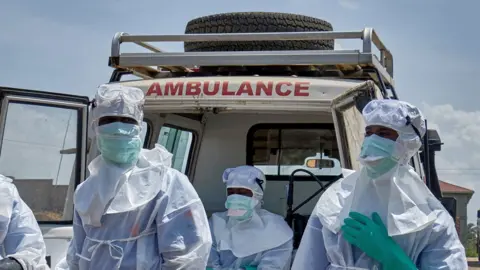
Healthcare workers in eastern DRC are facing challenges, as many facilities are overwhelmed and lack adequate protective gear. Trish Newport, an emergency program manager for Medecins Sans Frontieres, noted the dire situation, with facilities filled with suspected cases and overwhelming demand.
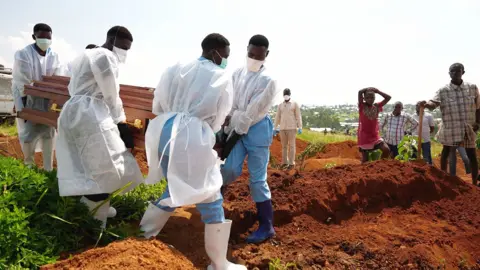
In response to the outbreak, the UK government has committed up to £20 million to support frontline healthcare efforts and improve disease surveillance. As investigations into the source and transmission of the virus continue, health officials are prioritizing measures to stop its spread, particularly as healthcare professionals have also succumbed to the virus.
Despite its less deadly reputation relative to other Ebola species, the Bundibugyo strain poses significant challenges due to its rarity and the limited tools available for control. The DRC is experiencing its 17th outbreak of Ebola, and while experimental vaccines are in development, no approved vaccine currently exists for this particular strain. Furthermore, current initiatives to curb the epidemic are complicated by the long history of conflict in the region.
To date, 51 confirmed cases of Ebola have been reported in the Democratic Republic of Congo (DRC), particularly in the eastern Ituri province, which is considered the outbreak's epicenter. Two confirmed cases have also emerged in Uganda, both linked to individuals who traveled from the DRC. Although a public health emergency has been declared by the WHO, officials clarified that the outbreak does not meet the criteria for a pandemic. The risk level is assessed as high nationally and regionally, but low on a global scale.
Healthcare workers in eastern DRC are facing challenges, as many facilities are overwhelmed and lack adequate protective gear. Trish Newport, an emergency program manager for Medecins Sans Frontieres, noted the dire situation, with facilities filled with suspected cases and overwhelming demand.
In response to the outbreak, the UK government has committed up to £20 million to support frontline healthcare efforts and improve disease surveillance. As investigations into the source and transmission of the virus continue, health officials are prioritizing measures to stop its spread, particularly as healthcare professionals have also succumbed to the virus.
Despite its less deadly reputation relative to other Ebola species, the Bundibugyo strain poses significant challenges due to its rarity and the limited tools available for control. The DRC is experiencing its 17th outbreak of Ebola, and while experimental vaccines are in development, no approved vaccine currently exists for this particular strain. Furthermore, current initiatives to curb the epidemic are complicated by the long history of conflict in the region.