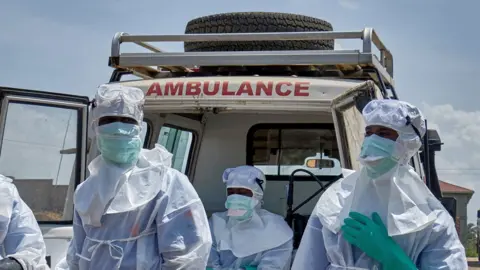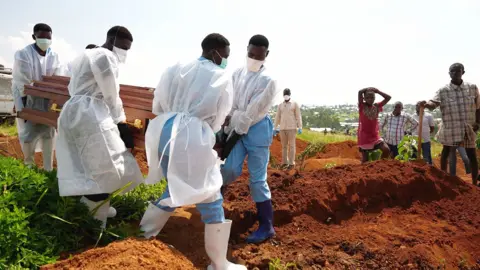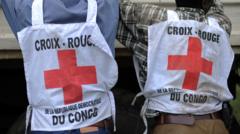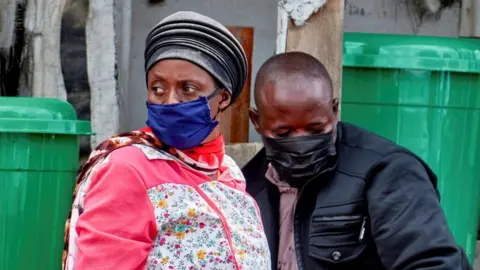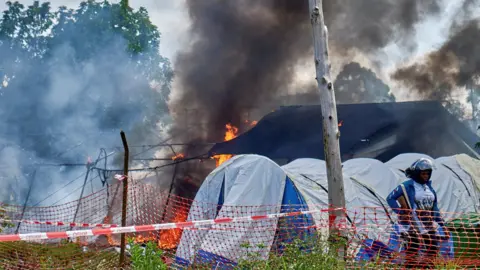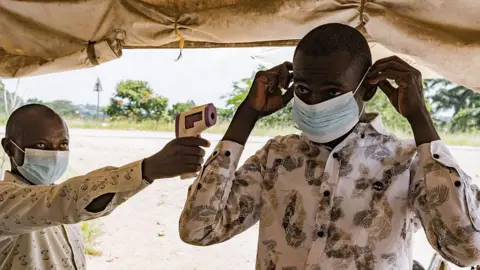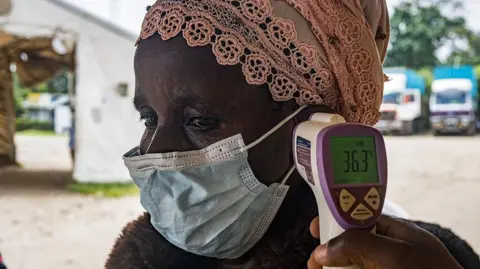
The demilitarised border between the Democratic Republic of Congo (DR Congo) and Uganda has once again been struck by a new wave of fear: a resurgence of Ebola virus disease. The emergency, first confirmed on 15 May, has been identified as the Bundibugyo species, only the third recognised worldwide and the first appearance in over a decade.
Military governor Johnny Luboya Nkashama – who has overseen the Ituri province since the civil‑administrative system was replaced by a military regime in 2021 – likened the outbreak to a war that the region does not have the resources to fight.
> “People in affected areas are not receiving enough food,” he told French broadcaster RFI. “Other diseases and overcrowding are also issues.” He called for a “swift response”, demanding qualified personnel, secure treatment centres and the mobilisation of financial resources before the situation turns into a catastrophe.
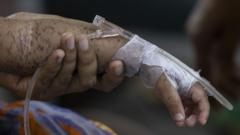
\� WHO says the epidemic is spreading faster than expected and has declared a public‑health emergency of international concern. According to officials, there are more than 900 suspected cases and 223 suspected deaths as of this week.
Africa’s disease‑control authority, the Africa CDC, met last Saturday with health ministers from DR Congo, Uganda and South Sudan to finalise cross‑border coordination. The meeting agreed on a $319 million budget to combat the spread; ten per cent of that has already been secured by the affected countries.
South African president Cyril Ramaphosa pledged an initial $5 million to the plan, while African business leaders are slated to raise additional funds in the coming days.
The outbreak, the 17th to emerge in DR Congo since the virus was first identified in 1976, has also reached the neighbouring provinces of North and South Kivu and put Uganda’s eastern border at risk, with seven confirmed cases among travellers.
Key challenges remain: Bundibugyo can currently not be treated with existing vaccines or medications, and the WHO estimates that a suitable vaccine could take up to nine months to develop. With the region already under military governance and the tribal insurgent group the Allied Democratic Forces active in the area, the fight against Ebola is as much a test of logistics as of virology.
The international community’s ability to respond rapidly and with adequate supplies will be the decisive factor that determines whether the people of Ituri and the wider region can avoid the looming “catastrophe” predicted by its governor.}
Military governor Johnny Luboya Nkashama – who has overseen the Ituri province since the civil‑administrative system was replaced by a military regime in 2021 – likened the outbreak to a war that the region does not have the resources to fight.
> “People in affected areas are not receiving enough food,” he told French broadcaster RFI. “Other diseases and overcrowding are also issues.” He called for a “swift response”, demanding qualified personnel, secure treatment centres and the mobilisation of financial resources before the situation turns into a catastrophe.
\� WHO says the epidemic is spreading faster than expected and has declared a public‑health emergency of international concern. According to officials, there are more than 900 suspected cases and 223 suspected deaths as of this week.
Africa’s disease‑control authority, the Africa CDC, met last Saturday with health ministers from DR Congo, Uganda and South Sudan to finalise cross‑border coordination. The meeting agreed on a $319 million budget to combat the spread; ten per cent of that has already been secured by the affected countries.
South African president Cyril Ramaphosa pledged an initial $5 million to the plan, while African business leaders are slated to raise additional funds in the coming days.
The outbreak, the 17th to emerge in DR Congo since the virus was first identified in 1976, has also reached the neighbouring provinces of North and South Kivu and put Uganda’s eastern border at risk, with seven confirmed cases among travellers.
Key challenges remain: Bundibugyo can currently not be treated with existing vaccines or medications, and the WHO estimates that a suitable vaccine could take up to nine months to develop. With the region already under military governance and the tribal insurgent group the Allied Democratic Forces active in the area, the fight against Ebola is as much a test of logistics as of virology.
The international community’s ability to respond rapidly and with adequate supplies will be the decisive factor that determines whether the people of Ituri and the wider region can avoid the looming “catastrophe” predicted by its governor.}