In a shocking incident in Zhuhai, southern China, a car attack resulted in the deaths of 35 individuals, raising alarms over a troubling trend of public violence in the country. This harrowing event occurred at a local sports center and has intensified public discourse on the phenomenon known as "taking revenge on society," where people vent personal frustrations through violent actions against strangers.
Authorities revealed that the perpetrator, a 62-year-old driver, was motivated by dissatisfaction with a divorce settlement, leading to this tragic outburst. This incident is now recorded as one of the most severe acts of violence in recent Chinese history, following other attacks in recent months, including multiple stabbings and assaults at schools and public venues.
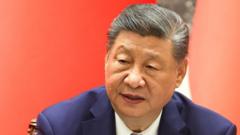
The Chinese government is under immense pressure to respond, with President Xi Jinping promising stringent consequences for the attacker. As the driver remains in critical condition due to self-inflicted injuries post-attack, discussions on social media reflect a profound shock and confusion. Many users have utilized platforms like Weibo and WeChat to voice concerns regarding the societal issues that lead to such violent acts.
A viral post on Weibo articulated a sentiment many share, questioning how personal tribulations can justify harming innocents. The overarching sentiment indicates a deep yearning for a reflection on the underlying causes of rising violence, such as job insecurity and societal pressures faced by citizens.
This attack is not isolated; rather, it is part of a disturbing pattern of violence reported in China this year, including a mass stabbing in Shandong and multiple transient knife attacks in urban settings. As public outrage mounts, authorities have simultaneously pursued censorship, restricting the dissemination of information regarding the attack and limiting discussions deemed politically sensitive.
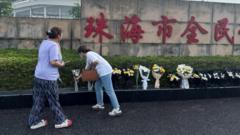
Residents in Zhuhai have gathered to grieve, lighting candles in memory of the victims, while many online lament the perceived prioritization of state events over human life. Reports reveal frustrations with the media’s coverage, as narratives surrounding the tragedy were largely overshadowed by a concurrent military airshow, leading to accusations that official channels failed to adequately represent the gravity of the situation.
A poignant personal account emerged from a user whose mother was critically injured in the attack, amplifying the sentiment of loss and frustration within communities grappling with the aftermath. Despite the state's tight grip on information, emotional stories continue to proliferate, fostering a national discourse on the urgency of addressing the social factors contributing to such tragic events.
As the country navigates these tumultuous waters, the collective outcry for a thorough examination of violence in society, alongside conversations about mental health and community support, can no longer be ignored.
Authorities revealed that the perpetrator, a 62-year-old driver, was motivated by dissatisfaction with a divorce settlement, leading to this tragic outburst. This incident is now recorded as one of the most severe acts of violence in recent Chinese history, following other attacks in recent months, including multiple stabbings and assaults at schools and public venues.
The Chinese government is under immense pressure to respond, with President Xi Jinping promising stringent consequences for the attacker. As the driver remains in critical condition due to self-inflicted injuries post-attack, discussions on social media reflect a profound shock and confusion. Many users have utilized platforms like Weibo and WeChat to voice concerns regarding the societal issues that lead to such violent acts.
A viral post on Weibo articulated a sentiment many share, questioning how personal tribulations can justify harming innocents. The overarching sentiment indicates a deep yearning for a reflection on the underlying causes of rising violence, such as job insecurity and societal pressures faced by citizens.
This attack is not isolated; rather, it is part of a disturbing pattern of violence reported in China this year, including a mass stabbing in Shandong and multiple transient knife attacks in urban settings. As public outrage mounts, authorities have simultaneously pursued censorship, restricting the dissemination of information regarding the attack and limiting discussions deemed politically sensitive.
Residents in Zhuhai have gathered to grieve, lighting candles in memory of the victims, while many online lament the perceived prioritization of state events over human life. Reports reveal frustrations with the media’s coverage, as narratives surrounding the tragedy were largely overshadowed by a concurrent military airshow, leading to accusations that official channels failed to adequately represent the gravity of the situation.
A poignant personal account emerged from a user whose mother was critically injured in the attack, amplifying the sentiment of loss and frustration within communities grappling with the aftermath. Despite the state's tight grip on information, emotional stories continue to proliferate, fostering a national discourse on the urgency of addressing the social factors contributing to such tragic events.
As the country navigates these tumultuous waters, the collective outcry for a thorough examination of violence in society, alongside conversations about mental health and community support, can no longer be ignored.