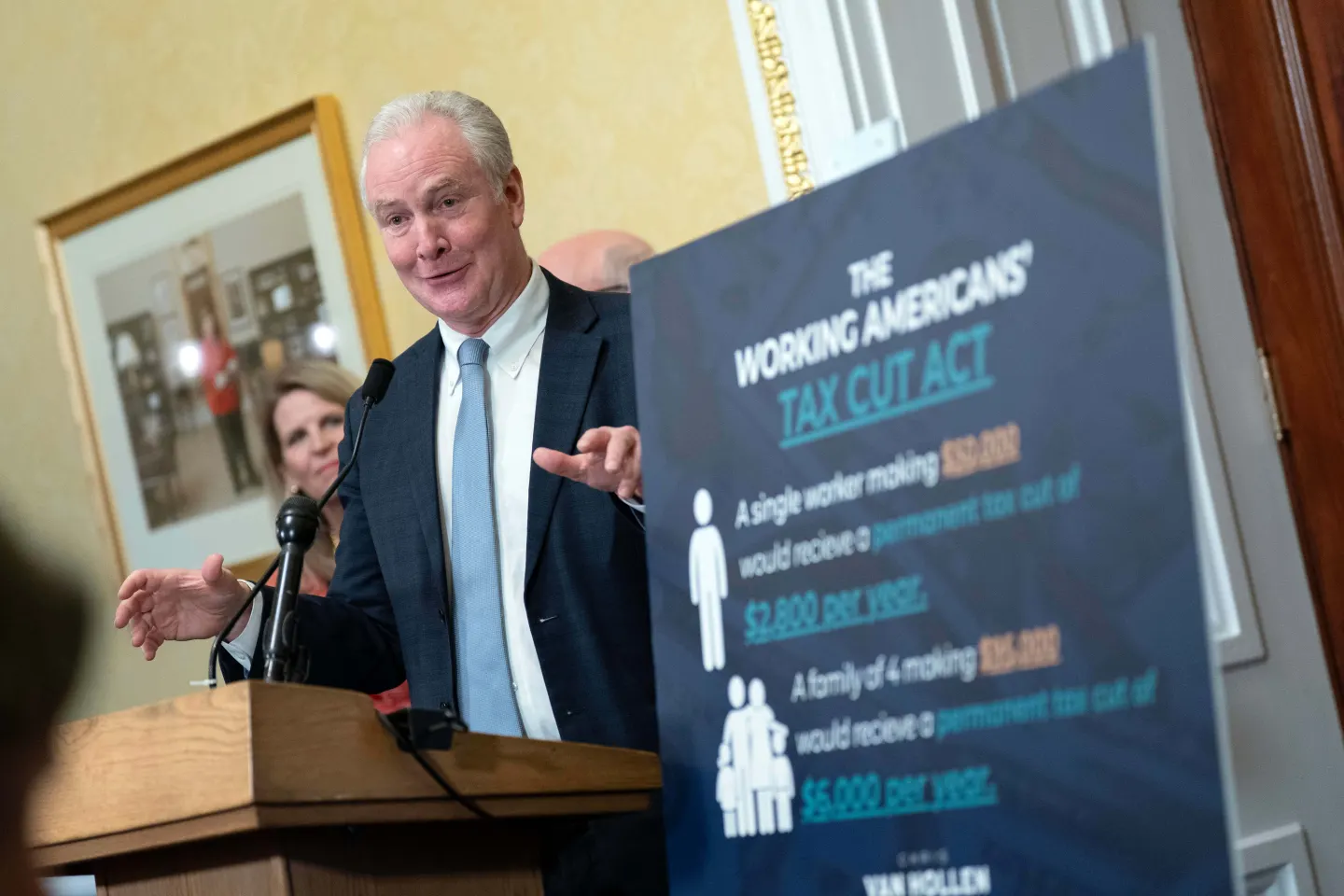
With rising voter concerns about affordability dominating discussions, some Democratic lawmakers are turning to a tactic traditionally associated with Republicans: tax cuts.
Sen. Chris Van Hollen (D-MD) has introduced a proposal to abolish federal income taxes for individuals earning $46,000 or less, while also easing tax liabilities for those making up to approximately $60,000. Meanwhile, Sen. Cory Booker (D-NJ) aims to exempt households with incomes up to $75,000 from income taxes altogether.
This shift could reshape the party's image, drawing inspiration from Trump-era promises like 'no tax on tips.' But there are concerns that these tax reductions could compromise funding for other Democratic priorities, such as Medicaid or the reversal of previous tax cuts benefiting the affluent.
Booker, however, pushes back against comparisons to Trump, asserting his proposals arise from constituent demand for bold, expansive action to alleviate their financial burdens.
Meanwhile, tax cut proposals are emerging in state races as well. Keisha Lance Bottoms, a former mayor, advocates for exempting public school teachers in Georgia from state taxes, and California's Rep. Katie Porter suggests families earning under $100,000 should not pay state income tax.
Porter emphasizes the need for simpler solutions, criticizing prior policy complexities that often alienate potential beneficiaries.
Meeting Voter Demand
Historically, tax discussions have been dominated by Republican messaging, which often favors wealthier Americans. Van Hollen recalls interactions with small business owners concerned about Trump's tax changes and emphasizes the need for legislation that directly benefits lower-income constituents.
Despite their new focus on taxes, Democrats maintain their long-standing goal of higher taxes on the ultra-wealthy. Van Hollen's plan includes a surtax on incomes exceeding $1 million, a move to offset tax cuts for lower-income brackets. However, the Yale Budget Lab indicates Booker's proposal could still result in a substantial deficit of approximately $7 trillion.
Concerns Over Middle-Class Benefits
Critics argue that tax cuts aimed at lower-income groups tend to inadvertently benefit those in higher income brackets due to the tax system's structure. For example, Booker's proposal boosts the tax deduction for couples, which primarily aids higher-income families while leaving the working class with minimal benefits.
Analysts working with the Yale Budget Lab note that savings for the middle class from these proposals will not be significant, indicating a trend where higher-income individuals will generally receive greater tax savings. Vanessa Williamson, from the Tax Policy Center, reinforces this notion, noting that proposals often fail to promise meaningful breaks for the middle-income demographic.
As Democrats pivot toward appealing to a more affluent voting block, there's a critical balance to strike between who benefits from these tax cuts and the necessity of generating revenue for essential programs.
Ultimately, the upcoming legislative measures reflect an evolving strategy for Democrats, aiming to address voter frustrations over costs while simultaneously trying to maintain their fiscal responsibilities amid growing budgetary deficits.