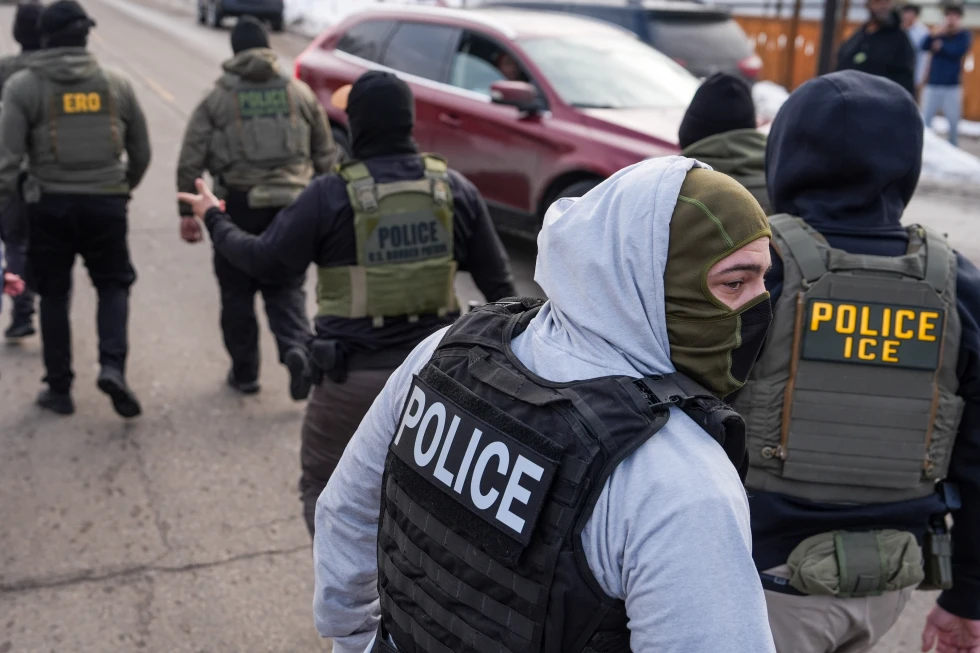
WASHINGTON (AP) — As images of masked federal officers conducting immigration operations provoke debate, the U.S. Congress faces pressure to address the tactics employed by Immigration and Customs Enforcement (ICE). These masked agents, often seen detaining individuals on city streets, are becoming a focal point in discussions around accountability and public trust in law enforcement.
The ongoing controversy highlights deep divisions among lawmakers about the balance between officer safety and community transparency. Supporters of the masking policy argue it protects agents from potential retaliation or harassment fueled by social media exposure. Critics, however, contend that unidentifiable officers hinder accountability and breed fear among those they serve.
“The ability to see an officer’s face is essential to human interaction,” says Justin Smith, a former sheriff. “When officers are unmasked, it diminishes trust between them and the communities they patrol.”
The question of whether female their masks should be banned is central to current negotiations over Homeland Security funding, especially with an impending partial agency shutdown looming on the horizon. Calls for “cameras on, masks off” resonate among Democrats, who seek to enforce greater transparency in enforcement operations.
House Democratic Leader Hakeem Jeffries declared unmasking a “hard red line” during negotiations, advocating for measures like body cameras for federal agents to ensure accountability. As tensions escalate, the debate shifts to potential legislative measures intended to curb ICE’s operational scope, particularly its authority to conduct raids without clear identification.
Experts reflect on the unprecedented nature of using masks widely in law enforcement, suggesting that such practices evoke fears reminiscent of repressive policing historically documented during troubling times in U.S. history. Proponents of reform argue that it’s essential to prioritize the community's rights and foster an environment of cooperative policing, rather than instill fear through anonymity.
Meanwhile, California has taken a significant step by becoming the first state to curtail the use of masks among law enforcement officers, a move expected to set precedents across the nation.
As arguments unfold on Capitol Hill, it remains clear that the handling of masking policies in immigration enforcement will play a critical role in shaping the future of U.S. attempts to navigate immigration, community relations, and the protection of civil liberties.