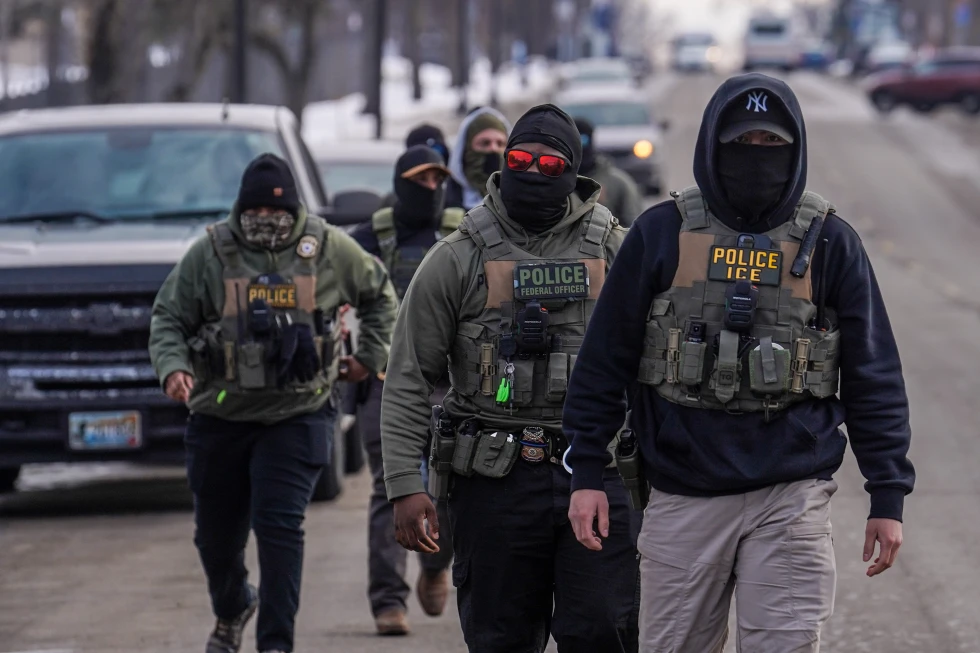
MINNEAPOLIS (AP) — Luis Ramirez had been uneasy for days about men dressed in high-visibility vests parked outside his family’s Mexican restaurant in the suburbs of Minneapolis. When they returned, he approached them, filming the encounter as they hid their faces. This is what our taxpayer money goes to: renting these vehicles with fake tags to sit here and watch my business,” Ramirez declared angrily.
As Minnesota continues its sweeping immigration crackdown, reports have multiplied about federal agents impersonating construction workers and utility staff. Legal experts note these tactics are not unique to Ramirez’s experience but are increasingly reported across the state.
A spokesperson from the Department of Homeland Security and Immigration and Customs Enforcement has not confirmed the identities of the agents in Ramirez's encounter but acknowledged the ongoing trend of impersonation tactics as federal officials adapt to local resistance against their operations.
Legal observers claim these incidents have heightened fears among local immigrant communities, as they add to anxieties caused by the Trump administration's reshaped enforcement practices. What we are witnessing may not be aimed solely at their targets, but serve to foster a level of public confusion and distress,” says Naureen Shah of the ACLU.
The manipulation of identities, including past disguises by immigration authorities, appears to be at a “more extreme degree” now as federal agents openly engage in these tactics in ways that were less common in previous years.
Recent weeks saw reports of agents appearing at construction sites dressed as workers, reinforcing the sense of unease sweeping through immigrant communities. Activists believe that these tactics are responses to their ongoing efforts to monitor and inform the community about federal presence.
Amid complaints of agents using fake license plates and unmarked vehicles, there’s a growing sentiment that these actions reflect a pushback against activist movements looking to expose covert operations. Candice Metrailer, a local antiques dealer, claimed she suspected two individuals browsing for license plates were agents when they displayed unusual interest in acquiring recent ones.
Supporters of these immigration enforcement measures argue that the visibility of activist groups has forced federal agents to change their tactics in order to remain undetected. However, many in the community, including Ramirez, continue to feel on edge as encounters with purported agents loom around every corner.