In brief
In a recent court hearing regarding the conditions at an Immigration and Customs Enforcement (ICE) facility in Minnesota, U.S. District Judge Nancy Brasel acknowledged significant discrepancies between the federal government’s claims about legal access for detainees and the allegations from human rights advocates. While government attorneys assert that detainees have adequate access to counsel and unmonitored phone calls, advocates argue that on-the-ground realities tell a different story. The judge has set a deadline for both sides to negotiate a solution, highlighting the necessity for reasonable legal support in such detention centers.
MINNEAPOLIS (AP) — In an ongoing legal battle, attorneys representing the federal government must negotiate with human rights lawyers seeking to protect the right to legal counsel for those detained at an Immigration and Customs Enforcement (ICE) facility in Minnesota, according to a judge's recent directives.
During a court session, advocates voiced concerns over insufficient legal access for detainees facing deportation, including inadequate options for in-person meetings with lawyers. Attorney Jeffrey Dubner articulated that while detainees are permitted to make phone calls to legal counsel, these communications are often monitored by ICE personnel, compromising their confidentiality.
U.S. District Judge Nancy Brasel called for a more collaborative approach, expressing skepticism about the government's assurances regarding legal access. She noted a 'very wide factual disconnect' between the government's depictions of the facility—described as a temporary holding center—and the realities presented by the plaintiffs.
As the session unfolded, Justice Department attorney Christina Parascandola defended the federal stance, claiming detainees have unrestricted access to counsel; however, she acknowledged her lack of firsthand experience of the facility's conditions.
As the hearing progressed, Judge Brasel pointed out that the evidence backing the plaintiffs' claims significantly outweighed the government's claims, stating, 'The gap here is so enormous I don’t know how you’re going to close it.'
Faced with the possibility of judicial ruling if no agreement is reached by February 12, both parties are working with a retired judge as mediator to possibly bridge the divide over what constitutes 'reasonable access' to legal counsel.
Concerned Congressional Voices
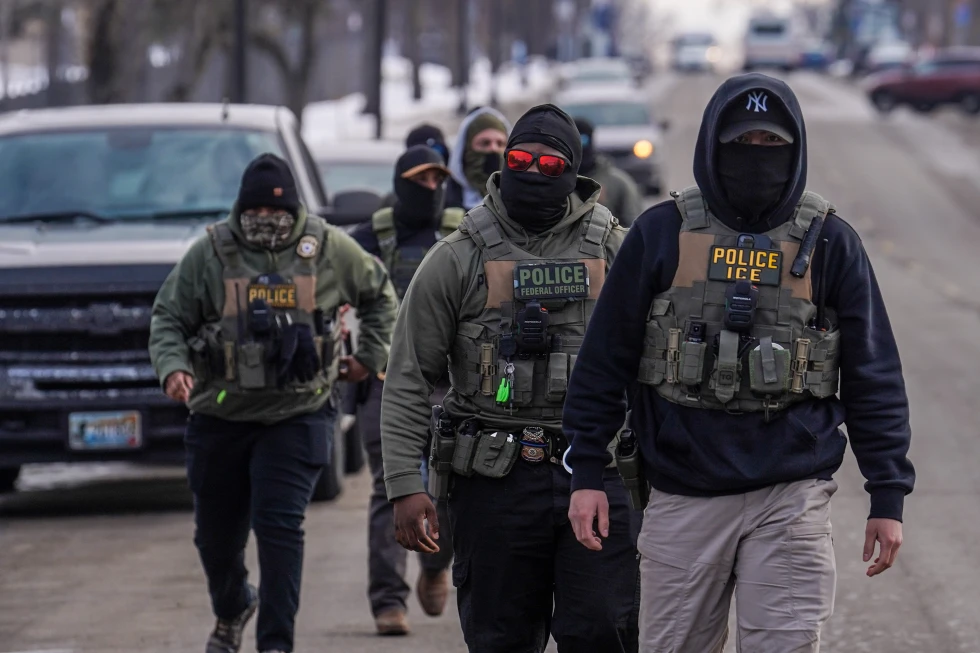
The Bishop Henry Whipple Federal Building, housing the controversial ICE operations, has drawn frequent protests, with Democratic U.S. Rep. Kelly Morrison denouncing the facility’s practices on a recent visit. She criticized the lack of measures in place to prevent disease spread, specifically mentioning reported measles cases at a Texas detention center. Morrison highlighted that detainees, including children, have been transferred from Minnesota to Texas, raising serious concerns regarding health protocols.
Despite a recent ruling affirming Congressional rights to unannounced visits to ICE facilities, Rep. Morrison faced initial resistance, with agents delaying her entry for nearly 30 minutes, which she interpreted as a lack of transparency.
Reps. Morrison, Ilhan Omar, and Angie Craig's attempts to inspect the facility reflected broader frustrations about detainee conditions, with claims of 'unlivable' environments persisting. The recent accounts of poor practices and procedural inconsistencies continue to fuel public scrutiny and political tension regarding immigration enforcement strategies in the U.S.