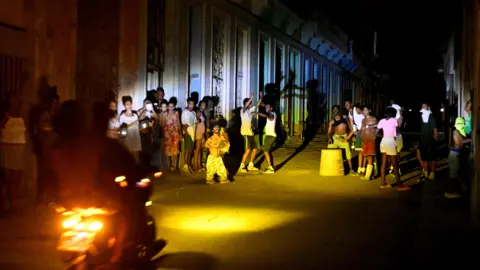
Cuba is grappling with yet another nationwide blackout, which has left over 10 million residents without power. This recent collapse of the national electrical grid is the second occurrence of such an incident within a week.
The Cuban energy ministry has reported a total disconnection of the National Electrical System and stated that restoration protocols are already in place. The state's grid operator, UNE, is gradually bringing electricity back online, focusing on key facilities like hospitals and water systems.
The Caribbean island nation has faced three significant blackouts this month, a situation exacerbated by a US fuel blockade that has limited fuel imports necessary for power generation. These persistent outages highlight the aging electricity infrastructure and chronic fuel shortages faced by the communist-ruled country.
In a show of solidarity, a coalition of international socialist groups arrived in Havana with donations of vital supplies, including solar panels and food kits, as the country's energy crisis continues.
Public dissent has emerged, with protests erupting in Havana and other cities as citizens express their frustration over the frequent power outages. Unauthorized demonstrations in Cuba, however, are illegal and can lead to severe penalties for those involved.
As tensions mount, the Cuban government has engaged in initial discussions with the US to address the ongoing crisis. However, officials have firmly stated that the political status of Cuba remains non-negotiable, despite external pressures for change. Amid escalating challenges, President Díaz-Canel has assured that the island is preparing for any potential military aggression and stands firm in its efforts to recover and restore essential services.
The Cuban energy ministry has reported a total disconnection of the National Electrical System and stated that restoration protocols are already in place. The state's grid operator, UNE, is gradually bringing electricity back online, focusing on key facilities like hospitals and water systems.
The Caribbean island nation has faced three significant blackouts this month, a situation exacerbated by a US fuel blockade that has limited fuel imports necessary for power generation. These persistent outages highlight the aging electricity infrastructure and chronic fuel shortages faced by the communist-ruled country.
In a show of solidarity, a coalition of international socialist groups arrived in Havana with donations of vital supplies, including solar panels and food kits, as the country's energy crisis continues.
Public dissent has emerged, with protests erupting in Havana and other cities as citizens express their frustration over the frequent power outages. Unauthorized demonstrations in Cuba, however, are illegal and can lead to severe penalties for those involved.
As tensions mount, the Cuban government has engaged in initial discussions with the US to address the ongoing crisis. However, officials have firmly stated that the political status of Cuba remains non-negotiable, despite external pressures for change. Amid escalating challenges, President Díaz-Canel has assured that the island is preparing for any potential military aggression and stands firm in its efforts to recover and restore essential services.