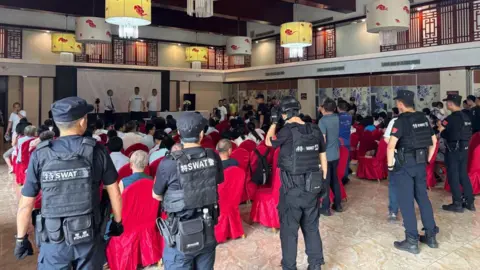
An influential Protestant church in China, the Early Rain Covenant Church, reports that nine of its prominent leaders were arrested following police raids in Chengdu. Five were released shortly after. Meanwhile, more than 1,000 miles away in Wenzhou, authorities began demolishing the Yayang Church building, which was captured on video by the religious watchdog group ChinaAid, known for monitoring religious persecution in the country.
This latest wave of arrests underscores the increasing resolve of the Communist Party to erode the influence of churches that do not conform to state ideology, according to Christian advocacy groups. In December alone, authorities arrested approximately 100 members of Yayang Church over five days, still keeping at least 24 in custody, as reported by Human Rights Watch.
Church leaders in China have noted that arrests are becoming more prompt and frequent, with unauthorised church leaders being detained without the typical prior warnings that they once received. Christian groups fear that this current campaign against independent church networks reveals the government’s commitment to eliminate any religious form that does not adhere strictly to Communist Party ideology.
Li Yingqiang, the current leader of the Early Rain Covenant Church, remarked that “a storm is gathering” and urged congregants to prepare for further crackdowns in a letter last November. As he and his wife remain detained, the church described the recent arrests as part of a “concerted operation,” without providing specific charges or details regarding the arrests.
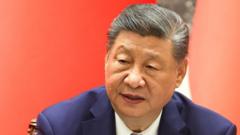
China’s government has a long history of persecution against religious groups, promoting atheism and forcing religious adherents to participate only in state-sanctioned practices. Since the government's stance on religious freedom hardened under Xi Jinping, significant restrictions have been imposed, including those prohibiting live preaching on social media and collecting funds outside government-approved platforms.
Experts argue that the tightening grip on religious freedom reflects the Chinese government's broader strategy of maintaining control over social and political life by mitigating influence from non-state actors. Both local and global communities are urged to advocate for respect for religious freedoms and the release of detained religious individuals.
}