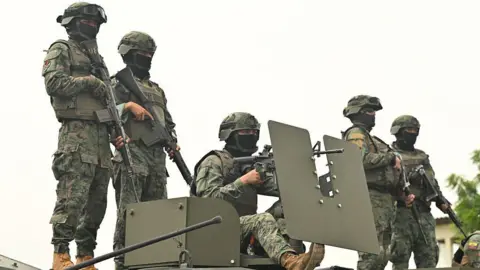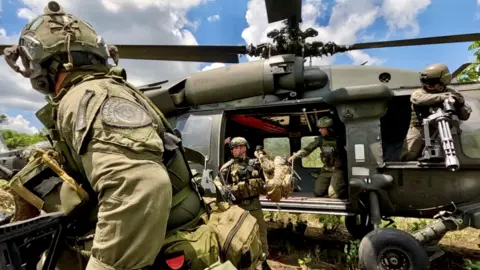
The Black Hawk helicopter readied for takeoff, its rotor blades cutting through the humid air of the Colombian Amazon. Inside, we were tucked in alongside the Jungle Commandos — a special police unit equipped and originally trained by the British SAS in 1989. Despite the clarity of the skies and the intensity of the mission, there was palpable tension on board as the commandos prepared for what they anticipated would be a familiar yet perilous operation against criminal groups.
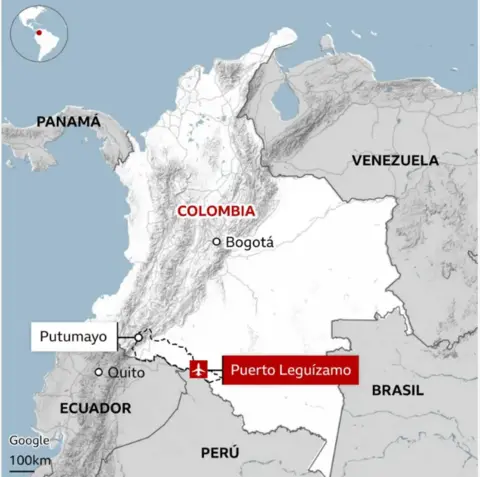
The commandos, armed to the teeth, often face fierce resistance from remnants of guerrilla groups, now entrenched in the drug trade that has replaced the cartels of previous decades. As we lifted off, the dense greenery of the Putumayo district came into view, notorious for generating approximately 70% of the world's cocaine supply.
Onboard were two other Black Hawk helicopters as they guided us over the vast illegal coca farms sprawling beneath us. Recent UN reports indicate that coca cultivation now covers an area nearly twice the size of Greater London. Below, the covert operations led us to a makeshift cocaine lab hidden behind layers of banana trees — a testament to the ongoing battle against drug production.
During our short and tense visit, the commandos made no arrests, opting instead to focus on dismantling the operation, emphasizing that their strategy targets the higher echelons of the drug trade, not the impoverished individuals working at the bottom.
Back on base, Major Cristhian Cedano Díaz reflected on the relentless nature of this war against drugs. He pointed out that for every lab destroyed, others spring up almost immediately. In one day, a lab can be rebuilt, he said, though he believes that their missions do impact the profitability of criminal organizations. They can rebuild, but we’re affecting their supplies.
Despite such efforts, the cocaine trade continues to flourish, with Colombia's Defense Minister Pedro Sanchez asserting that they destroy cocaine factories every forty minutes, though he holds the demand for cocaine abroad equally accountable for the ongoing crisis.
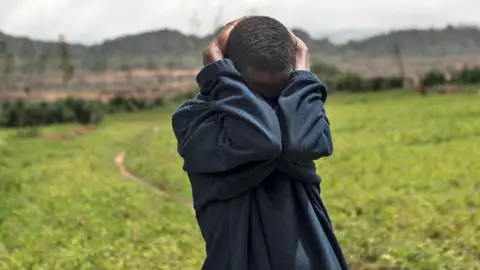
The juxtaposition of the war on drugs is starkly highlighted through personal stories. Farmers like Javier, reluctant players in this cycle of cocaine production, express the dire economic realities forcing them into coca cultivation while also pondering the societal consequences of their actions.
As the commandos prepared for yet another operation, it was clear that both sides of this conflict, from military leaders to struggling farmers, share the hope of creating a Colombia free from the grasp of the drug trade, but the pathways to that future remain obscured by challenges.