In brief
Amid Typhoon Noul’s fury, Chinese authorities have been up against new weaponised content: AI‑crafted videos that exaggerate flooding, casualty numbers and emergency resource shortages. These deep‑fake clips, spread across social media, have caused panic buying, misdirected evacuation efforts and delays in rescue work, prompting the state to arrest creators and impose fines. Experts warn that the speed and realism of AI content outpace current detection tools, urging the construction of trusted information infrastructures and stricter legal enforcement to protect public trust.
The Rise of Fake Videos in China’s Typhoon Response
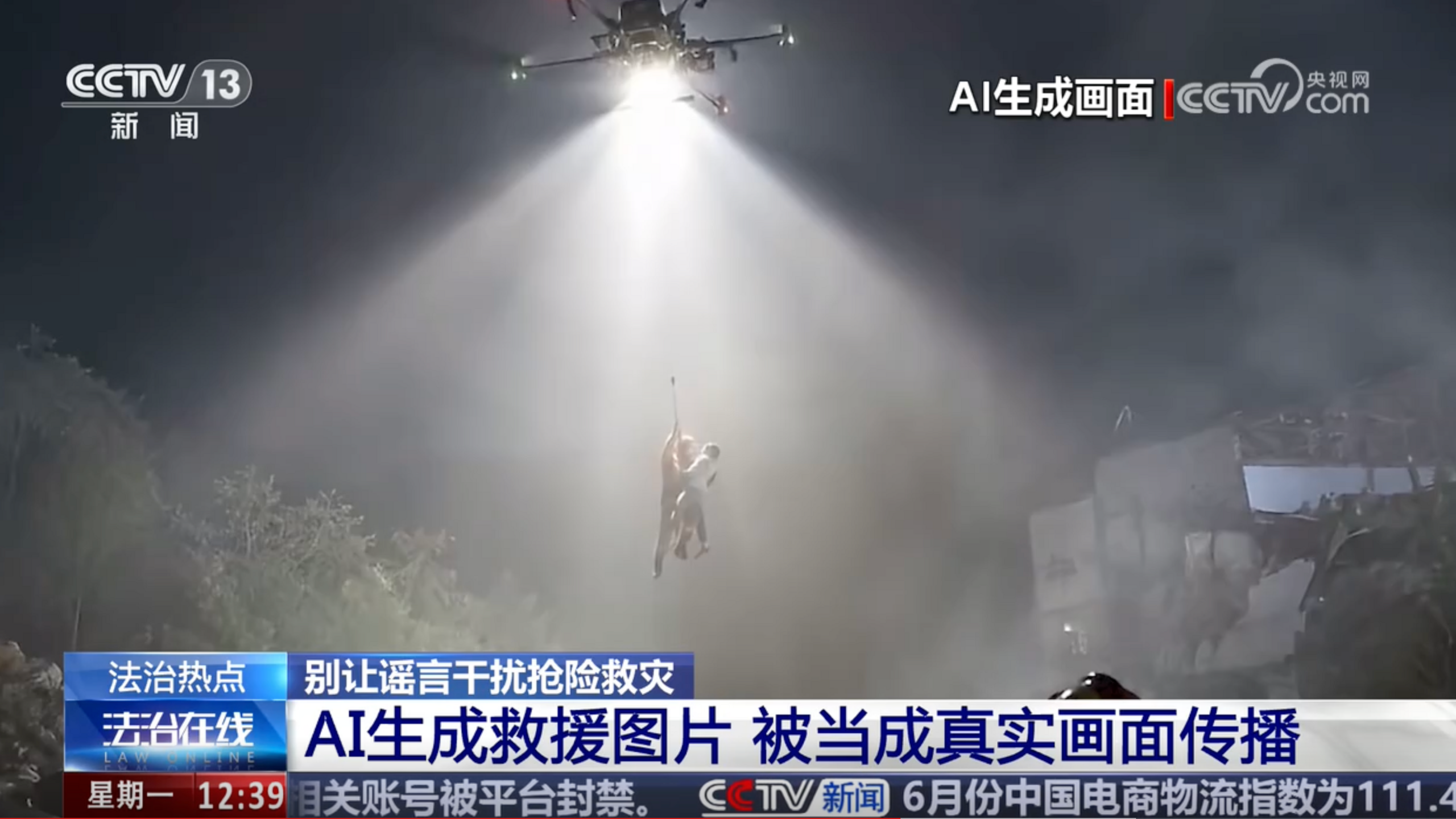
The weekend‑landfalling Typhoon Noul has left coastal villages battered by storm‑surges and heavy rain. But alongside the physical devastation, officials are grappling with a new threat: fake videos created with Artificial Intelligence (AI) that depict catastrophic scenes far worse than reality.
Social‑media platforms have been flooded with clips showing bodies drifting in floodwaters, falsely claiming a wider reach of the disaster and injecting fabricated details of rescue operations. In some cases, these videos used the wrong names for shelters or misrepresented the scale of power outages, prompting residents to panic‑buy emergency supplies and overwhelm local stores.
The danger is real: the speed at which these clips can spread during crisis situations means that authorities often react to misinformation before the factual data is confirmed. In one instance, a fabricated video claimed that rescue teams had prioritized pigs over people, generating public outrage and eroding confidence in official disaster communication.
According to Huang Zhihua, Deputy Chief of Online Public Security for Zhejiang Police, the motive behind many of these viral videos is purely the pursuit of views: “These content creators use disaster coverage to gain followers, knowing sensational exaggeration brings more likes.”
The Chinese government has already cracked down on the creators. Since mid‑July, authorities have arrested several individuals and imposed fines ranging from a few hundred to several thousand yuan. In addition, the Cyberspace Administration announced a nationwide campaign on 23 July to tackle fake content related to floods, urging platforms to strengthen their review processes.
Experts warn that current detection tools lag behind the rapid evolution of AI‑generated content. Professor Xu Xiaoke of Beijing Normal University emphasises the need for “trusted information infrastructure” – early warning systems and official disaster interfaces that news organisations can rely on. He also stresses that the technology for detecting AI videos is still in a cat‑and‑mouse phase, warning that “detection technology still lags behind generation technology.”
To counteract future crises, scholars advocate a dual approach. Professor Gao Kai from the Ningbo Public Security Bureau urges public education combined with strict law enforcement, while international attorney Peter Pang calls on social‑media platforms to be held legally accountable for enabling the spread of misinformation. “If the platform allows the spread, they must face responsibility for the consequences that arise from panic induced by fake posts,” Pang says.
Data sources: BBC, Xinhua, academic commentary from Chinese universities, and Chinese cyber‑security official statements.