In brief
India's air force is at a crossroads, contemplating the procurement of advanced fighter jets amid dwindling numbers and a growing regional threat. The choice between the US's F-35 and Russia's Sukhoi Su-57 poses significant political and logistical challenges, with experts noting that India's focus may ultimately lie in developing its indigenous aircraft.
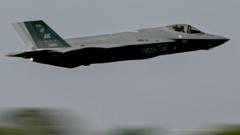
India stands at a critical juncture in the modernization of its air force, evaluating whether to invest in the advanced American F-35 or deepen its defense collaboration with Russia to produce its Sukhoi Su-57 fighter. During Prime Minister Narendra Modi's recent trip to Washington, US President Donald Trump offered an opening for India to acquire F-35s—advanced fighter jets renowned for their cutting-edge technology, stealth capabilities, and hefty price tag of approximately $80 million each.As China's military power expands, this decision carries substantial geopolitical weight. India's air force currently operates 31 fighter squadrons, significantly below the necessary 42, with many aircraft dating back to Russian-era designs. This alarming trend has left India vulnerable, prompting discussions about modernization and operational readiness.Experts suggest, however, that the US-Russia competition for India's fighter jet market may be overstated. Observations made at the recent Aero India air show featured both the Russian Sukhoi Su-57 and American F-35, yet experts like Ashley J. Tellis of the Carnegie Endowment for International Peace see Trump's offer as more symbolic than feasible. The integration of the F-35 into India's Air Force, especially in light of Modi's emphasis on "Make in India," poses significant hurdles, particularly surrounding co-production and technology transfer limitations.Moreover, concerns about the high cost, operational issues, and the jet's low availability rate within the US Air Force—averaging around 51%—complicate the potential purchase. Experts like Stephen Bryen indicate that the financial commitment required for the F-35 might be better allocated toward acquiring the Russian aircraft, which could also produce strong local ties amidst rising tensions.Despite unresolved issues regarding technology sharing that led India to exit the co-production deal for the Su-57 in 2018, the prospect of reviving partnerships with Russia remains, as India grapples with an aging fleet and dwindling options. India's strategic push is towards developing its Advanced Medium Combat Aircraft (AMCA) and acquiring over 500 jets domestically, with 83 units of the Tejas Mark 1A already confirmed and expectations for more commemorated.Although the Indian government is striving for a transparent procurement process in the future, hindrances in both funding and project timelines could ultimately affect the delivery of its homegrown aircraft. The IAF has expressed concern over delays and evolving needs, highlighting the urgency for modernizing its fleet.While the focus for many experts leans towards fostering indigenous production, leveraging foreign partners for advanced technologies remains crucial. The long-term aim is clear: India intends to build fighter jets that can meet its defense requirements without excessive reliance on imports. The nation's airpower future hinges not just on acquiring foreign technology but on realizing its self-reliance in defense capabilities.