In brief
Survivors of Auschwitz deliver poignant messages, urging a fight against intolerance and a commitment to preserving memory on the 80th anniversary of the camp's liberation.
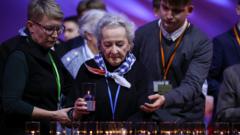
15 hours ago In a somber commemoration of the 80th anniversary since the liberation of Auschwitz, survivors of the infamous Nazi death camp gathered to share their haunting experiences and deliver a dire warning against the resurgence of intolerance. "We were stripped of all humanity," recounted 99-year-old Leon Weintraub, the eldest survivor present, as he stood by the notorious Death Gate at Birkenau.The event drew global attention, with world leaders and dignitaries honoring the memory of the 1.1 million people who perished at Auschwitz-Birkenau between 1941 and 1945, predominantly Jewish victims. Tova Friedman, a survivor who witnessed atrocities as a young child, described how she clung to her mother's hand while her young friends endured horrific fates. She emphasized the survivors’ unique understanding of the risks posed by antisemitism and intolerance.In a heartfelt appeal, Weintraub urged younger generations to remain vigilant in recognizing and speaking out against all forms of hatred and division: "Be sensitive to all expressions of intolerance and resentment," he said. The solemnity of the occasion was underscored by the presence of 56 survivors, who each shared their harrowing narratives, often punctuated by moments of silence in memory of those lost.Among the speakers was Janina Iwanska, 94, who recounted her childhood experiences during the Warsaw Uprising and the grim actions of the notorious Nazi doctor Josef Mengele, who oversaw the execution of many in the camp. As the speakers reflected on the tragic loss of life, Marian Turski, 98, reminded attendees of the countless victims whose stories were never told and whose voices have been silenced by an unforgiving history.Piotr Cywinski, director of the Auschwitz museum, stressed the importance of preserving history as the number of survivors diminishes. He warned against the dangers of forgetting, stating, "Memory hurts, memory helps, memory guides… without memory you have no history." The day was marked by global observances for International Holocaust Memorial Day, stressing the need for sustained remembrance.Poland’s President Andrzej Duda reaffirmed his country’s commitment to maintaining the memory of the death camps located within its borders. Soon after, at the United Nations, Secretary General António Guterres echoed similar sentiments, denouncing the rise of Holocaust denial and anti-Semitic rhetoric worldwide. He invoked the legacy of Italian survivor Primo Levi, who documented his trauma yet struggled greatly with his memories.The commemoration also saw prominent figures such as King Charles of the United Kingdom attending for the first time as a sitting British monarch. With tears in his eyes, he listened intently to the survivors, emphasizing the critical importance of recognizing past evils to prevent future atrocities.Reflecting on the urgent responsibility to educate the next generation, 94-year-old survivor Mala Tribich noted that the lessons of history need to be heeded now more than ever. “What [children] are taught under despotic circumstances can be so damaging,” she warned.As the survivors continue to pass away, many experts are increasingly concerned about the fading of their narratives and the historical truths of the Holocaust. Lord Pickles, the UK's envoy on post-Holocaust issues, acknowledged a troubling trend of distortion and emphasized the urgency of transferring memory into tangible historical education.In a recent survey, many expressed fears that another Holocaust could happen again, underscoring the continued relevance of the survivors’ warnings. As the world remembers the horrors of Auschwitz, it is a call to action—a plea to ensure history does not fade away into obscurity.