In brief
BAREC 2.0 introduces advanced artificial‑intelligence models that can rewrite Arabic content to match predefined proficiency tiers while offering transparent feedback on classification. The project, backed by a formal agreement signed at a recent Arabic & Creative Industries congress, builds on 69,000 sentences from its first edition and aims to support writers, teachers, and learners throughout the UAE.
The Balanced Arabic Readability Evaluation Corpus 2.0 (BAREC 2.0) was unveiled on 5 November 2026 by the Abu Dhabi Arabic Language Centre (ALC) in partnership with New York University Abu Dhabi (NYUAD), the Mohammed bin Zayed University of Artificial Intelligence (MBZUAI), and Zayed University. The new edition equips users with artificial‑intelligence models that rewrite Arabic text to match a selected readability level and provide explanatory feedback on how a piece is graded.
The ALC, which operates under the Abu Dhabi Department of Culture and Tourism, cited the requirement for resources that can adapt content for learners with varying linguistic proficiency. BAREC 2.0 derives from its predecessor, BAREC 1.0, which compiled over 69,000 sentences in a balanced set of Arabic text samples. The updated platform adds a suite of tools that modulate vocabulary choice and syntactic structure to either simplify or complexify text according to defined proficiency tiers.
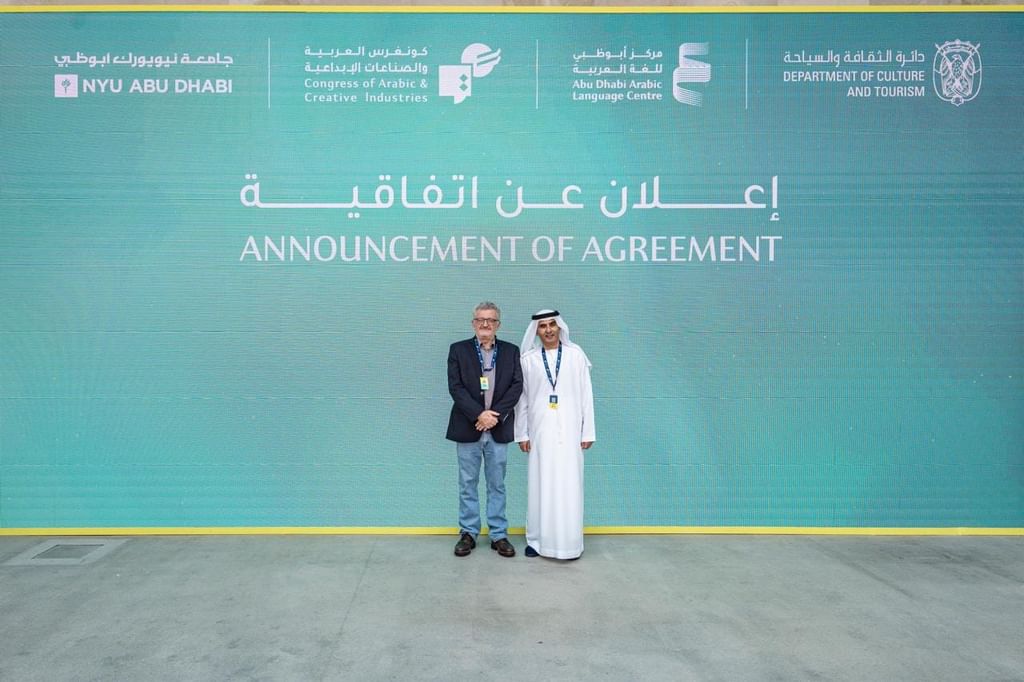
An agreement authorizing the partnership was signed earlier in the year and formally announced at the fifth edition of the Congress of Arabic & Creative Industries held on Manarat Al Saadiyat. The ceremony was attended by Dr. Ali bin Tamim, Chairman of the ALC, and Professor Fabio Piano, Vice Chancellor of NYUAD.
Dr. Bin Tamim welcomed the launch, stating, "BAREC 2.0 is an important step forward in our efforts to advance Arabic readability research and harness modern technologies to support education and content creation. By combining linguistic expertise with advanced AI models, we are working to develop practical tools that help educators, writers, and students assess and adapt Arabic texts to different readability levels. This will enhance comprehension, support the creation of Arabic content that is better suited to different readers, and contribute to strengthening the effective use of the Arabic language in the digital environment."
Professor Piano highlighted the project’s significance for language education in the UAE. "The partnership has been established to strengthen Arabic language education in the UAE, and NYU Abu Dhabi is proud to lead BAREC 2.0," he said, emphasizing that the AI system can explain why a text receives a particular classification.
The system’s underlying methodology uses machine‑learning models trained on a vast corpus of balanced Arabic sentences. By analyzing lexical density, word frequency, and sentence length, the models generate suggestions that replace complex terms or restructure sentences to lower reading difficulty. Conversely, for more advanced levels, the AI can introduce specialized terminology and longer, more complex syntactic constructions.
Both textual transformation and classification feedback are designed with an educational mindset. The explanatory module delivers a narrative that clarifies the linguistic features driving the score, thereby offering teachers and writers concrete guidance on how to adapt material for their audience.
The launch also coincides with broader initiatives to promote digital literacy in the Gulf region. MBZUAI’s involvement underscores the AI angle, as the university provides computational infrastructure and expertise in natural language processing. Zayed University partners to pilot the tool in classrooms, integrating it into curricula for Arabic language and literacy courses.
Industry observers point to the project’s potential to democratize content creation in Arabic. By offering automated rewriting, the platform could alleviate the bottleneck faced by educational publishers and media organizations that traditionally rely on manual editing for each proficiency group.
Critics, however, caution that AI systems must be continuously supervised to avoid bias or oversimplification. Proponents counter that the explanatory feedback mitigates these risks by making the model’s decision process transparent.
Project Scope and Expected Impact
According to the joint press release, BAREC 2.0 will allow authors to adjust the readability level of articles, legal documents, or educational materials on demand. The tool also promises to support researchers exploring language acquisition by testing how different linguistic features influence comprehension across proficiency bands.
In addition to editing services, the platform offers a dataset that researchers can access to study readability predictors in Modern Standard Arabic. This dataset expands on the original 69,000‑sentence set, adding refined annotations such as semantic density and morphological complexity.
From a practical standpoint, educators could use the system to generate practice materials that match students’ current reading level and gradually increase difficulty. Likewise, university professors could rewrite conference proceedings or scientific papers into more accessible language for non‑expert audiences.
Future Developments
The initial rollout covers five predefined proficiency tiers: beginner, elementary, intermediate, upper‑intermediate, and advanced. Announced plans include extending the range to accommodate beginner‑intermediate hybrid levels and adapting the algorithms for regional dialects, which would broaden applicability beyond Modern Standard Arabic.
Technical teams are also exploring integration with existing learning management systems so that the rewriting tool could operate within popular authoring platforms. This integration would allow users to adjust text in real time without leaving their preferred workflow.
As part of a long‑term agenda, the collaboration intends to release open‑source code for the readability classifiers under a non‑commercial license, allowing academic institutions worldwide to contribute improvements or adapt the model to other Afro‑asiatic languages.
In conclusion, BAREC 2.0 represents a concerted effort to leverage machine learning for enhancing Arabic literacy. By providing a technologically advanced, transparent, and educationally focused rewriting system, the project aims to make scholarly and everyday Arabic text more accessible across proficiency levels and to foster a more inclusive reading culture in the Arabic‑speaking world.