In brief
The UAE Ministry of Higher Education and Scientific Research (MoHESR) documented tangible outcomes from its fifth Advisory Committee meeting, including enhanced data governance, new AI skill clusters, and improved entrepreneurship education. The meeting, chaired by Minister Dr. Abdulrahman Al Awar, underscored the partnership between academia and vital economic sectors to prepare graduates for future jobs.
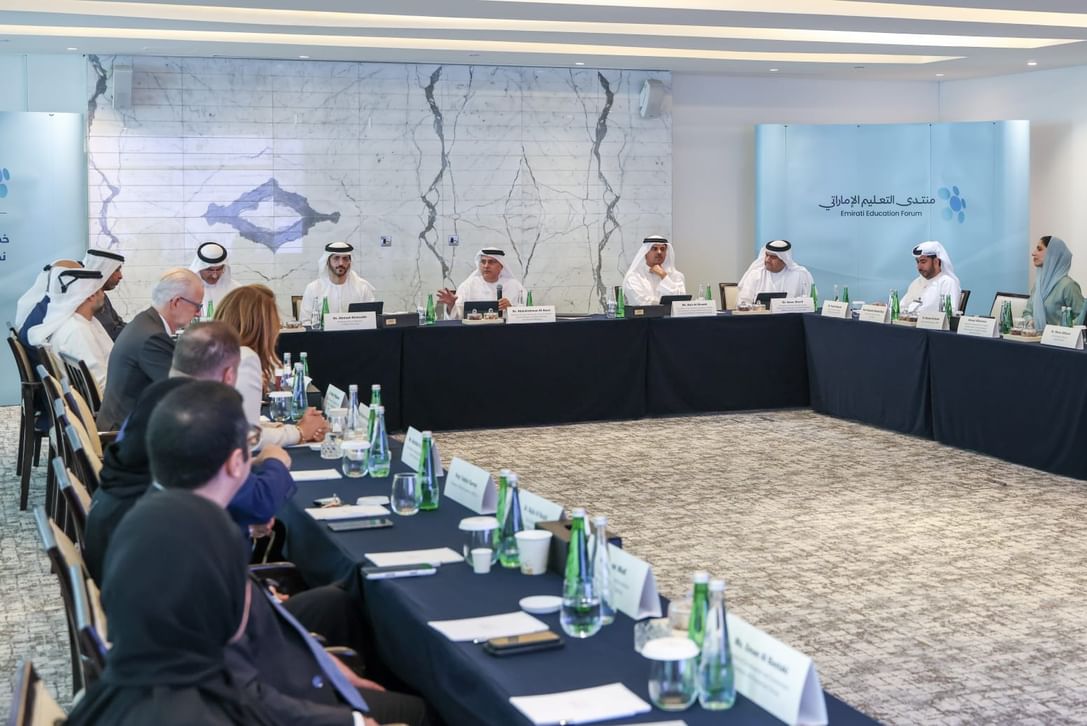
The fifth meeting of the UAE Ministry of Higher Education and Scientific Research’s (MoHESR) Advisory Committee for Higher Education and Future Skills, held on 1 November 2026 in Abu Dhabi on the sidelines of the Emirati Education Forum, confirmed that the country’s strategy for AI integration and graduate preparedness is delivering concrete results.
The committee, chaired by Dr. Abdulrahman Al Awar, Minister of Human Resources and Emiratisation and Acting Minister of Higher Education and Scientific Research, focused on the deployment of artificial intelligence across universities, the strengthening of university–industry partnerships, and the rapid evolution of future‑ready skillsets for students.
During the meeting, Dr. Al Awar said: “The achievements of the Advisory Committee and its working groups are aligned with the vision of our wise leadership, which places great emphasis on preparing generations capable of contributing to the knowledge economy.”
"Collaboration between higher education institutions, government entities and private sector partners is essential to advancing shared national priorities."
He added that the committee provides a platform for sustained dialogue, ensuring that university programs respond to the changing demands of the market and the evolving nature of professions.
Central to the discussion was the committee’s progress in data governance. The group has put in place new policies that standardize the collection, security, and utilization of student and research data, enabling better analytics for institutional decision‑making and fostering trust between academic, government, and private stakeholders.
Another milestone was the creation of new skill clusters designed to equip students with AI competencies that align with industry needs. These clusters combine coursework in machine learning, data analytics, and ethical AI with hands‑on projects that lead directly to employment opportunities.
In terms of entrepreneurship education, the committee announced a broadened curriculum that integrates startup incubation, business development modules, and mentorship from industry leaders. The goal is to produce graduates who can create and manage ventures that contribute to a knowledge‑based economy.
According to the meeting’s agenda, the working groups—comprising university representatives and Heads of the UAE’s vital economic sectors—have drafted policy briefs that outline the next steps for expanding applied research and industry collaboration. These briefs include detailed roadmaps for funding mechanisms, data sharing agreements, and professional training pathways.
AI Deployment Across Academic Institutions
The committee highlighted several pilot projects where AI tools have been integrated into curricula to enhance learning outcomes. For instance, universities are now using adaptive learning platforms that personalize content for each student based on real‑time performance, thereby improving retention rates.
Additionally, AI‑driven assessment tools are being deployed to provide instant feedback to students and educators, enabling more targeted interventions in areas where learners struggle.
These initiatives are part of the broader national digital transformation strategy, through which MoHESR aims to position the UAE as a global hub for education, scientific research, and innovation.
University–Industry Partnerships
Partnerships between academia and industry are structured around joint research agreements, internship pipelines, and co‑developed course modules. The committee’s working group on industry collaboration has identified key sectors—such as technology, renewable energy, and healthcare—where academic research can directly influence product development and policy.
One notable collaboration involves a consortium of universities and a leading AI tech company that is co‑funding a research laboratory focused on natural language processing for Arabic language applications. The project is expected to generate both academic publications and commercial applications for the UAE market.
Preparing Graduates for the Future Economy
To ensure that graduates are ready for the future economy, the committee is revising the curriculum standards with an emphasis on interdisciplinary learning. Students now engage in project‑based learning that requires them to solve real‑world problems using AI tools and data analytics.
Moreover, the committee is expanding career support services to include AI literacy training for industry recruiters, ensuring that the skills taught in university classrooms match the competencies required in the labor market.
Dr. Al Awar concluded that “we are building on the achievements made so far by strengthening institutional performance, accelerating the adoption of advanced technologies and expanding opportunities for applied learning, scientific research, and entrepreneurship.”
As the UAE’s higher education system continues to evolve, the Advisory Committee’s work serves as a blueprint for how data governance, AI deployment, and institutional partnerships can converge to create a robust ecosystem that nurtures innovation and economic growth.”}