In brief
At a Black Sea 2030 forum in Burgas, Romanian and Bulgarian officials outlined a plan to use satellite technology for environmental monitoring and risk assessment. EU funds earmarked €110 million for marine ecosystem restoration and calls for more investment in transport and logistics are part of a broader effort to address regional security, climate and economic challenges.
In a strategic dialogue titled “Security: The Black Sea in the New Security Architecture” held in Burgas on 30 October 2026, officials from Romania and Bulgaria announced plans to harness satellite monitoring and joint governance to safeguard the Black Sea’s environment and security.
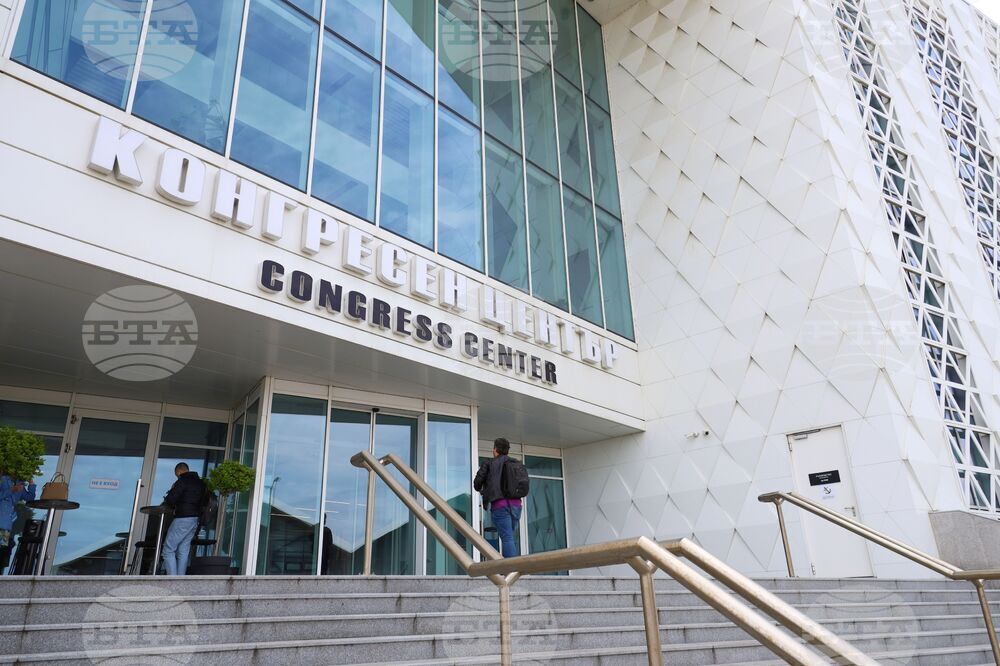
Burgas, on the Black Sea, 30.10.2026 12:32 (BTA) — George Constantin, Deputy General Director at Romania's Ministry of Environment, Water and Forests, said stronger cooperation between Bulgaria and Romania on Black Sea monitoring, including through the use of satellite technology, is needed to improve marine environmental monitoring and risk management in the region. He was speaking at a strategic dialogue titled “Security: The Black Sea in the New Security Architecture”, held as part of the Black Sea 2030: Security, Resilience, Innovation international forum in Burgas on Friday. Constantin said the two countries could develop joint maritime governance and water monitoring projects and make use of existing infrastructure and satellite systems to track changes in the Black Sea and the Danube River. He said cooperation was also important for assessing flood and drought risks and protecting the region's population.
Satellite‑based risk assessment, a term that refers to the use of Earth‑seeing satellites to detect and predict environmental changes, would enable rapid identification of storm surges, coastal erosion and water quality fluctuations. Such data can inform early‑warning systems for coastal communities that face flooding and sea‑level rise.
Business leaders highlighted the economic consequences of ongoing regional tensions. Savvas Karafilidis, President and Founder of the Bulgarian‑Hellenic Chamber of Commerce and Industry, highlighted the need for partnerships between businesses and public institutions. He said military conflicts in the region were hampering private investment and negatively affecting the economy. In his view, the EU should provide more funding for businesses in regions affected by insecurity, particularly in the transport, logistics and energy sectors.
Academic cooperation offers another lever for resilience. Prof. Milen Baltov, Rector of Burgas Free University, spoke about building shared Black Sea capacity through cooperation between universities and research organizations. Baltov, who is Chairman of the Marine Scientific Society and member of the European Ocean Board, announced a decision to establish a security hub at the Nikola Vaptsarov Naval Academy in Varna, with activities also planned in Burgas. The initiative is the result of joint efforts within the Marine Scientific Society.
The European Commission has already committed substantial resources. James Morrison, Director of the Healthy Planet Directorate in the European Commission's DG Research and Innovation, said via video link that stronger regional cooperation is needed to strengthen the resilience of coastal communities and protect marine ecosystems. He noted that the Commission had invested EUR 110 million in implementing the plan for restoring marine ecosystems in the Black Sea. Financial support for initiatives under the EU Mission: Restore our Ocean and Waters will continue until 2030. In the coming months, the European Commission will unveil a new strategy focusing on an integrated approach to marine resources.
The EU’s Horizon Europe framework is also primed to support innovative solutions for mitigating the environmental impact of waterborne transport. A recent call, hosted by Euresearch, invites projects under the ZEWT Partnership aimed at reducing emissions and improving the ecological footprint of maritime logistics across the continent, including the Black Sea corridor. While the call is competitive, it signals the EU’s willingness to finance research that aligns with the region’s security and environmental goals.
Challenges remain. The ongoing geopolitical tensions surrounding naval exercises and territorial disputes could limit the openness of data sharing and infrastructure usage. However, the agreements signed in Burgas demonstrate a growing consensus that collective action—spanning satellite monitoring, joint governance and EU funding—can address the intertwined dangers of climate change, conflict and economic downturn.
Moving forward, the partners plan to formalize a Black Sea Security Hub, expand the network of marine research stations and synchronize satellite data pipelines between Romania, Bulgaria, and neighboring Mediterranean states. The coordination will also involve capacity‑building programs for local universities, ensuring a steady pipeline of scientists skilled in oceanography, remote sensing and risk analytics. By 2030, the goal is to establish a continuous, real‑time monitoring grid that can detect pollutant spills, illegal fishing and oil‑spill incidents within hours, thereby reducing ecological damage and safeguarding fisheries that many coastal towns depend on.
Ultimately, the forum underscored that addressing the Black Sea’s security, environmental integrity and economic vibrancy requires a multi‑layered strategy: technology, institutional partnership and sustained financial support. If the initiatives move from planning to implementation, they could serve as a blueprint for other maritime regions confronting similar convergence of climate, livelihood and security challenges. The Black Sea, once a volatile corridor, may transform into a showcase of collaborative resilience, marrying cutting‑edge science with policy integration to protect both people and the planet.