In brief
As a partial ceasefire is announced between Russia and Ukraine, Ukrainian drone manufacturers are skeptical about its durability and remain vigilant in advancing their military capabilities. The newly developed Raybird drone highlights the ongoing conflict, with fears that Russia may not adhere to the agreements, especially regarding energy infrastructure attacks.
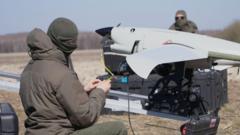
At a secure, undisclosed facility far from the eye of conflict, Ukrainian engineers work amidst a brewing storm of geopolitical tension. They are diligently testing a new long-range drone named Raybird, a device that resembles a scaled-down aircraft with optimized wings. After being launched from a specially-designed platform akin to an archer's bow, Raybird soars into the sky, capable of flying for over 20 hours and traversing more than 1,000 kilometers (around 620 miles). Its mission includes striking targets vital to Russian operations, including oil refineries and fuel depots situated deep within Russia.Despite separate agreements between the US, Ukraine, and Russia outlining a partial ceasefire — including a commitment to cease attacks on energy facilities — skepticism looms over its enforcement. Ukrainian President Volodymyr Zelensky declared that the arrangements would be put into immediate effect. However, Oleksiy, a representative from Skyeton, the firm behind Raybird, questions Russia's commitment to peace: "Russians punch you in the face, then the next day they make an agreement but ask to tie up your hands. So the possibility that they will continue fighting remains," he states, highlighting the treachery often associated with the agreements.This ceasefire also aims to alleviate the pressure on Russia, which has faced considerable attacks on its oil infrastructure throughout 2023, with over 30 drone assaults reported. Ukrainian strikes have severely impacted key facilities like the Ufa refinery, leading to a 10% decrease in Russia's oil refining capacity. The extension of export bans by Moscow signals the economic strain.Simultaneously, Ukraine’s defense capabilities continue to expand. Zelensky recently announced the development of drones capable of covering distances up to 3,000 kilometers (about 1,860 miles), potentially reaching far into Russian territory, including Siberia. Additionally, Ukraine claims it has created faster, turbojet-powered missile-drones and has upgraded its Neptune missiles for dual-targeting both ships and land.While the ceasefire might suggest a moment of respite, it represents a strategic pause for both nations. Ukraine has suffered significant attacks on its energy infrastructure, with Russian forces persistently targeting power stations. Last winter saw drastic reductions in energy generation, causing disruption for vulnerable civilian populations, especially during extreme cold.Back at the testing ground, as the Raybird returns from its flight, successfully deploying its parachutes to land, Oleksiy remains wary. He acknowledges the need for continuous development and readiness, stating, "Our enemy just wants to have a break, gather its strength and attack again. We must be ready for that." In the backdrop of fluctuating ceasefires and precarious security, the arms race continues, with each side vigilant of the other's next move.