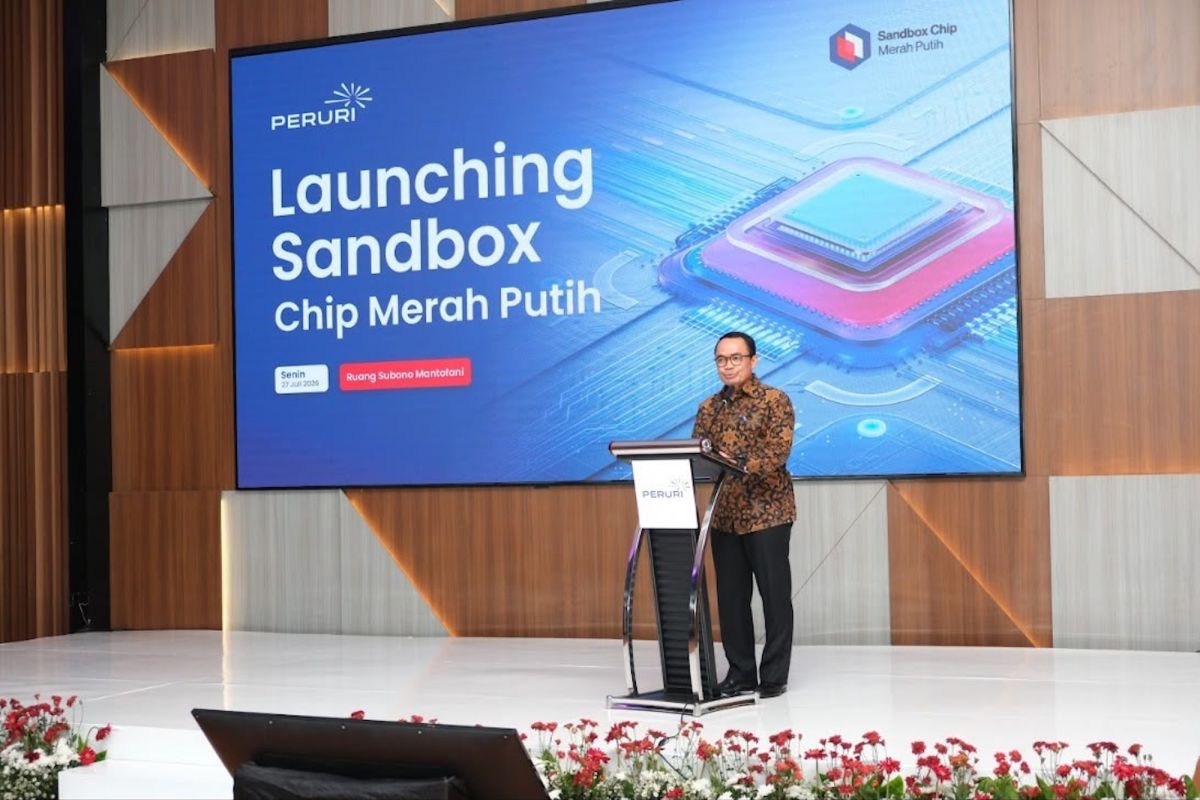
Indonesia’s Ministry of Higher Education, Science and Technology announced on 2 November 2026 that universities should join the new Red and White Chip project, a joint effort with state‑owned PERURI to build domestic semiconductor design talent.
Minister of Higher Education and Minister of Science and Technology Brian Yuliarto issued the call from Jakarta, stressing that the project’s success hinges on research collaboration, workforce training and coordinated policy frameworks. The aim is to construct a nationally guided ecosystem capable of designing, simulating and ultimately producing semiconductors for domestic use.
Central to the initiative is a “chip design sandbox,” a digital testing environment where designers can experiment with chip layouts and validate performance before any physical fabrication. It functions as an early‑stage simulation tool, providing engineers with a risk‑free platform for iterating layouts, testing circuit behavior and optimizing power consumption. The sandbox was piloted in a recent hackathon that saw 98 teams from 41 universities and 338 students develop prototype designs.
The project is backed by PERURI, the state‑owned security paper and banknote printing company, which has leveraged its digital infrastructure and experience with secure production lines to create the sandbox. PERURI also works with the State‑Owned Enterprises Regulatory Agency (BP BUMN), which has announced its readiness to submit an application for an initiative permit. This regulatory step is a key milestone toward securing a clear legal foundation for the program.
On the research front, the ministry’s Director General of Research and Development, Fauzan Adziman, said the ministry was supporting semiconductor research through collaborations with several universities. A multi‑year research program scheduled to finish in May 2028 is expected to lay a foundation for Indonesia’s national chip design capabilities, providing both technical knowledge and a talent pipeline. Adziman emphasized that the program’s timeline is aligned with the broader roadmap from chip design to possible fabrication.
At the previous meeting, the State‑Owned Enterprises Regulatory Agency conveyed its readiness to submit an application for an initiative permit. Today, we will hear the latest developments and identify what still needs to be completed. The previous target was November 11, and at least the process has begun moving into the harmonization stage,
Minister Yuliarto’s statement underlined the importance of ensuring that every stage of the project moves forward with clear direction and a solid foundation. He added that developing the chip design ecosystem requires human resource training, industry partnership and a robust policy environment that delineates responsibilities across public and private stakeholders.
In addition to the sandbox, the project roadmap covers the entire lifecycle from design to potential fabrication. While the current focus is on design, the plan also includes future steps to establish manufacturing capabilities if the technology proves commercially viable. The policy discussion involves establishing a framework that encourages cooperation between universities, research institutes, and private companies, ensuring that intellectual property rights and profit sharing are clearly defined.
The Red and White Chip project is part of Indonesia’s larger strategy to boost its high‑tech sector and reduce reliance on imported semiconductor components. By building a local design ecosystem, the country aims to generate high‑value jobs, foster innovation, and increase self‑sufficiency in critical technology sectors.
While the initiative has attracted positive reaction from academic and industry observers, some question the feasibility of scaling from design sandbox to commercial production within the projected timeline. The ministry has not yet outlined a definitive plan for partnering with overseas foundries or securing fabrication plants; however, preliminary talks are reportedly underway.
Overall, the ministry’s call to universities signals a governmental push to involve academic institutions more actively in engineering education, research, and talent cultivation. The program’s success will hinge on sustained investment, clear regulatory pathways, and the ability to translate sandbox prototypes into market‑ready products.