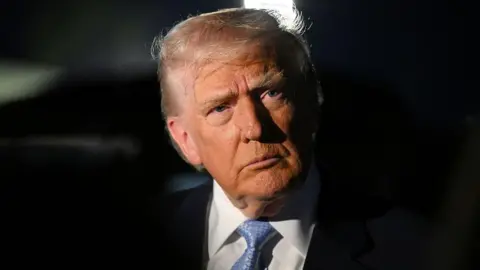
Through a recent press conference on Air Force One, Donald Trump made headlines by stating his belief that the United States will inevitably gain control of Greenland, suggesting that the island's residents desire a closer relationship with the U.S. His comments come amid ongoing discussions regarding the territorial rights of Greenland, an autonomous territory of Denmark that has historically not been open to acquisition.
The conversation about Greenland's potential sale was re-ignited by Trump's previous remarks during his first term in office, where he deemed U.S. dominion over the strategically located island essential for global security. However, Danish Prime Minister Mette Frederiksen has firmly stated that Greenland is "not for sale," further complicating the diplomatic landscape. She underscored that the island's future lies in the hands of its indigenous population, a sentiment echoed by Greenland's leaders who have emphasized their autonomy and local governance.
While Trump maintains a tone of confidence regarding a potential shift in control, communications from Greenland's leadership indicate a resolute stance against the idea of selling their territory. Local figures suggest that citizens value their independence, challenging the narrative that they wish to become part of the U.S. In response to Trump's assertions, a fishing boat captain and a church elder from the island expressed skepticism regarding Trump's claims, declaring that Greenland belongs to the Greenlanders and is "not for sale."
Amid the rising tensions, the implications of Trump's remarks have provoked a flurry of activity within Denmark's political sphere, highlighting the precarious nature of international relations concerning Greenland. There are concerns surrounding the motivations behind such a desire for acquisition, particularly regarding Greenland’s rich natural resources and its critical geographical position between North America and Europe.
As the story unfolds, the ideas surrounding military or economic pressure related to Greenland remain in limbo, with local leadership standing firm against any externally imposed claims over their land. The ongoing debate raises questions about the geopolitics of Greenland and the potential for a redefined relationship between the U.S. and this Arctic territory.
With this increasing global spotlight on Greenland, its path towards potential independence from Denmark might further reshape any future interactions with the United States, making this situation one to watch closely in the months ahead.
The conversation about Greenland's potential sale was re-ignited by Trump's previous remarks during his first term in office, where he deemed U.S. dominion over the strategically located island essential for global security. However, Danish Prime Minister Mette Frederiksen has firmly stated that Greenland is "not for sale," further complicating the diplomatic landscape. She underscored that the island's future lies in the hands of its indigenous population, a sentiment echoed by Greenland's leaders who have emphasized their autonomy and local governance.
While Trump maintains a tone of confidence regarding a potential shift in control, communications from Greenland's leadership indicate a resolute stance against the idea of selling their territory. Local figures suggest that citizens value their independence, challenging the narrative that they wish to become part of the U.S. In response to Trump's assertions, a fishing boat captain and a church elder from the island expressed skepticism regarding Trump's claims, declaring that Greenland belongs to the Greenlanders and is "not for sale."
Amid the rising tensions, the implications of Trump's remarks have provoked a flurry of activity within Denmark's political sphere, highlighting the precarious nature of international relations concerning Greenland. There are concerns surrounding the motivations behind such a desire for acquisition, particularly regarding Greenland’s rich natural resources and its critical geographical position between North America and Europe.
As the story unfolds, the ideas surrounding military or economic pressure related to Greenland remain in limbo, with local leadership standing firm against any externally imposed claims over their land. The ongoing debate raises questions about the geopolitics of Greenland and the potential for a redefined relationship between the U.S. and this Arctic territory.
With this increasing global spotlight on Greenland, its path towards potential independence from Denmark might further reshape any future interactions with the United States, making this situation one to watch closely in the months ahead.