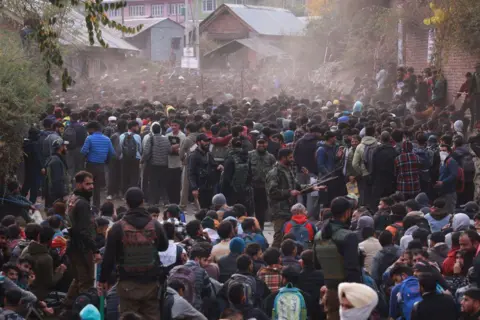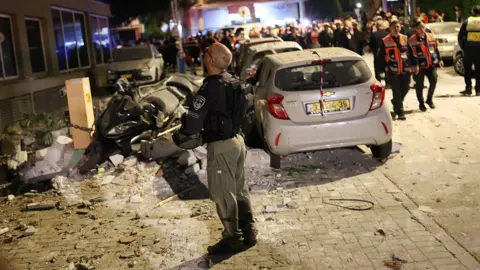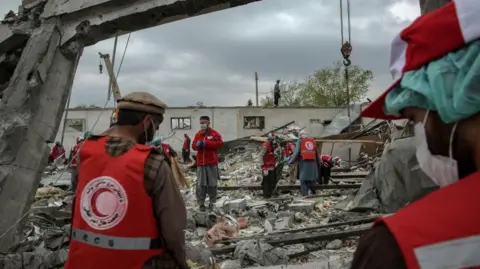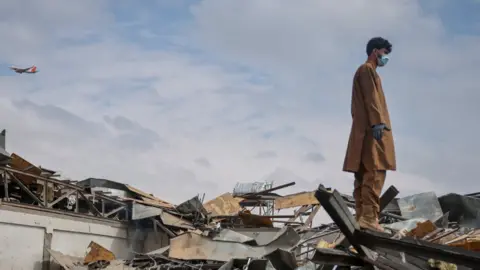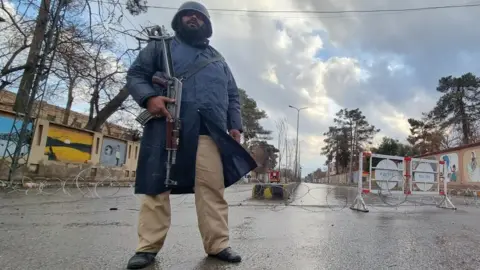
Pakistan's military says it has killed at least 92 militants blamed for deadly coordinated attacks in the south-western Balochistan province on Saturday. The military reported that 15 security service personnel and 18 civilians were also killed during the assault, which the military attributes to militants backed by India, a claim that Delhi has consistently denied. The Balochistan Liberation Army (BLA) claimed responsibility for the attacks, asserting that they targeted military personnel and installations. These accusations and counterclaims have not been independently verified.
Describing the situation as one of the deadliest days of violence in the historically impoverished province, the military stated that it had launched clearance operations across Balochistan to disrupt the militants' plans. During this time, key administrative buildings in the provincial capital, Quetta, were sealed off, mobile phone services were disrupted, and regional train services were suspended.
Prime Minister Shehbaz Sharif praised the military's efforts, reaffirming a commitment to combat terrorism until it is entirely eradicated. Earlier that day, militants armed with grenades and weapons had attacked multiple cities, focusing on police stations and governmental infrastructures, triggering a significant military response.
The BLA claims that the federal government exploits Balochistan's rich mineral resources without benefiting local communities, while local activists assert that government forces commit enforced disappearances of individuals opposed to state policies. Resistance against Islamabad has streamed since 1948, following the formation of Pakistan.
This violent clash occurs in a region that not only shares borders with Iran and Taliban-controlled Afghanistan but also has extensive access to the Arabian Sea, indicating its strategic importance. The local Baloch population, the majority ethnic group in the region, has raised concerns over governance and representation, highlighting the complexity of the insurgency that seeks greater autonomy or independence.
Describing the situation as one of the deadliest days of violence in the historically impoverished province, the military stated that it had launched clearance operations across Balochistan to disrupt the militants' plans. During this time, key administrative buildings in the provincial capital, Quetta, were sealed off, mobile phone services were disrupted, and regional train services were suspended.
Prime Minister Shehbaz Sharif praised the military's efforts, reaffirming a commitment to combat terrorism until it is entirely eradicated. Earlier that day, militants armed with grenades and weapons had attacked multiple cities, focusing on police stations and governmental infrastructures, triggering a significant military response.
The BLA claims that the federal government exploits Balochistan's rich mineral resources without benefiting local communities, while local activists assert that government forces commit enforced disappearances of individuals opposed to state policies. Resistance against Islamabad has streamed since 1948, following the formation of Pakistan.
This violent clash occurs in a region that not only shares borders with Iran and Taliban-controlled Afghanistan but also has extensive access to the Arabian Sea, indicating its strategic importance. The local Baloch population, the majority ethnic group in the region, has raised concerns over governance and representation, highlighting the complexity of the insurgency that seeks greater autonomy or independence.