In brief
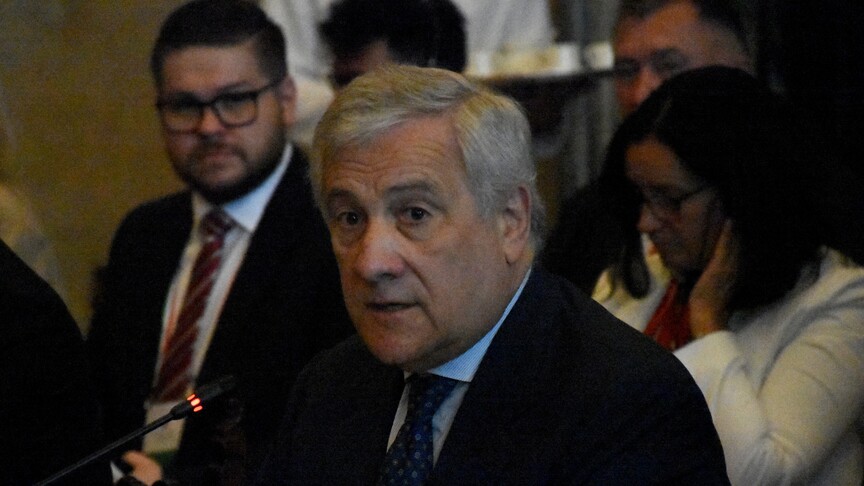
Italian Foreign Minister Antonio Tajani confirmed a dark‑web leak of his personal data, identifying cybercriminals linked to hostile state actors as the perpetrators. He blamed Italy’s support for Ukraine for the targeting, pledged to resist intimidation, and highlighted recent cybersecurity upgrades at the foreign ministry.
On 7 November 2026 the Italian Foreign Minister Antonio Tajani announced that his personal information was circulating on the dark web, a hidden layer of the internet where illicit data can be traded and accessed by anonymity.
The minister said the leak was the product of a coordinated effort by cybercriminals who, according to him, were “often linked in some way to state entities hostile to us.” This statement implies that the actors behind the data dump are not merely independent hackers but may be receiving support from adversarial governments.
"My reaction is very simple: I will not be intimidated in any way," Tajani wrote in a post on X, the U.S. social‑media platform now known as X. The statement signals a refusal to engage with the coercive tactics that he claims accompany the data leak.
"My reaction is very simple: I will not be intimidated in any way."
The Minister linked the leak and the accompanying threats to Italy’s political stance on the Ukraine conflict. He stated, “Our position on Ukraine is the political reason why I have become a target.” By framing the incident as politically motivated retaliation, Tajani highlights how foreign policy can become a vector for cyber‑hostile activities.
"Our position on Ukraine is the political reason why I have become a target."
According to the Anadolu report, the cybercriminals have been circulating Tajani’s personal data for days and appear to be actively seeking further detailed information about him and his family. They have also offered to surrender additional data on a monetary basis, indicating that the leak is part of a broader “extortion‑like” scheme.
The minister noted that the Foreign Ministry’s internal cybersecurity posture has undergone significant strengthening. On 1 January, a dedicated cybersecurity directorate was established specifically to counter intrusion attempts that are “often linked in some way to state entities hostile to us.” The directorate’s purpose is to monitor cyber‑threats, conduct incident response, and cooperate with allied agencies.
“We are operational and connected to our allies,” Tajani said, underscoring that Italy’s cyber‑defense strategy is not a solitary endeavour but part of a broader international framework designed to mitigate threats from hostile actors.
The use of the dark web in this incident exemplifies how authoritarian or hostile state actors can leverage clandestine cyber channels to collect, sell, or weaponise personal data. The dark web remains a nexus for covert data exchange, a domain where regulatory oversight is limited and anonymity is reinforced by specialized network protocols such as Tor.
From a technical perspective, the leak indicates that a powerful and persistent anonymous actor managed to breach or compromise the foreign ministry’s security perimeter. Possible attack vectors include phishing of senior staff, exploitation of software vulnerabilities, or collusion with insiders. While the Minister did not specify the exact vector, he emphasised the importance of the newly created directorate in dealing with similar incidents.
The incident also reflects the growing trend of cyber‑extremism, where state or state‑aligned actors use “extortion‑like” tactics to coerce political figures. By demanding payment for more data, the attackers are using the personal exposure as leverage; this can be interpreted as an attempt to destabilise political stability or to undermine a country’s foreign policy. The Strait of Italy’s foreign minister has expressly denied any intention to capitulate.
In addition to the explicit threat, the presence of encrypted messaging and anonymous marketplaces on the dark web facilitates the trade in sensitive data. The technical community generally notes that the “dark web” consists of sites that require specific software to disclose, thereby shrouding requests, transactions and sharing of personal data from conventional law‑enforcement scrutiny.
The minister’s reassurances and appeal for cooperation align with standard best‑practice frameworks for national cyber‑defense. He emphasised operational readiness and alignment with allies, a strategy echoed across several European nations increasingly targeting cyber‑terrorism roots.
While the Minister’s statement does not single out a particular nation-state responsible for the leak, he placed the blame on Russia‑aligned cyber‑operators, implicating them indirectly by citing “hostile state actors.” Other media reports, such as those from VOZ, also mention an intimidation campaign linked to the Italian support for Ukraine, and domestic outlets have brought up the possibility of pro‑Russian hackers behind the breach.
The severity of the breach and the Minister’s response have prompted discussions among policy analysts and technologists about the adequacy of current defense mechanisms under increased geopolitical cyber pressure. The formation of the cybersecurity directorate, negotiated during a period of training and information‑sharing with allies, marks a tangible step forward, even if the threat landscape continues to evolve.
In summary, the exposure of the Italian Foreign Minister’s personal data on the dark web underscores the reality that high‑profile political figures are susceptible to state‑backed cyber‑hostile actors. The incident illustrates how political stances—such as support for an overseas conflict—can become catalysts for targeted cyber aggression. It also highlights the need for continuous jurisdictional collaboration, advanced detection capabilities, and transparent public communication in counter‑counteracting these threats.