In brief
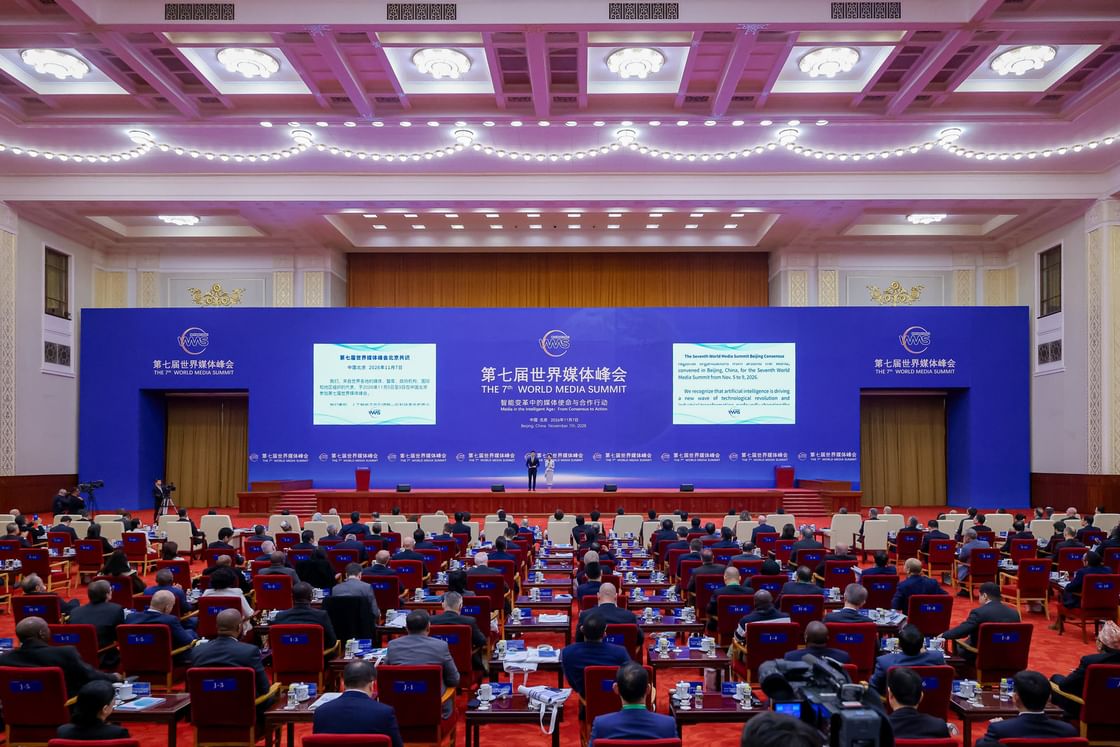
The Emirates News Agency (WAM) took part in the opening ceremony of the 7th World Media Summit in Beijing, held from November 5–9, 2026. The summit attracted about 500 delegates from 330 media outlets and organizations across 112 countries, focusing on artificial intelligence, digital transformation, and international media cooperation.
The Emirates News Agency (WAM) highlighted its commitment to AI‑driven media innovation by participating in the opening ceremony of the 7th World Media Summit in Beijing. The summit, organized by Xinhua News Agency in partnership with the Beijing municipal government, ran from November 5 to 9 and adopted the theme "Media in the Intelligent Age: From Consensus to Action," signaling the industry’s pivot toward machine learning, natural‑language processing, and automated content generation.
Approximately 500 delegates attended the opening, drawn from 330 media outlets, think tanks, government agencies, and international bodies, including the United Nations. Delegates represented 112 countries and regions, marking a broad geographic sweep from the Global North to the Global South. This diverse consortium underscored the growing recognition that digital transformation is shaping every corner of the journalism ecosystem.
The summit’s agenda was structured around three pillars: strengthening international media cooperation, exploring the opportunities and challenges of artificial intelligence, and fostering news content development suited for a global audience. Sessions included plenary talks by industry leaders, thematic forums on AI ethics and data governance, and cultural activities to foster cross‑cultural understanding. Field visits to Beijing’s tech hubs and media centers allowed participants to observe real‑world AI applications in live news production and audience analytics.
AI as the Engine of Transformation
Central to the summit’s discourse was the role of artificial intelligence in redefining content workflows. The term “artificial intelligence,” broadly defined as computer systems that mimic human cognition, was explored in depth. Speakers highlighted advancements in neural‑network models that enable real‑time fact‑checking, predictive journalism, and hyper‑personalized audience targeting. One panel discussed how AI algorithms can accelerate the curation of disaster reporting, providing automated alerts that blend satellite imagery with social media signals.
According to a WAM representative, the agency is actively integrating AI tools into its newsrooms to improve efficiency and audience engagement. The representative noted that WAM’s adoption of automated translation technologies has already broadened its reach to non‑Arabic‑speaking markets. This aligns with the summit’s broader objective of leveraging AI to democratize information access.
Meanwhile, several sessions addressed the potential pitfalls of AI in journalism. Journalists from the Global South called for robust regulatory frameworks that balance innovation with accountability. They emphasized the need to safeguard against algorithmic bias and to maintain editorial independence in an era where automated content recommendation can shape public discourse.
Notably, the summit’s organizers referenced the World Media Summit’s legacy, having launched the event in 2009 as a platform for global media exchanges. Over the years, the summit has facilitated policy dialogues on data security, cross‑border media ownership, and the sustainable development of digital infrastructure. In 2026, the focus sharpened on the intersection of AI and journalism, reflecting the rapid deployment of large‑scale language models in media production pipelines.
While WAM’s role in the event was largely ceremonial, its presence underscored the UAE’s investment in advancing media technology. The agency’s spokesperson highlighted its collaboration with local universities to train journalists in AI literacy and ethical data use. This initiative is part of a broader national strategy to position the UAE as a leading hub for media innovation in the Middle East.
The summit’s cultural component included a showcase of traditional Chinese storytelling alongside interactive AI‑generated narratives, demonstrating how heritage content can be revitalized through immersive technologies. Participants reported that such hybridity widens audience demographics, bringing younger viewers into classical narratives via virtual reality interfaces.
By the end of the final day, delegates urged world media leaders to commit to actionable frameworks that promote responsible AI use. The summit concluded with a panel on collaborative research, encouraging joint ventures between universities, tech companies, and media houses to accelerate the development of ethical AI tools tailored for journalism.
WAM’s engagement in the opening ceremony reaffirmed its role as a key player in the global media ecosystem, poised to harness AI’s potential while emphasizing transparency and inclusivity.