The European Commissioner for Budget, Anti‑Fraud and Public Administration Piotr Serafin spent Thursday and Friday in Sofia, outlining the priorities for the EU’s Multiannual Financial Framework (MFF) 2028‑2034 and meeting Bulgarian officials on the framework’s financing and implementation. With a focus on defence investment, cohesion, and agricultural policy, the visit was part of Serafin’s European tour to consult Member States on the bloc’s long‑term budget.
On Thursday, Serafin held a meeting with Prime Minister Rumen Radev, Finance Minister Galab Donev, and Deputy Prime Minister Atanas Pekanov—who oversees EU‑fund management. The discussion centered on how the next MFF must balance growth, cohesion, and security across the Union, a theme echoed in earlier talks across Europe.
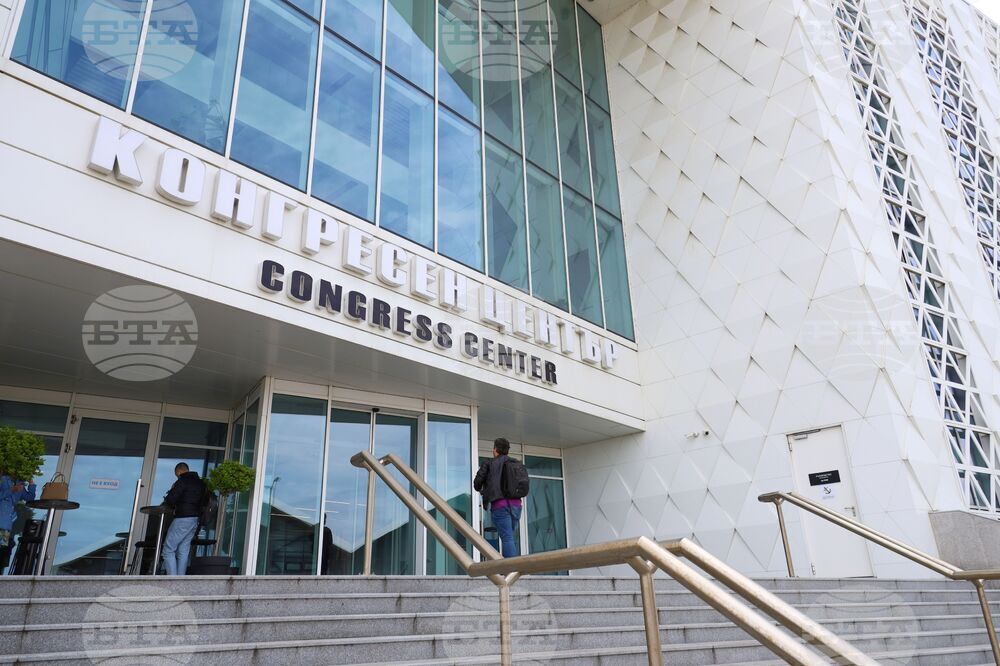
Following the ministerial talks, Serafin opened a jointly organised conference titled The Next Multiannual Financial Framework: Priorities and Principles in Sofia. The event was coordinated by the European Commission Representation in Bulgaria, the Embassy of Poland and the Sofia office of the European Council on Foreign Relations. Speakers highlighted that decisions on the next seven‑year budget must be made despite an uncertain future, pointing to defence spending as essential for EU security.
"Increased defence investment must be reflected in the next budget if the EU is to safeguard peace and security along its borders," Serafin said at the conference.
Serafin also emphasised that the proposed budget would represent 1.02 % of the EU’s gross national income (GNI), compared with 1.13 % in 2020 when the bloc’s budget was supplemented by €700 billion under NextGenerationEU. He underlined the importance of maintaining cohesion and agricultural policy while achieving fiscal prudence.
On Friday, the commissioner met with the National Association of Municipalities to discuss regional aspects of the National and Regional Partnership plans, a key pillar of the MFF. He was accompanied by Atanas Pekanov during visits to the National STEM Centre in Sofia Tech Park—a hub for science and technology research funded by the Recovery and Resilience Plan—and to EnduroSat’s laboratory and mission control center, a satellite manufacturer supported by the European Innovation Council.
Finance Minister Galab Donev, during a separate meeting with Serafin, highlighted the necessity of a robust revenue strategy that preserves EU cohesion, agriculture, and food security without imposing additional national budget burdens. He called for an ambitious, fair and balanced EU budget that would maintain the EU’s role as a stabilising force.
"We are seeking agreement on appropriate sources of revenue for the EU budget while avoiding additional burdens on national budgets," Donev said.
Serafin responded by stressing the ethical imperative of reaching a consensus on the MFF before year’s end, noting that the package of proposals must be considered as a whole and that compromises would be inevitable.
In both Peter’s talks and his subsequent visits, a central theme emerged: the need to simplify complex funding procedures, reduce overlapping regulations, and improve legal consistency. Stakeholders from across Member States expressed a shared concern that navigating EU funding should become less bureaucratic, thereby enabling more effective deployment of resources to science, defence and infrastructure projects.
While the visit was largely diplomatic, it also carried significant implications for the scientific community. The inclusion of funded facilities such as the National STEM Centre and EnduroSat illustrates the Commission’s commitment to advancing research infrastructures under the EU’s Digital and Digital‑Industrial Strategy, which prioritises high‑performance computing, satellite communications, and cross‑border data sharing.
Serafin’s remarks suggest that the Commission views science and technology as integral to both defence — through satellite reconnaissance and secure communications — and to social cohesion, ensuring that innovation benefits all Member States. The emphasis on transparency and accountability aligns with EU legislative trends that require clear reporting on how funds are utilised across research consortia and industrial programmes.
As the EU moves closer to finalising the 2028‑2034 MFF, the dialogues in Sofia exemplify the broader policy debate that balances security, prosperity and sustainability. Bulgaria’s engagement with the European Budget Commissioner underscores both the national and European stakes involved in shaping a budget that supports scientific progress, regional development, and collective resilience in a rapidly evolving geopolitical landscape.