In brief
A group of African athletes, led by Senegal’s Marieme Diallo, completed intensive training camps in China as part of the China‑Africa Year of People‑to‑People Exchanges. They focus on table tennis, wushu, changquan, and taijiquan, gaining technical gains and mental resilience under Chinese coaching. Returning home, the athletes are eager to showcase their progress at the Dakar 2026 Youth Olympic Games.
With the Dakar 2026 Youth Olympic Games fast approaching, Algerian, Senegalese, and Tunisian competitors have concluded intensive training camps in China, sharpening their form and confidence before the historic continental showcase. In Changsha, central China’s Hunan Province, 16‑year‑old Senegalese table‑tennis star Marieme Diallo enjoyed the final touches on her preparation before the YOG.
Marieme Diallo, 16, reported to Xinhua:
We can keep the ball in play much longer than usual because they taught us the proper techniques.
— Xinhua.
Diallo’s statement highlights the technical refinement that Chinese coaches emphasize, from consistent serve placement to controlled backhand rallies. Coach‑in‑charge of the Senegalese delegation, Marie Fara Mendy, echoed her own impressions of the training environment.
Marie Fara Mendy said:
What impressed me most was the rigor, discipline and sports facilities. I was also impressed by the attention paid to technical details, the volume of ball practice and the role played by sparring partners. There was also the physical conditioning, as well as the patience and kindness of the coaches despite the language barrier.
— Xinhua.
Training and Coaching Methodology
The camps are part of the China‑Africa Year of People‑to‑People Exchanges, a governmental initiative to strengthen ties through sports education. The program has brought Senegalese youth table‑tennis squads to China for a second consecutive year, offering a semi‑closed‑door regime where athletes can train for four to five hours daily. According to Mendy, the structured sessions fostered both physical stamina and tactical awareness.
“In technical terms, the players improved their serves, returns, consistency on the backhand and footwork,” notes Mendy. Footwork, the coordinated movement of a player’s feet to maintain balance and positioning near the net or baseline, is critical for rapid direction changes during rallies.
Beyond table tennis, the camps also feature Chinese martial arts such as wushu, changquan, and taijiquan. African athletes engage in competitive sparring with their Chinese peers, allowing them to adapt to varied styles and tempos.
Meanwhile, at the Tianjin Huoyuanjia School, four Senegalese athletes – two boys and two girls – spent a nearly two‑month closed‑door period focusing on wushu disciplines. The rigorous training schedule included twice‑daily drills on balance, flow, and explosive power, under the watchful eyes of local coaches.
Aliou Niasse, a 15‑year‑old wushu practitioner from Senegal, shared his experience:
We have learned to maintain focus for long periods, and our confidence has grown as we see our improvements in the mirror.
— Xinhua.
These training traditions are noted for their emphasis on *sustainability*—the ability to endure multiple hours of intensive practice while retaining technique accuracy. The psychological component is equally prominent, as athletes articulate a heightened sense of self‑belief that will underpin their performance at the Youth Olympic Games.
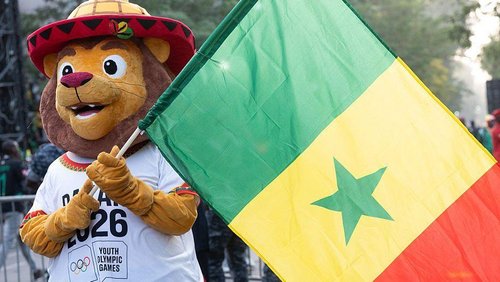
After their return to Dakar, the athletes express intent to honor their national flags. Mendy emphasized, “Their goal is to represent Senegal with pride in front of their home crowd and showcase the progress made.” She highlights the humility the athletes carry, despite the boost in confidence.
Co‑organizers of the Youth Olympic Games have noted that this initiative exemplifies the Olympic spirit of growth through international mentorship. By bridging technical gaps and fostering cross‑cultural understanding, African athletes arrive in Dakar prepared not only to compete but also to narrate a story of collaboration and resilience.
As the 2026 YOG draws closer, the Senegalese and Tunisian delegations will continue to refine their skills in the lead‑up, confident that the exposure to Chinese coaching standards has given them a competitive edge on the world stage.