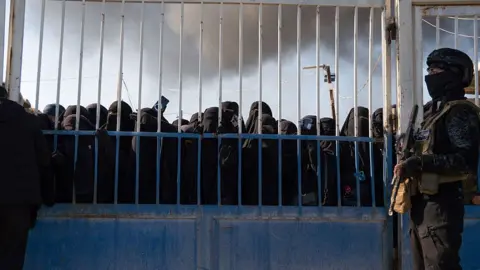
The United Nations (UN) says it will take over management of a camp in north-eastern Syria holding thousands of people with alleged links to the jihadist group Islamic State (IS).
This change follows the withdrawal of Kurdish-led forces managing the camp, due to a push from Syrian government forces. This withdrawal triggered unrest, leading to the suspension of aid operations.
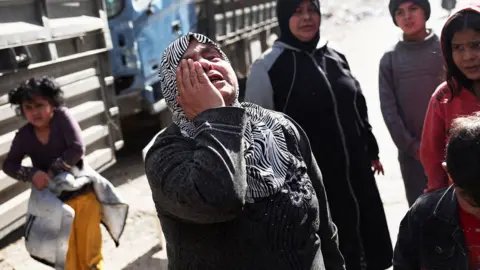
Reports indicate that residents attempted to rush the camp's perimeter in an effort to escape, causing unrest and looting.
A ceasefire agreement has shifted control of much of northeast Syria back to Damascus, ending years of Kurdish autonomous rule.
During a UN Security Council briefing, Edem Wosornu indicated that the UN refugee agency, UNHCR, had assumed management responsibilities at Al-Hol and is coordinating with Syrian authorities to restore humanitarian access. Security forces from Syria have established a perimeter around the camp.
However, UN spokesman Stéphane Dujarric warned that conditions in the camp are still tense and volatile, with humanitarian operations currently halted due to the recent violence.
In parallel, the U.S. has initiated an operation to relocate high-risk detainees from the region entirely. On Wednesday, U.S. Central Command confirmed the transfer of up to 7,000 suspected IS fighters from northeastern Syrian prisons to Iraq, with 150 detainees already moved to a secure location across the border.
Iraqi authorities stated that all transfer detainees will be prosecuted under Iraqi law. Iraqi Deputy UN Ambassador Mohammed Sahib Mejid Marzooq emphasized the importance of addressing this issue to avoid a long-term strategic burden on Iraq alone.
The Syrian government has expressed support for the U.S. operation of transferring IS detainees out of Syrian territory.
Rights groups have raised concerns that transferred detainees may face serious abuses. The charity Reprieve has urged the UK government to intervene, citing that there could be British nationals among those transferred, including juvenile detainees.
The Kurdish-led Syrian Democratic Forces (SDF), the U.S., and the UN have long advocated for the repatriation of foreign IS suspects and their families from northeastern Syria, citing dire conditions in the camps and prisons, but many countries have been reluctant to accept them.