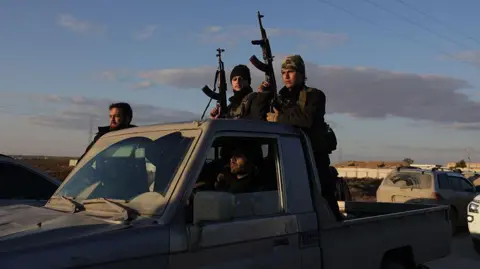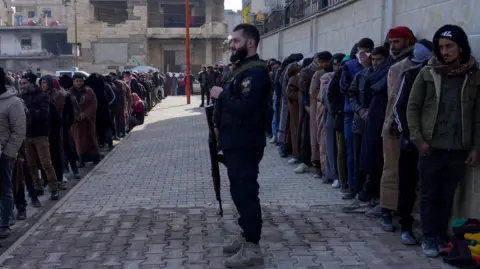
Syria's government has reached a deal with the Kurdish-led Syrian Democratic Forces (SDF) militia alliance that will gradually integrate Kurdish forces and institutions into the state. This agreement comes after weeks of clashes that allowed Syrian troops to reclaim significant territories in the northeast previously held by the SDF for over a decade.
US envoy Tom Barrack emphasized this development as 'a profound and historic milestone in Syria's journey toward national reconciliation, unity, and enduring stability.'
Earlier this month, the SDF had agreed to a ceasefire following extensive territorial losses, although reports of ongoing clashes persisted. Similar to a previous 14-point agreement, this latest deal requires the SDF to withdraw from certain contact points and join the Syrian army, integrating their civil and administrative bodies into the government's structures.
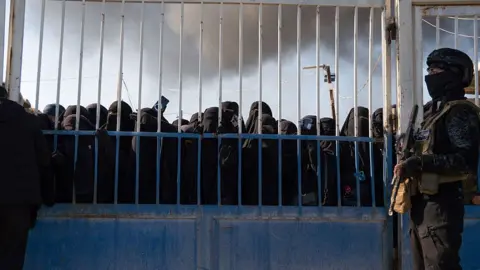
The agreement also encompasses the establishment of a military division composed of SDF members and outlines civil and educational rights for Kurdish people, ensuring their displaced population can return to their homes. Furthermore, control of SDF-held prisons and natural resources, including oil and gas fields, has been transferred to the Syrian government.
Following the SDF's withdrawal, Syrian forces took control of the Omar facility, Syria's largest oilfield, and previously secured the strategically vital Tabqa dam on the Euphrates River. The Kurds had controlled nearly a third of Syria's territory, greatly supported by the US in their campaign against the Islamic State (IS) group.
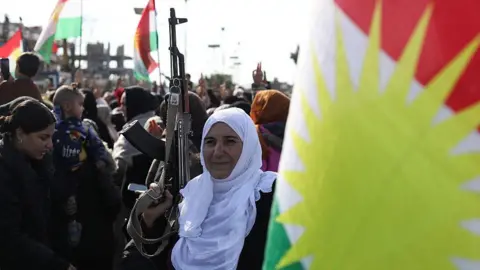
This recent shift represents the largest change in territorial control since former leader Bashar al-Assad was deposed in December 2024, ending Syria's long-standing civil war. President Ahmed al-Sharaa has repeatedly declared his intentions to reunify Syria and has issued directives to acknowledge Kurdish cultural, linguistic, and civil rights, marking the first formal recognition of Kurdish national rights since Syria’s independence in 1946.
This new deal concluded months of stalled discussions surrounding a March 2025 integration plan, amid mutual accusations of obstruction.
US envoy Tom Barrack emphasized this development as 'a profound and historic milestone in Syria's journey toward national reconciliation, unity, and enduring stability.'
Earlier this month, the SDF had agreed to a ceasefire following extensive territorial losses, although reports of ongoing clashes persisted. Similar to a previous 14-point agreement, this latest deal requires the SDF to withdraw from certain contact points and join the Syrian army, integrating their civil and administrative bodies into the government's structures.
The agreement also encompasses the establishment of a military division composed of SDF members and outlines civil and educational rights for Kurdish people, ensuring their displaced population can return to their homes. Furthermore, control of SDF-held prisons and natural resources, including oil and gas fields, has been transferred to the Syrian government.
Following the SDF's withdrawal, Syrian forces took control of the Omar facility, Syria's largest oilfield, and previously secured the strategically vital Tabqa dam on the Euphrates River. The Kurds had controlled nearly a third of Syria's territory, greatly supported by the US in their campaign against the Islamic State (IS) group.
This recent shift represents the largest change in territorial control since former leader Bashar al-Assad was deposed in December 2024, ending Syria's long-standing civil war. President Ahmed al-Sharaa has repeatedly declared his intentions to reunify Syria and has issued directives to acknowledge Kurdish cultural, linguistic, and civil rights, marking the first formal recognition of Kurdish national rights since Syria’s independence in 1946.
This new deal concluded months of stalled discussions surrounding a March 2025 integration plan, amid mutual accusations of obstruction.