In brief
After Trump announced a substantial reduction of the Ulchi Freedom Shield exercise, South Korea’s 18,000 troops halted mid‑drill, startling allies and fraying confidence in U.S. support. Seoul’s leaders, who view the annual drills as proof of American commitment, condemned the abrupt move while reassessing the cost of the alliance. Trump’s agenda – a mix of trade friction and an attempt to woo Kim Jong Un – coincides with North Korea’s expanding military posture and its new ties to Russia and China. Experts warn that such unilateral decisions may push South Korea to rethink its reliance on American forces and reconsider its own deterrence strategy. The situation highlights mounting pressure on the continent as leaders juggle diplomatic overtures against looming regional power shifts.
U.S. President Trump announced – with a telegram that surprised Seoul’s officials – a "substantial" reduction in the Ulchi Freedom Shield war games that normally bring 18,000 South Korean troops and 11 allied armies into the DMZ each year. The halt came only after the plan was crafted, leaving the Korean peninsula in a state of uncertainty.
Seoul’s Foreign Minister Cho highly stressed that the decision was a "mutual agreement," and insisted that servers had never been briefed on the moves beforehand. The news rattled allied capitals; Taiwan and Japan, for whom the U.S. remains the primary security guarantor, questioned the continuity of such large-scale forces in the region.
Experts on the U.S.-Korea alliance warning that Trump’s short‑sighted orientation could slice through the chain of command. Even the senior researchers at the Atlantic Council convey fear that Trump might push further to pull U.S. military detachments or abandon the longstanding denuclearisation policy without Seoul’s consent.
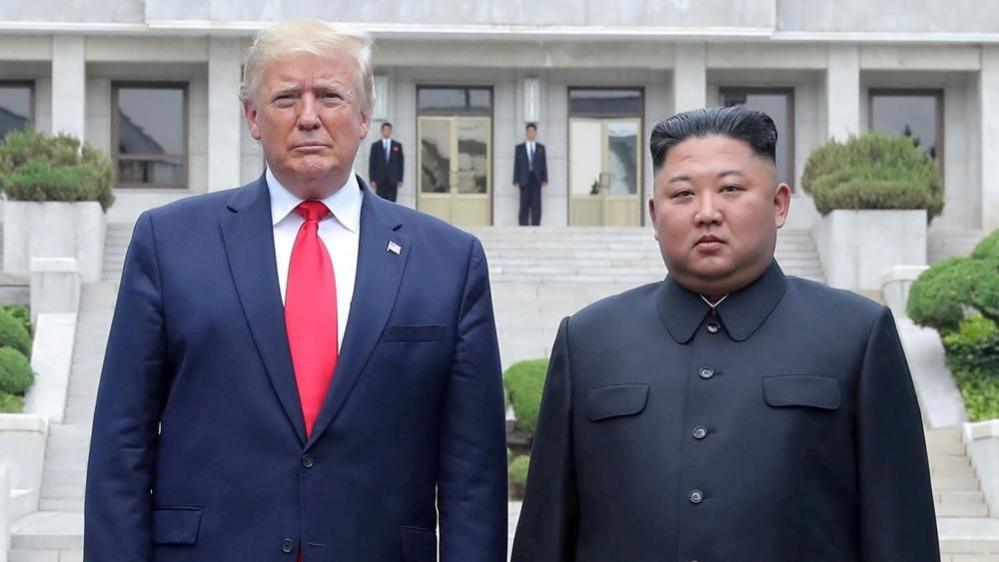
In the grander scheme, Trump’s desire to deepen ties with Kim Jong Un is tangled with the U.S. trade disagreements and his refusal to ally with Seoul’s stances on Iran. The public suspects, and many commentators affirm, Trump sees the South as a costly partner that should yield to his trade pressure while ignoring the strategic balance on the peninsula.
Should Trump successfully meet Kim, the international community may doubt whether the North can uphold the deterrence veil that protects regional stability. Nevertheless, the South’s current stance quietly signals Brazil’s tilt toward strengthening its own nuclear deterrence – a fragile safeguard while the U.S. reevaluates its presence elsewhere.
Overall, South Korea faces a decision: either deepen reliance on American forces or follow a think‑up path to authentic deterrence. The former risks an uneasy alliance; the latter could shift the United Nations security equation in an unprecedented fashion.