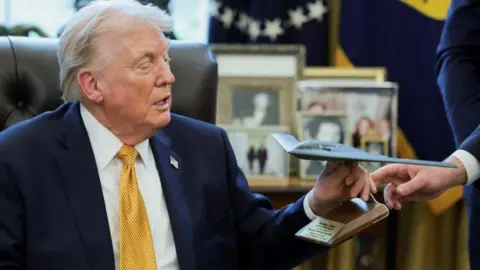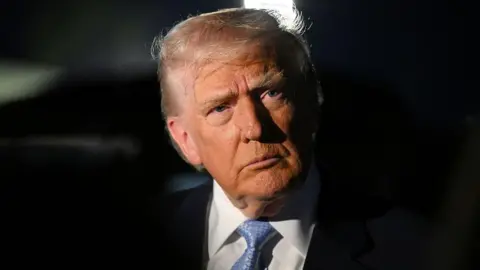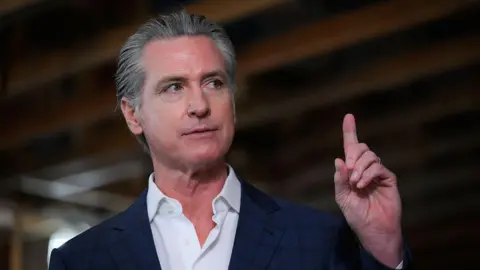
Donald Trump has sparked controversy by stating that learning disabilities should disqualify individuals from presidential office, ridiculing California Governor Gavin Newsom for his dyslexia. During a recent event, Trump referred to Newsom as 'dumb' and claimed a president should not have learning disabilities.
The remarks come amidst growing tension between the former president and the governor, who is seen as a possible contender for the Democratic nomination in the next presidential election. In a humorous retort on social media, Newsom reminded Trump that he is also not the president.
The National Center for Learning Disabilities publicly condemned Trump's comments, emphasizing that such assertions promote stigma against those with learning disabilities. They highlighted that dyslexia, affecting up to 20% of the population, does not impair judgment or ability to lead.
Past U.S. presidents, including George Washington and John F. Kennedy, are believed to have had dyslexia, illustrating that learning disabilities do not hinder intelligence or capability. Advocacy groups stress the importance of understanding and supporting individuals facing these challenges rather than using them as a means of ridicule in political discourse.
The remarks come amidst growing tension between the former president and the governor, who is seen as a possible contender for the Democratic nomination in the next presidential election. In a humorous retort on social media, Newsom reminded Trump that he is also not the president.
The National Center for Learning Disabilities publicly condemned Trump's comments, emphasizing that such assertions promote stigma against those with learning disabilities. They highlighted that dyslexia, affecting up to 20% of the population, does not impair judgment or ability to lead.
Past U.S. presidents, including George Washington and John F. Kennedy, are believed to have had dyslexia, illustrating that learning disabilities do not hinder intelligence or capability. Advocacy groups stress the importance of understanding and supporting individuals facing these challenges rather than using them as a means of ridicule in political discourse.