In brief
In a surprising legal move, the Justice Department filed a lawsuit to prevent the certification of Alaska’s Senate election results if incumbent Dan Sullivan is defeated. The government argues that a co‑candidate named Dan J. Sullivan could confuse voters, potentially skewing the outcome. Polls show the race is close, with Democrat Mary Peltola slightly ahead as the election approaches. President Trump has publicly condemned the rival candidate as a “scam” and promised to pursue “powerful legal options” to remove him. No candidate has yet commented, but the lawsuit could delay certification pending an investigation into voter confusion, a development that could reverberate across the 2026 midterm election cycle.
The Justice Department has filed a federal lawsuit on Thursday seeking to stop the certification of Alaska’s upcoming Senate election if Republican Senator Dan Sullivan is defeated, citing a ballot copycat that could mislead voters.
According to the filing, a second candidate using the name Dan J. Sullivan also appears on the ballot. Officials claim that the coincidence could cause ballot‑box confusion, potentially diverting votes from the incumbent into the rival.
Polls indicate the race between Sullivan and Democrat Mary Peltola is tight, with Peltola holding a narrow lead as the November 3 election looms.
The suit asks a judge to bar Alaska from certifying results that would show a loss by Sullivan if the margin between the two Dan Sullivans is smaller than the difference in votes.
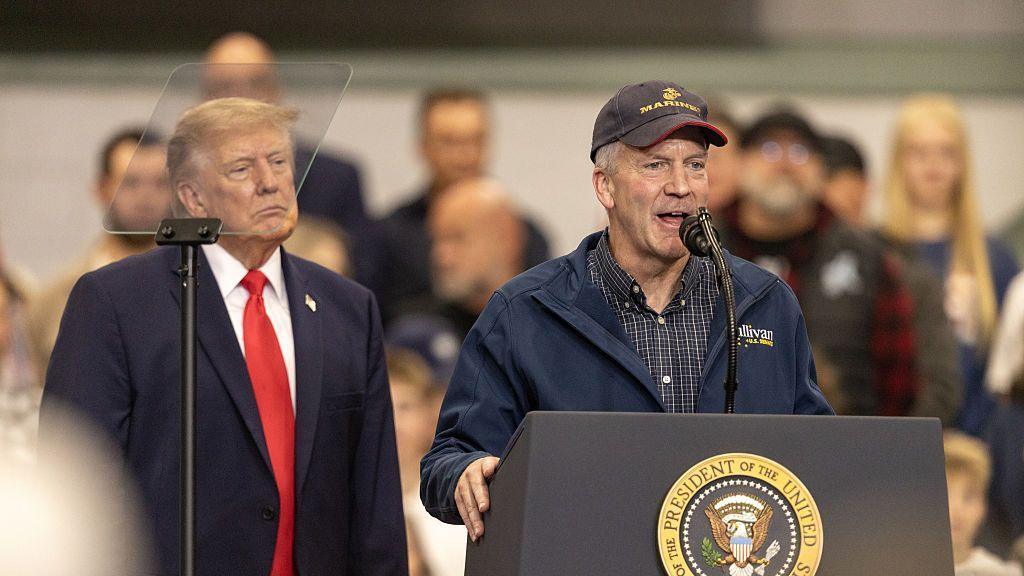
President Donald Trump reiterated the lawsuit in the first light of a Florida campaign rally, stating “I’m the one that said do it,” and denounced the second candidate as a “scam.”
Despite the backlash, the second Sullivan, a retired teacher and former U.S. Forest Service employee, insists his candidacy is legitimate and has no hidden agenda.
Alaska’s Supreme Court has previously rejected efforts to remove him from the ballot, clearing the way for his participation in the race.
On the ballot, the incumbent will be sequestered as the Republican candidate, while the challenger will also appear under the same name, a scenario that encourages voters to forward a choice to both if unsure under the state's ranked‑choice system.
The junior attorney general in the file, Stanley E. Woodward Jr., argued that including the second candidate “taints the integrity of the electoral process” and that a certification would reflect a distorted will of Alaskan voters.
Former U.S. Forest Service worker Dan J. Sullivan’s political history includes a brief stint with the Alaska Independence Party before registering as a Republican this year.
Woodward claimed the primary motive of the candidacy was to siphon votes from Sullivan, benefiting Peltola’s campaign. Sullivan refutes the allegation, stating he would “not even know who to speak to” in Peltola’s operations.
Should Peltola win and evidence suggests voter confusion, the lawsuit requests a delay in certification pending investigation into the impact of the duplicate name on ballots and a determination of what the results would have been had the second candidate been removed.
Neither candidate has yet offered an explicit comment on the legal action.
The Senate clash in Alaska, a race Trump won in 2024 by 14 percentage points, remains one of the most closely watched contests in the 2026 midterm election calendar.
Trump’s approval ratings down in the state reflect voter discontent over rising prices and the war in Iran, factors that may influence the outcome of the contested election.