In brief
When the Goliath roller coaster at Six Flags Over Georgia halted unexpectedly, the incident resulted in a fatality and several injuries, igniting an immediate investigation by local police and federal safety regulators. Witnesses and surveillance footage indicate a rider was ejected from the ride, a scenario rarely seen on modern coasters. The incident prompted Six Flags to temporarily shut nine rides across the U.S. and Canada while the company cooperates with authorities. Experts explain that roller coaster safety hinges on precise harness design and rigorous maintenance, highlighting gaps in state‑only regulation. The tragedy underscores the need for tighter oversight and real‑time safety analytics in the amusement‑park industry.
One fatality and several injuries occurred when the Goliath roller coaster at Six Flags Over Georgia malfunctioned, raising serious questions about ride safety protocols.
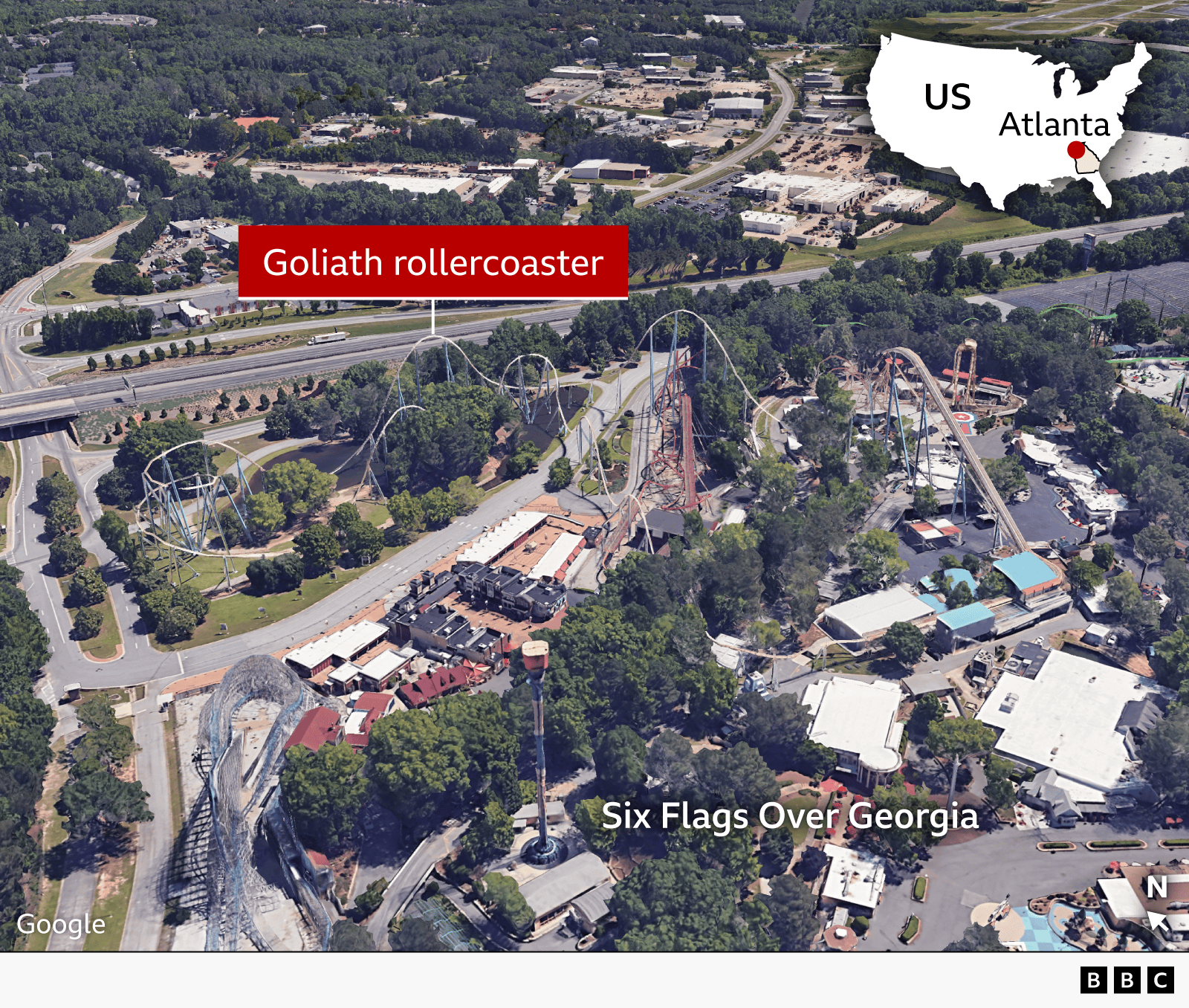
The incident happened Monday afternoon near Atlanta and was captured on aerial footage showing the coaster stopping mid‑air, with riders stranded on the rails. Police recovered the body of 42‑year‑old Hassan Jihad Ibn Kariem beneath the track; witnesses reported he was ejected before falling into the park’s haunted house roof.
The Cobb County Police Department, aided by the Office of Commissioner of Insurance and Safety Fire, launched an investigation that includes reviewing maintenance logs and harness integrity. The preliminary police statement cites that the rider’s seat had come loose, striking other passengers before the vehicle descended.
Six Flags issued a statement expressing deep sadness and said it had already begun shutting nine attractions across North America as a precautionary measure while cooperating fully with authorities.
“This is a tragic moment for everyone who was involved,” the company said, adding that employee and safety harness checks were “routine” before the ride’s launch.
Experts explain that modern roller coasters rely on precise harness geometry to keep riders within the track’s containment envelope. Professor Brian Avery, a specialist in ride mechanics from the University of Florida, noted that while Goliath’s design met manufacturer safety standards, “any failure of a single restraint can have catastrophic consequences when forces exceed 3 g.”
The tragedy highlights that amusement‑park safety in the United States falls largely under state jurisdiction, leaving federal oversight limited. Avery emphasised the value of comprehensive safety analytics—something that could detect anomalous sitting patterns or sudden restraint slack before accidents occur.
Eight deaths have occurred at Six Flags parks since the company’s opening, and this latest incident may spark renewed calls for a national standard that incorporates real‑time sensor data, exhaustive maintenance audits, and stricter ride‑augmentation protocols.
For the families impacted by this crash, as well as for regulators looking to prevent a repeat, the priority is ensuring the next roller coaster can deliver thrills without compromising safety.