In brief
Cities of steel bells in the Capitol ring with the voices of eighty‑year‑olds, but the next generation of lawmakers remains a rarity. The article delves into the persistence of veteran politicians such as Hal Rogers, who is fighting for a twenty‑fourth term, and the sharp rise in median age across both chambers. It covers the stark gap in age representation, the financial hurdles that keep young challengers starved for cash, and the societal trust deficit that discourages 18‑to‑34‑year‑olds. Figures like rookie candidate Riley Owen in Utah and the cases of Elaine Ocasio‑Cortez and Karoline Leavitt illustrate how motherhood and career politics intersect. Concluding voices caution against conflating age with capability and call for greater youth participation and generational renewal.
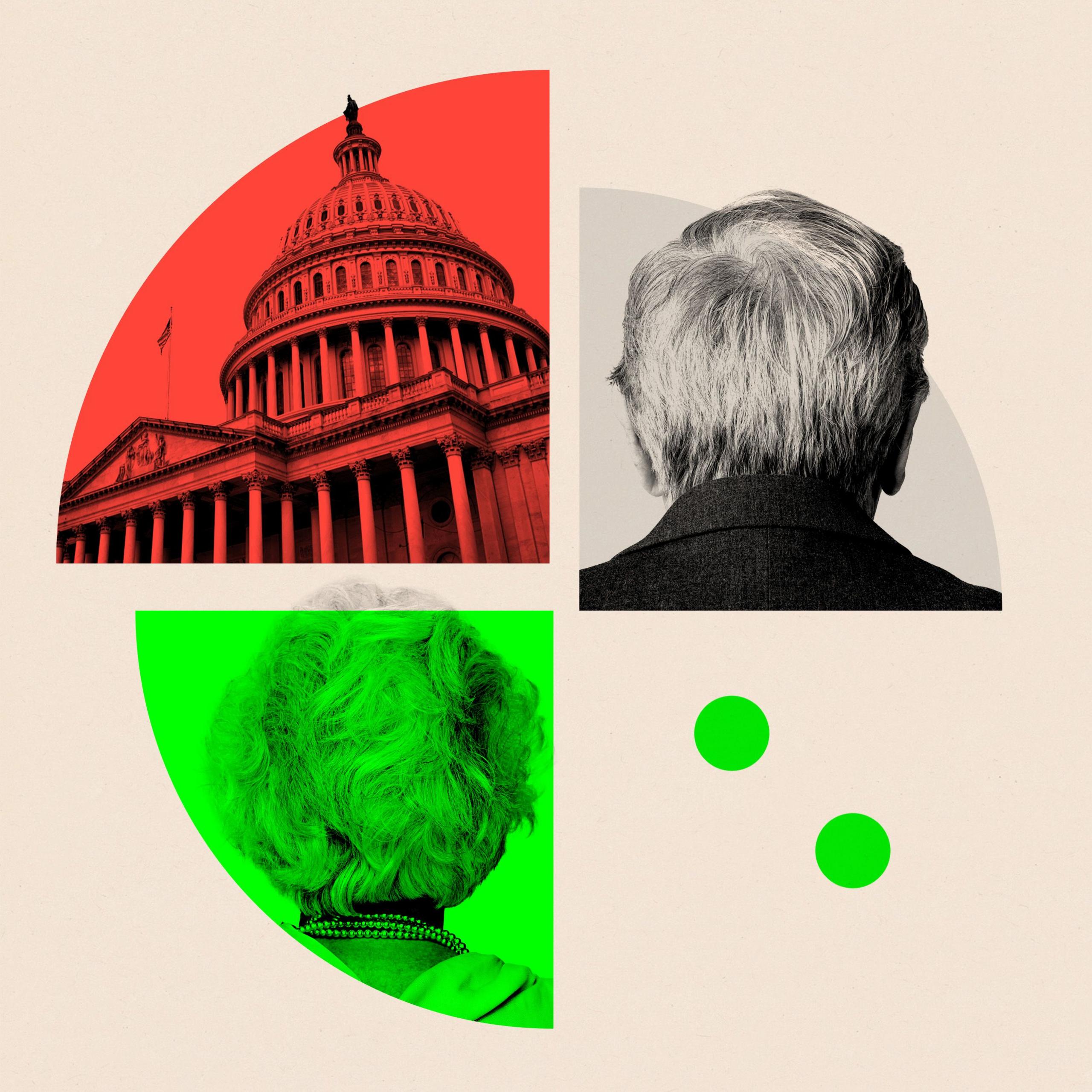
The United States still feels like a generation‑old country, with a Congress in which the majority of members are in their late forties and eighties, while the next cohort of leaders remains scarce. In the most recent mid‑term election, seasoned Republican Hal Rogers of Kentucky’s Fifth district is aiming for a record twenty‑fourth term, a feat only matched by governors and presidents such as Donald Trump, Joe Biden and Nancy Pelosi.
The long‑standing presence of that most senior politicians has raised concerns about a purported gerontocracy, bringing age limits and health checks into the cross‑fire. It also stokes the debate over whether the aging ranks of Congress reflect the nation’s demographic reality or merely a political system that rewards incumbency and long‑time networking.
If the Senate’s average age is 65 and the House’s is 58, the median age of a citizen is 39. That stark disparity paints a picture of a legislature that is not only out of step with its people but also out of step with the lives of the people that elected them. Data from the Inter‑Parliamentary Union points out that the U.S. has one of the lowest proportions of lawmakers under 45 compared with its European counterparts.
Yet the desire to usher in a new era of youthful policy is not lost. Riley Owen, 27, a Republican in Utah’s newly drawn district, bills himself as a candidate who will break the entrenched “us versus them” narrative. He champions paid maternity leave, limits on congressional stock trading and climate action—issues that traditionally belong on the left but are resonant with younger voters. He and Democratic Socialist Grace Mausser point out that what matters is the ideas behind a candidate, not their birth year. They argue that the political wide-scope is bent toward long‑time incumbents, and that may complicate the ability of a 20‑year‑old to even get on the ballot.
Another angle on youth disengagement comes from the trust deficit. Over six in ten young adults aged eighteen to thirty say that very few or none of their elected officials are honest, a statistic that sits with the officials who outrank them in age. The age–trust gap can explain why fewer young people run for office; they see a system that prioritises voter age, age has been a visible hurdle for the political arena, and the cost of participation seems high. Campaign finance plays a decisive role—as seen in Ben McAdams’s war chest that dwarfs Riley Owen’s—making it hard for young candidates to level the playing field.
The most tangible roadblock is the merit of experience: donors favour incumbents, and to compel them to give money to a young challenger, the challenger must offer a differentiated platform. The policy approach, the PACs and the purchase of time before the campaign launch—all shine light on the depth of the problem. The analysis is set against the backdrop of the 2026 mid‑finals, where expectation is that presidential and civic bodies might still lean heavily on experience to strengthen policy continuity.
The discussion is far from one‑sided. A professor of gerontology, Tracey Gendron, challenges the assumption that age equals decline. She points out that an eighty‑year‑old Senator such as Bernie Sanders still has the judgements needed for life‑shaping decisions. Her tone is a warning against the temptation to swaddle the older generation in a narrative that everyone should retire after a certain age; it may also drown out the useful crux: ageality is only a single factor in any calculation of viability.
All approaches highlight one precious truth: we must bring in more young voices to the ordinary daily work in policy, to the payment system, to the courts and to the public debates. The answer is not a blanket ban on long‑term service and yes, the system can change. That change must be open to youth participation so that the next congress becomes as dynamic as the electorate that votes for it, and not simply an aging echo of the past. In that way, the United States can keep its democracy responsive, representative and humane for all ages.