In brief
Seventy‑two retired U.S. generals, admirals and other senior officers signed an open letter demanding the cancellation of a Pentagon announcement that would livestream the August 2026 firing‑squad execution of Nidal Hasan, the Army psychiatrist convicted of killing 13 soldiers. The veterans argue that livestreaming would contravene constitutional protections against cruel and unusual punishment, turn Hasan into a martyr, and serve as propaganda for U.S. enemies. While President Trump has indicated support for the plan, a final decision remains pending amid intense criticism from lawmakers, religious leaders and civilian experts. The debate highlights broader questions about media’s role in capital punishment and the preservation of military honor.
Seventy‑two former U.S. generals, admirals and other senior military officers have collectively written to the Pentagon, demanding that the planned live broadcast of the 3 December 2026 execution of Army psychiatrist Nidal Hasan be scrapped.
In an open letter signed by 45 generals, 12 admirals and several former judge advocate generals, the veterans argue that livestreaming a capital punishment would violate the Constitution’s prohibition against cruel and unusual punishment, reduce a solemn duty to a “carnival” for voyeuristic spectators and potentially turn Hasan into a martyr that could be exploited by the United States’ enemies.
The Pentagon’s announcement, made by Defence Secretary Pete Hegseth, stipulated that the execution would be shown to the public, a first in the United States in nearly a century. While President Donald Trump has reportedly approved of the livestream, officials have signaled a shift, with some senior staff reiterating their opposition to the plan as of a recent CBS News report.
The letter’s signatories include prominent figures such as retired Major General Tony Taguba, who led the Army’s Abu Ghraib investigation, retired Air Force Colonel Moe Davis, former Marine Corps Major General Charles Bolden (current NASA administrator), and Gen. Claudia Kennedy, the Army’s first three‑star female officer. Their collective stance highlights the ethical and security dilemmas surrounding the media coverage of a death penalty.
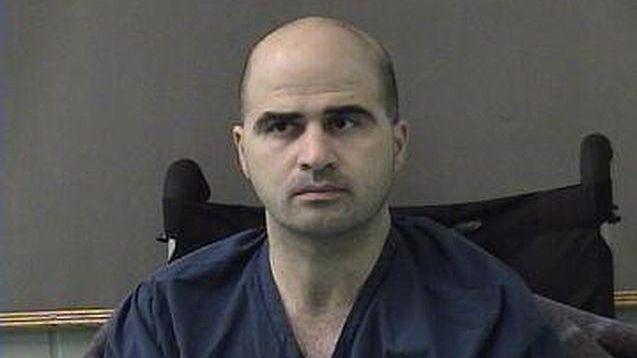
Hasan, who was convicted after killing thirteen unarmed soldiers in a 2009 Fort Hood shooting, has used a wheelchair since his arrest. He asserted that his actions were motivated by a misguided attempt to protect Muslims and the Taliban in Afghanistan. The controversy over his execution’s broadcast reflects the broader debate over capital punishment practices and the influence of digital media in modern warfare contexts.
Lawmakers from both parties, as well as religious leaders, have condemned the livestream idea. An unresolved decision looms as the Pentagon and the administration weigh legal, ethical, and propagandistic implications of broadcasting a state-sanctioned death penalty.