In brief
Bahram Beyzai, a towering figure in Iranian cinema and theatre, passed away at 87 in the U.S., prompting widespread mourning in Iran. Known for his innovative storytelling and subtle political commentary, Beyzai's work spanned decades, influencing a generation of filmmakers and garnering international recognition, despite many of his films being banned post-revolution. His masterpiece, 'Bashu, the Little Stranger', remains celebrated as one of the greatest Iranian films of all time. Tributes have poured in from various quarters, underscoring his significant contribution to the arts and culture.
Bahram Beyzai, a giant of Iranian cinema and theatre, has died aged 87 in the United States, sparking an outpouring of tributes from across Iran and the arts world. Beyzai's death has left a profound impact on the cultural landscape, as highlighted by Iranian newspapers that mourn his loss.
Prince Reza Pahlavi, the exiled son of the last Shah of Iran, emphasized that Beyzai's passing represents a great loss for the art and culture of our country. Although many of Beyzai's films faced bans in the 1980s by the Islamic regime following the Shah's fall, even some current government officials recognized his invaluable contributions to Iranian culture.
Modern Iranian filmmakers have acknowledged their debt to Beyzai. Notably, Jaafar Panahi, whose film recently won a top prize at Cannes, expressed that Beyzai taught them how to stand up to oblivion. While he avoided overt political messages in his work, the themes he explored often pitted historical and mythical figures against oppressive regimes.
Beyzai hailed from a family of poets and was deeply immersed in Persian cultural traditions from an early age. He initially gained fame as a playwright, drawing inspiration from Persian legends, before transitioning to film in the 1970s and becoming a prominent figure in the Iranian new wave cinema.
His most acclaimed work, 'Bashu, the Little Stranger', which chronicles a young boy's flight from the Iran-Iraq war, was banned in Iran upon its release yet was later celebrated globally, even being recognized as the greatest Iranian film of all time. It was recently showcased in a restored version at the Venice Film Festival.
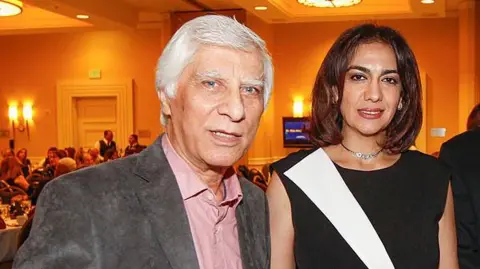
In 2010, Beyzai left Iran for the U.S. where he continued to honor his cultural roots, teaching about Iranian culture. His wife, actress Mozhdeh Shamsai, shared that despite his physical departure from Iran, the mention of his homeland would bring tears to his eyes, as he held onto hope for a vibrant future for Iranian culture.